
Buying a car in 2026 means choosing between more options than any generation of buyers has ever had: traditional dealerships, online retailers that deliver to your driveway, private sellers, auctions, and marketplaces that mix all of the above. That flexibility is great for price shoppers and overwhelming for everyone else. With the average new car transaction sitting near $49,000 according to Kelley Blue Book and used prices still well above pre-2020 norms, the cost of a wrong decision has never been higher.
This guide walks through how to buy a car step by step: where to shop, what to decide before you spend a dollar, how the financing and paperwork actually work, and the mistakes that cost real money. The FTC’s car-buying guidance is a good companion read for the legal basics; what follows adds the practical layer, including the one option most guides skip entirely, which is buying in another state and shipping the car home.
Key Takeaways
- Decide your budget, financing, and new-versus-used question before you ever talk to a seller.
- Getting pre-approved for a loan at a bank or credit union gives you a negotiating anchor dealers must beat.
- The steps to buying a car are the same everywhere, but where you buy changes the price, protections, and paperwork.
- Out-of-state and online purchases can save more than the cost of shipping the car home, especially when regional price gaps are large.
Places to Buy a Car
There’s no single best place to buy; each channel trades convenience against price and protection differently. How does buying a car work at each? Here’s the honest comparison:
| Channel | Price | Selection | Negotiation | Protections | Best for |
|---|---|---|---|---|---|
| Online retailers (Carvana, CarMax) | Fixed, mid-range | Huge, nationwide | None | Return windows (usually 7-10 days) | Convenience, no-haggle buyers |
| Franchise dealerships | Negotiable | New + certified used | Expected | Warranty, lemon law, financing options | New cars, trade-ins, CPO |
| Independent dealers | Negotiable, lower | Local used | Expected | State-dependent, thinner | Budget used cars |
| Private sellers | Lowest | One car at a time | Direct | Almost none, as-is | Experienced buyers, best prices |
Online Car Buying Sites
Online retailers and marketplaces let you shop the whole country from your couch, with fixed prices and home delivery. The trade-off is that you can’t test drive before committing, so return windows do the job of the test drive. We’ve reviewed the major players in depth in our guide to the best used car websites, including how Carvana actually performs when the car shows up. The practical tip: fixed prices online make excellent leverage when negotiating with a local dealer, even if you end up buying in person.
In-Person Dealerships
Dealerships remain the default for new cars and certified pre-owned, and they’re the only channel where financing, trade-in, and purchase happen in one transaction. That convenience is also where margin hides: the finance office makes more profit on loans, add-ons, and warranties than the showroom makes on many cars. Walk in with outside financing already approved and the car researched, and the dealership becomes a fine place to buy.
Private Sellers
Private-party prices run meaningfully below dealer retail for the same car, because you’re not paying for reconditioning, overhead, or protections. There’s no warranty, no return, and no recourse if the transmission fails a week later. The rule that keeps private purchases safe: no pre-purchase inspection by an independent mechanic, no deal. Spend the $150 on the inspection; it’s the cheapest insurance in the entire process.
Buying from a private seller follows its own compact sequence, and doing it in order prevents nearly every horror story. Run the VIN history report first, before you fall in love with the car. Verify the title is in the seller’s name, physically present, and lien-free; if a bank still holds the title, the payoff happens at the bank, not in a parking lot. Schedule the pre-purchase inspection. Agree on payment that protects both sides, with a cashier’s check exchanged at the seller’s bank being the classic clean method. Write a simple bill of sale with the price, date, VIN, and both signatures, since your DMV and insurer may want it. Complete the title transfer per your state’s rules, insure the car before it moves, and only then arrange pickup. If the seller is in another state, that last step is where transport comes in, and the same sequence applies: paperwork first, then shipping.
What to Consider Before Buying a Car
How does buying a car work when it goes well? It starts with decisions made before you shop. Answer these first, and every later step gets easier.
Car Use Needs
Match the vehicle to the life you actually live, not the one you imagine. Count seats you need weekly, cargo you haul monthly, and the worst weather you drive in yearly. A pickup you need twice a year costs thousands more than renting one twice a year.
Used vs. New
New buys you the full warranty, current safety tech, and known history at a steep premium: the average new car loses roughly 20% of its value in year one, per industry depreciation data. A two-to-three-year-old car with a clean history captures most of the technology at a fraction of the depreciation. New makes the most sense when you keep cars a decade; lightly used wins for nearly everyone else. Used electric cars follow the same logic with one extra check, battery health, which our guide to the best used EVs walks through model by model.
Trade-In Options
A trade-in is convenient and reduces the taxable amount of your purchase in most states, but convenience has a price: dealers typically offer wholesale value, not retail, and selling your current car separately usually nets more. Get instant offers from two or three online buyers first so you know the real number; our guide on how to trade in a vehicle covers squeezing the most from it.
Budget
Two rules keep budgets honest. The 20/4/10 guideline: 20% down, no more than a 4-year loan, and total vehicle costs (payment, insurance, fuel) under 10% of gross income. And the monthly-payment trap to avoid: never negotiate on payment, because a longer term can make an expensive car “fit” while costing thousands more in interest.
Cash or Financing
Cash is simplest and makes you a stronger negotiator. If you finance, the order matters: get pre-approved by your bank or credit union first, then let the dealer try to beat that rate. In 2026, average new-car APRs still sit in the high sixes for good credit per Experian’s automotive data, and the spread between a good rate and a bad one on a $35,000 loan runs into thousands of dollars.
Insurance and Ownership Costs
The purchase price is the entry fee, not the total. Get an insurance quote on the specific model before you buy, because premiums for two similar cars can differ by $1,000 a year. Add fuel or charging, maintenance, and registration, and compare total monthly cost of ownership, not sticker prices.
How to Buy a Car - Step by Step
The steps to buying a car are the same at a dealership, online, or in a stranger’s driveway.
Research Options
Narrow to two or three models that fit your needs and budget, then research what people actually pay, not MSRP. Pricing tools show the real transaction range for your ZIP code. Thirty minutes of research here is worth more than an hour of negotiating later.
Secure an Auto Loan
Apply for pre-approval with your bank or credit union before you shop. It costs nothing, multiple applications within a two-week window count as one credit inquiry, and the approved rate becomes your benchmark: the dealer either beats it or doesn’t get the financing business.
Shop Around Marketplaces (In Person and Online)
Cross-shop your models across at least one online retailer and two local sources. An aggregator such as AutoTempest runs that comparison across several marketplaces in one search, with the gaps covered in our AutoTempest review. In our experience helping buyers move purchased cars, prices for the same model routinely spread by $2,000 or more across channels in the same market. The out-of-state version of this move gets its own section below, because the spread across states can be even bigger.
Test Drive
Drive the actual car you’d buy, not just the model. Listen with the radio off, test the brakes hard once safely, park it, and sit in the back seat. For online purchases where the return window is the test drive, put real miles on it during those days, including the highway.
Ask for Vehicle History
For any used car, run the VIN through a history report and read it before negotiating. Accidents, title brands, odometer gaps, and ownership count all move the price. A seller who resists sharing the VIN has answered your question already.
Negotiate
Negotiate the out-the-door price, the single number including all fees and taxes. Dealers structure deals across four levers (price, trade-in, rate, add-ons), and the out-the-door number is the only one that cuts through all four. Email negotiating with multiple dealers works: ask each for their best out-the-door number on a specific car and let them compete.
Finalize Cost & Paperwork
Before signing, read the itemized breakdown and question every line you didn’t agree to. Here’s what the fee section typically looks like:
| Fee | Typical range | Negotiable? |
|---|---|---|
| Documentation fee | $85–$895 (varies by state; some cap it) | Rarely, but offsettable in price |
| Sales tax | 0–8%+ by state | No |
| Title & registration | $50–$500 by state | No |
| Destination charge (new cars) | $1,000–$2,000 | No |
| Dealer add-ons (nitrogen, etching, protection packages) | $200–$2,000+ | Yes, decline or remove |
| Extended warranties/GAP sold in the finance office | $1,000–$4,000 | Yes, entirely optional |
Take your time in the finance office; it’s the last room where the price can still grow.
Buying a Car Out of State or Online
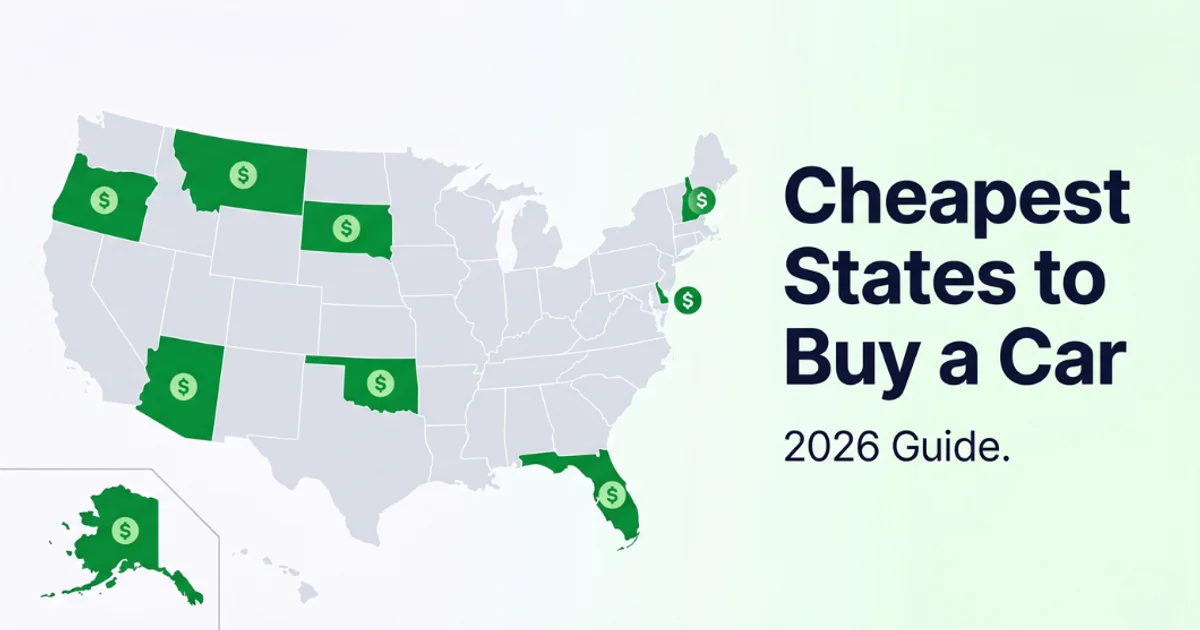
Here’s the option most car-buying guides never mention: the best deal on your exact car is often in another state. Prices vary regionally with demand, and our data on the cheapest states to buy a car shows the same model listing for thousands less in the right market. Online retailers, auctions, and long-distance private purchases all widen the search the same way.
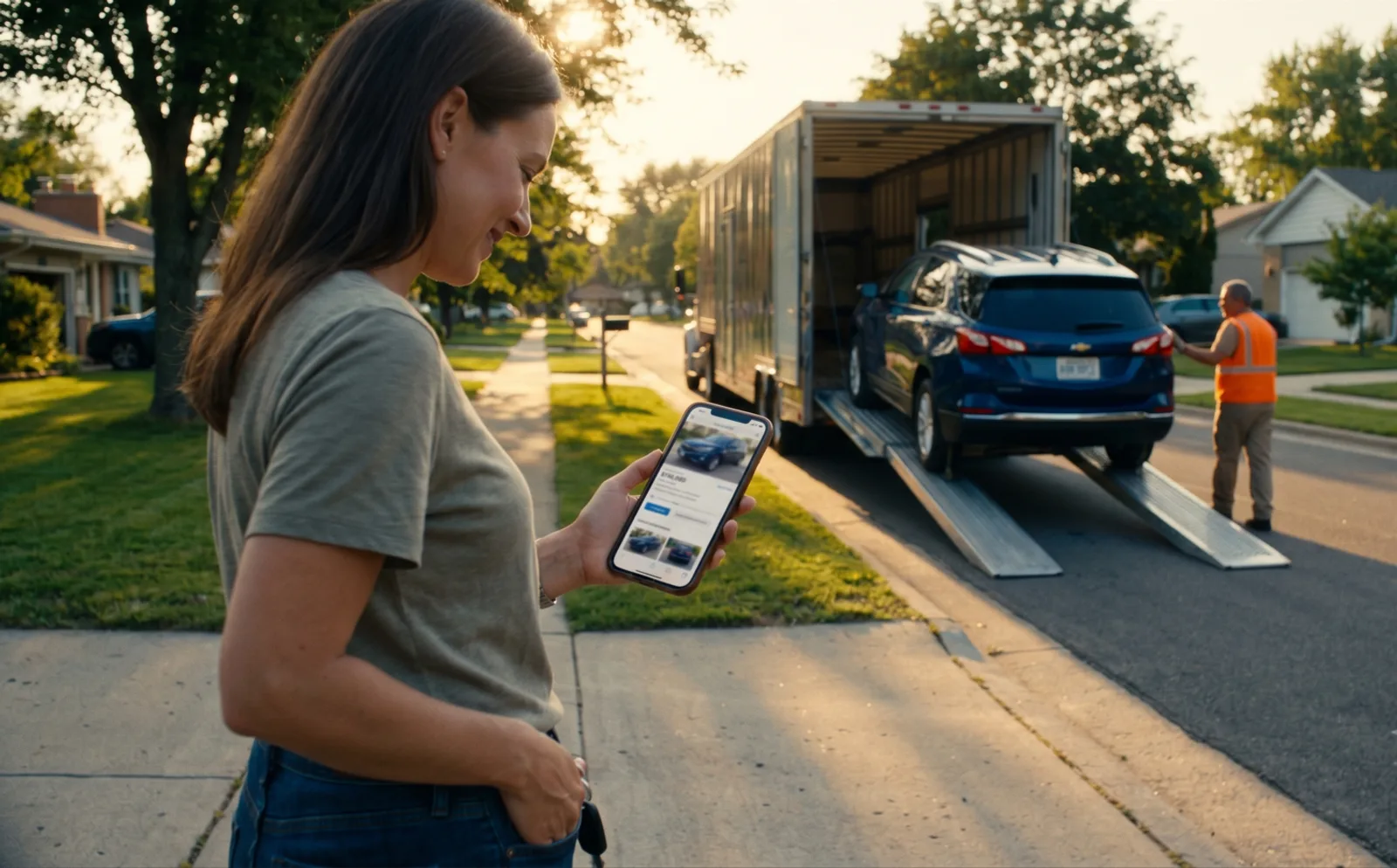
The logistics are simpler than most buyers expect. You buy the car, and an auto transport company picks it up and delivers it to your driveway, typically in 2 to 7 days depending on distance. Shipping usually runs $500 to $1,500, so the math works whenever the price advantage beats the transport cost, which it regularly does on trucks, SUVs, and specialty models. We move out-of-state purchases for buyers every week at SAKAEM Logistics, and the pattern is consistent: the savings on the car outrun the car shipping cost several times over. The same channel works for motorcycles, where thin regional inventory makes national shopping even more common; if a bike is on your list, our guide to the types of motorcycles helps narrow the category before you start searching. The tax, temporary tag and title steps that follow an out-of-state purchase are covered in our guide to buying a car out of state.
Two cautions from the shipping side of the transaction. First, complete the paperwork and payment before transport is booked, because the carrier needs an owner to release the vehicle and an owner to receive it. Second, for auction and online purchases (auction buys carry their own fee stack, covered in our Copart fees guide), photograph the car at pickup through the transporter’s inspection report, since that Bill of Lading is your condition record if anything’s off at delivery.
Buying vs. Leasing a Car
When Buying a Car Makes Sense
Buy when you keep cars past the loan, drive more than 12,000 to 15,000 miles a year, or want the freedom to modify and sell on your schedule. Every payment builds toward owning an asset, and a paid-off car is the cheapest car you’ll ever drive.
When Leasing a Car Makes Sense
Lease when you want a new car every two or three years, drive predictable low miles, and value a fixed monthly cost under warranty. You’re paying for depreciation without building equity, which is fine when you understand that’s the product. Watch the mileage caps: overage charges of 15 to 30 cents per mile add up fast.
Should I Buy an Extended Warranty?
Usually not, and here’s the honest math: extended warranties are dealership profit centers with substantial markups, and Consumer Reports’ owner surveys have repeatedly found most buyers pay in more than they ever claim out. Skip it on a new car (the factory warranty already covers the risky years) and on any model with a strong reliability record. It can make sense in narrow cases: a used luxury or European vehicle out of factory warranty, where single repairs can run four figures, bought from the manufacturer rather than a third party, at a negotiated price. If you wouldn’t negotiate the warranty price, don’t buy the warranty.
Bottom Line
Buying a car in 2026 rewards preparation over instinct: set the budget, secure financing first, cross-shop channels including other states, negotiate the out-the-door number, and read before signing. The buying part is where you save money; the logistics are where we come in. SAKAEM Logistics is an FMCSA-licensed auto transport broker (MC 16237, A+ BBB) shipping vehicles door to door across all 48 continental states since 2017, including thousands of online and out-of-state purchases. Found the right car three states away? Get a quote and have it in your driveway within the week.
Buying a Car FAQ
What fees should I expect when buying a car?
Beyond the price, plan for sales tax (0–8%+ by state), title and registration ($50–$500), a documentation fee ($85–$895 depending on state caps), and on new cars a destination charge around $1,000–$2,000. Dealer add-ons and finance-office products are the optional layer; decline what you didn’t ask for.
Should I buy a car in another state?
Yes, when the savings beat the logistics. Prices for the same model vary by thousands between regional markets, and shipping typically costs $500 to $1,500. You’ll pay sales tax in your home state at registration, not twice, and transport companies handle out-of-state purchases routinely.
Is it better to buy a car from a dealership or an online car-buying service?
Dealerships win for new cars, trade-ins, and buyers who negotiate; online services win on convenience, fixed pricing, and nationwide selection. Steps to buying a car are the same either way, and smart buyers use online prices as leverage in person.
What documents do I need to buy a car?
A valid driver’s license, proof of insurance for the vehicle, and payment or financing approval. Financing adds proof of income and residence. From a private seller, you’ll also handle the signed title and a bill of sale yourself.
What are common scams to avoid when buying a car?
Watch for title washing (salvage history hidden across state lines), odometer fraud, “yo-yo financing” where the dealer calls weeks later demanding new terms, and deposits to “hold” cars from unverifiable sellers. A VIN history report and an independent inspection kill most of them.
What credit score do I need to buy a car?
There’s no cutoff; rates change instead. Scores above roughly 660 see mainstream rates, 720+ gets the best offers, and below 600 financing exists but gets expensive fast. Checking pre-approval with your own bank first shows you exactly where you stand.
How much should I put down on a car?
Twenty percent down is the classic target on new cars, ten percent on used, and more is better. A real down payment keeps you from owing more than the car’s worth the moment you drive off, which matters if it’s totaled or you sell early.
How long does buying a car take?
How does buying a car work on the clock? Once you’ve chosen the car: an online purchase takes under an hour plus delivery in days; a dealership visit runs two to four hours, most of it in the finance office; a private sale takes as long as the title transfer at your DMV. Add 2 to 7 days of transport if the car’s coming from out of state.
Can I return a car after buying it?
From a dealership or private seller, generally no; sales are final unless your state or the contract says otherwise. Online retailers are the exception, with return windows around 7 days. Treat every other purchase as permanent, which is what the test drive, history report, and inspection are for.