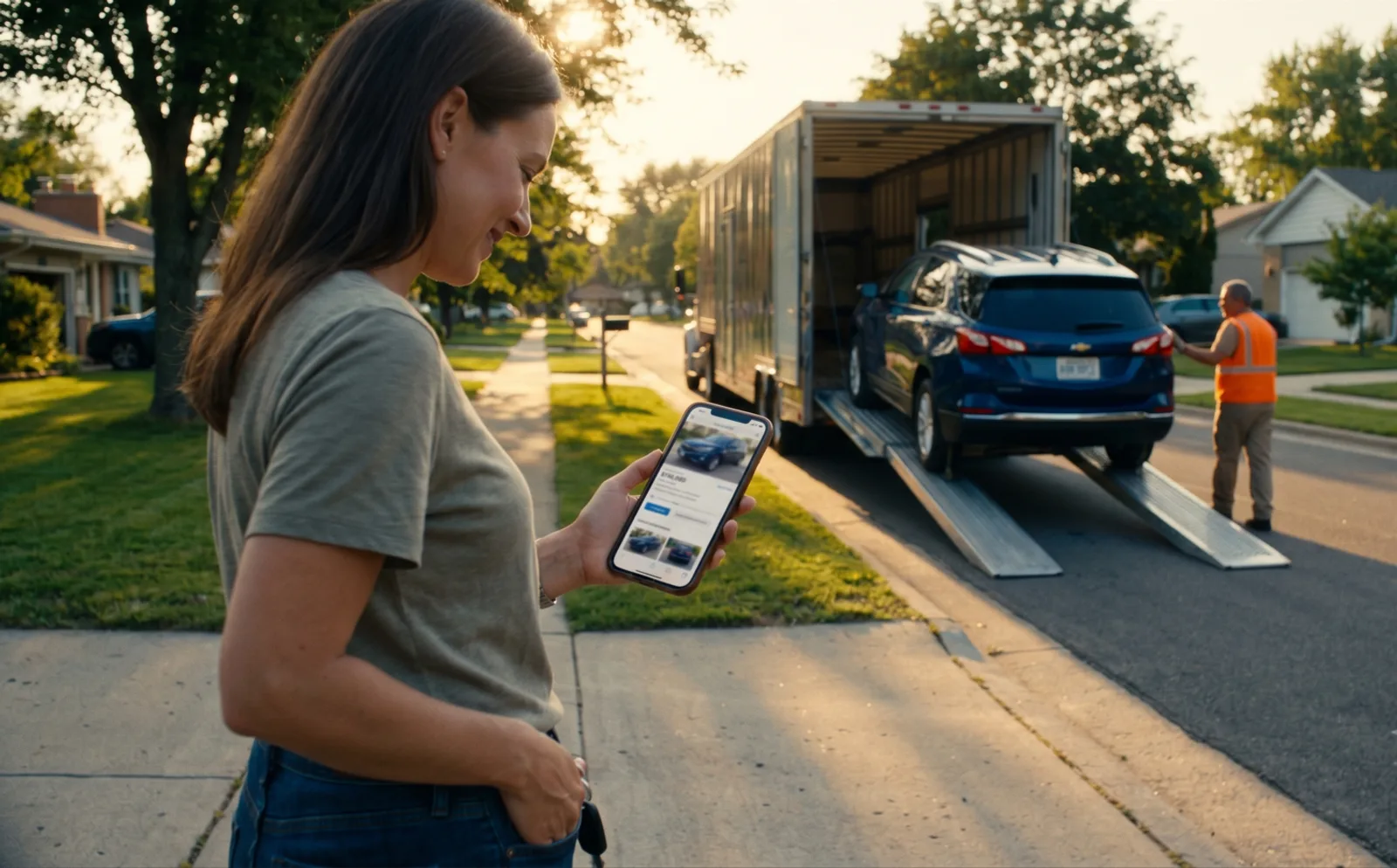
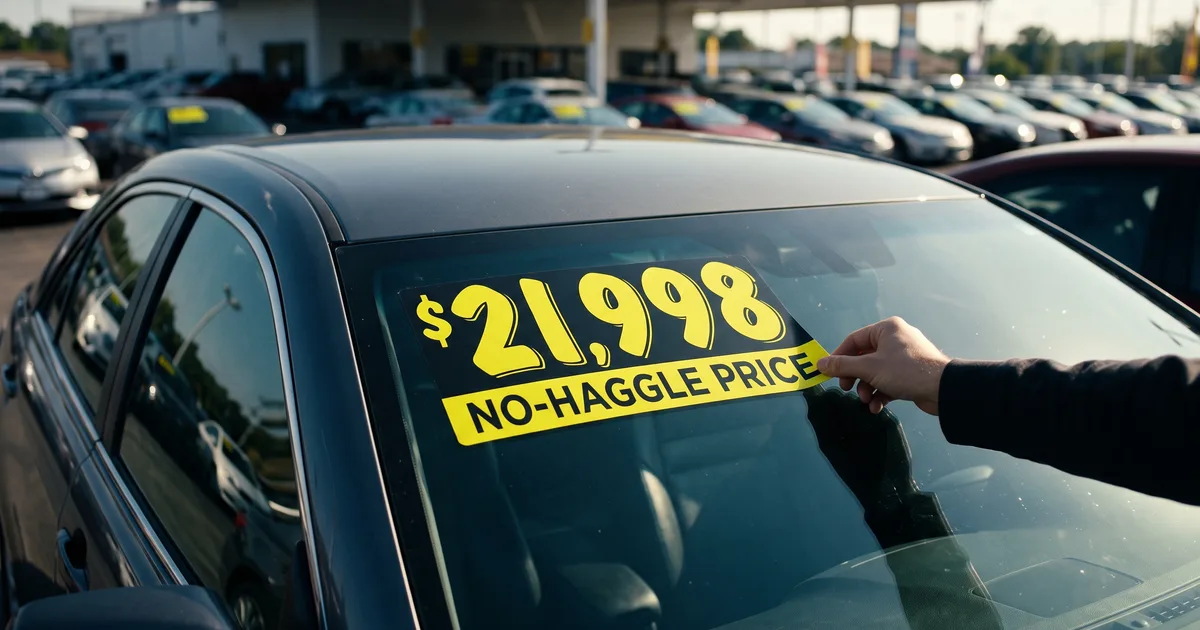

Buying a car from CarMax trades the lowest possible price for certainty: the sticker is the price, the car comes inspected with a 90-day warranty, and the whole transaction can close in about 90 minutes instead of an afternoon of back-and-forth. Whether that trade is worth it depends on how much the haggling discount at a traditional dealer is really worth to you, and on a handful of fees CarMax is less loud about. This guide covers the full buying side: the process, the fees, what you can still control in a no-haggle deal, and who should shop elsewhere. For the marketplace-agnostic fundamentals, our guide to buying a car covers financing, inspections, and paperwork in depth. If you are selling or trading in, that is a different transaction with its own rules, covered in our guide to selling a car to CarMax. For the legal basics of any used-car purchase, the FTC’s car-buying resources are a good companion read.
How Buying from CarMax Works
Buying from CarMax is a fixed-price retail transaction, closer to buying electronics than to a traditional dealership visit. You browse tens of thousands of used vehicles across about 250 stores nationwide on carmax.com, and every car carries one non-negotiable price. From there the process runs in a straight line:
- Find the car. Search nationwide inventory online. If the car sits at a distant store, you can have it transferred to your local one, sometimes free, often for a fee (more on that below).
- Test it properly. CarMax offers a 24-hour test drive, so you can take the car home overnight, park it in your garage, and fit the car seats before committing.
- Arrange payment. Use CarMax’s financing, bring your own lender, or pay outright. CarMax accepts outside financing on any vehicle.
- Sign and drive. The in-store paperwork typically takes about 90 minutes. A 10-day money-back guarantee (up to 500 miles) and a 90-day/4,000-mile limited warranty come standard under CarMax’s Love Your Car Guarantee program.
One recent change worth knowing: CarMax reduced its money-back guarantee from 30 days to 10 days in May 2024, and the figures here reflect CarMax’s published policies as of August 2026. Plenty of older articles still cite the 30-day window; it no longer exists. Ten days is still enough time to have an independent mechanic inspect the car, which you should do, warranty or not.
Does CarMax Negotiate? No, but Three Things Still Flex
CarMax does not negotiate. Not on the vehicle price, not on trade-in offers, not online, not in person, and the salesperson you ask has no authority to change that. CarMax uses fixed, no-haggle pricing, so the advertised vehicle price is not negotiated with individual buyers, and every buyer pays the same number. Asking politely, waiting for month-end, or walking away theatrically all produce the same result.
What most buyers miss is that three meaningful levers remain open in every CarMax deal:
- Financing is where CarMax deals are won or lost. CarMax accepts outside lenders, so a pre-approval from your bank or credit union sets a rate ceiling before you walk in. If you finance through CarMax anyway, the 3-Day Payoff Program lets you replace that loan with a better one within three business days at no cost, which effectively gives you a rate-shopping window after signing.
- The extended warranty is configurable. MaxCare coverage levels, terms, and deductibles (tiers run roughly $50 to $600) vary widely in price, and the plan is entirely optional. Declining it or choosing a different deductible can materially change the total cost of the deal.
- Transfer fees are avoidable. The fee to move a distant car to your store is fixed, but choosing similar inventory that is already nearby, or within a free-transfer radius, removes it entirely.
The honest math on no-haggle: a skilled negotiator may be able to buy a comparable vehicle for less at a traditional dealership, and a CarMax buyer gives up that opportunity by design. What you buy with it is a firm floor under the transaction: no add-on ambush in the finance office, no four-square worksheet, and the same price whether you are a seasoned negotiator or hate the game entirely.
CarMax Fees in 2026: What the Sticker Doesn’t Include
The advertised price is firm, but it is not the out-the-door price. Three costs sit on top:
| Fee | Typical range | Notes |
|---|---|---|
| Vehicle transfer | Free to about $1,999 | Free or cheap within a region; long-distance and cross-country transfers cost the most. Quoted before you commit, and non-refundable once the car ships |
| Processing / doc fee | $0 at many locations to about $400 at others | Location-dependent; confirm the exact fee with your store before signing |
| Tax, title, registration | Varies by state | Same as any dealer purchase |
Rates reflect figures published and reported as of mid-2026; confirm the exact numbers for your store and state before you commit, since transfer pricing depends on the specific route.
The transfer fee deserves the most attention, because it quietly changes the economics of shopping CarMax’s “nationwide” inventory. The perfect car three states away is not priced like the identical car in your city; it is that price plus potentially four figures to bring it to you, and the fee does not apply toward the purchase. Before paying a long-distance transfer fee, compare it against an independent shipping price in our car shipping cost calculator.
Is CarMax Overpriced?
Generally, yes, by a modest and fairly consistent margin. Third-party reviews such as Automoblog’s CarMax analysis put its vehicles around 5 to 10% above comparable private-party sales, and somewhat above negotiated dealer prices for the same car. That premium is the cost of the inspection, reconditioning, the 90-day warranty, the return window, and the no-haggle model itself.
Whether it is overpriced depends on what you are comparing against. Against a disciplined buyer who negotiates well at a traditional dealer, CarMax usually loses on price. Against the average transaction, once dealer add-ons and doc-fee games are counted, the gap narrows considerably. And against a private-party purchase, you are paying the premium for not inheriting a stranger’s deferred maintenance sight unseen. Check any CarMax price against a pricing guide before committing; our reviews of Carvana and the other major platforms in our best used car websites guide cover how the alternatives price the same inventory.
CarMax vs. a Traditional Dealer vs. Carvana
| CarMax | Traditional dealer | Carvana | |
|---|---|---|---|
| Price | Fixed, modest premium | Negotiable | Fixed |
| Test drive | 24 hours | Usually short, accompanied | None before delivery |
| Return window | 10 days / 500 miles | Rare | 7 days / 400 miles |
| Warranty included | 90 days / 4,000 miles | Varies | 100 days / 4,189 miles |
| Time to buy | ~90 minutes in store | Varies; often longer | Fully online |
| Haggling | None | Expected | None |
The pattern: CarMax is the middle path. More human than Carvana (you can see and drive the car first), less adversarial than a dealership, rarely the absolute cheapest of the three.
Who Should Not Buy from CarMax
CarMax is a poor fit for some buyers, and it is worth being direct about which ones:
- Strong negotiators lose their edge here. If you routinely get real discounts at dealerships, no-haggle pricing costs you money by design.
- Bargain hunters will not find true cheap cars. CarMax’s inspection standards keep rough-but-running vehicles off the lot, which is exactly where the deepest used-car deals live. Car auctions and private sales serve that buyer better.
- New-car shoppers: CarMax sells used vehicles only.
- Buyers chasing rare or specialty inventory will find the selection mainstream by design. Enthusiast cars appear occasionally but the model works on volume sellers.
If the right car for you is in another state, on any platform, the distance problem is solvable without CarMax’s transfer network, which brings us to the fee comparison nobody runs.
Transfer Fees vs. Shipping: The Math on Distant Cars
First, the honest framing: CarMax transfer fees and independent auto shipping solve different problems, so they are not direct substitutes. A transfer brings a CarMax car to your local store where you can still test-drive it and walk away; shipping moves a car you have already bought. But the comparison matters when deciding whether to limit your search to CarMax inventory or shop the broader national used-car market. A cross-country CarMax transfer can cost up to about $1,999, paid before you have committed to buy, non-refundable if you pass on the car. Shipping a purchased car coast to coast on an open carrier typically runs $1,150 to $1,550 at current market rates:
- Within CarMax’s world, the transfer fee is the only way to get a distant CarMax car to your store, and for regional distances it is often cheap or free, which is fair value for a car you can then test-drive for 24 hours before buying.
- Outside it, the entire national used-car market is open to a buyer willing to purchase remotely, and professional transport moves the car to your driveway, often for less than CarMax charges to move its own inventory between stores. Buyers who purchase from distant dealers, auctions, and private sellers do this every day; our online car buyer shipping service exists specifically for that transaction, and our cross-country car shipping guide covers timelines and costs.
SAKAEM Logistics has been brokering exactly these shipments since 2017, FMCSA-licensed (MC 16237) with a 4.6 rating across 580+ Google reviews. The practical takeaway: never let geography shrink your search to one company’s local lot, because moving a car you bought well is a solved problem.
Buying from CarMax FAQ
Does CarMax negotiate prices?
No. Vehicle prices, trade-in offers, and fees are all fixed, online and in person. The levers you can still control are financing (outside lenders are accepted, and the 3-Day Payoff Program lets you swap loans within three business days), the optional MaxCare coverage configuration, and avoiding transfer fees by choosing nearby inventory.
Is CarMax a good place to buy a car?
For buyers who value certainty over squeezing out the last dollar, yes. Cars are inspected, carry a 90-day/4,000-mile warranty and a 10-day money-back guarantee, and the price is the price. Third-party editorial reviews consistently score CarMax high on platform experience and transaction support and lower on cost, which matches the trade the model makes. Buyers who negotiate well or hunt bargains will usually do better elsewhere.
Is CarMax overpriced?
Third-party reviews place CarMax vehicles around 5 to 10% above comparable private-party prices, a premium that pays for reconditioning, the warranty, the return window, and the no-haggle process. Against average dealer transactions the gap is smaller than the sticker comparison suggests.
How much is the CarMax transfer fee?
It ranges from free for many regional transfers to roughly $1,999 for cross-country moves, depending on distance. The fee is quoted before you commit, is not applied toward the purchase, and is non-refundable once the vehicle ships even if you decide not to buy.
What is CarMax’s return policy in 2026?
Ten days, with a 500-mile cap. CarMax reduced its money-back guarantee from 30 days to 10 days in May 2024, so older articles citing the 30-day window are out of date. The 24-hour test drive before purchase still stands.
What warranty comes with a CarMax car?
Every vehicle includes a 90-day/4,000-mile limited warranty. Optional MaxCare extended coverage is available at varying terms and deductibles, and it is one of the few parts of a CarMax deal you can meaningfully configure.
Can I use my own financing at CarMax?
Yes. CarMax accepts outside financing on any vehicle, and arriving with a pre-approval from a bank or credit union is one of the strongest ways to protect the economics of the deal. If you finance through CarMax, the 3-Day Payoff Program allows you to replace the loan within three business days at no cost.
Does CarMax deliver cars to your home?
In select markets CarMax offers local home delivery, but availability depends on your location and the vehicle. For distant purchases, the standard route is transferring the car to your local store. If you buy a vehicle remotely from any other seller, professional auto transport handles the delivery leg.
How long does buying a car at CarMax take?
The in-store transaction typically takes about 90 minutes once you have chosen the car, which is shorter than a typical dealership visit runs. Transfers add days, not hours: moving a distant car to your store can take from a couple of days to a few weeks depending on distance.
Should I still get an inspection on a CarMax car?
Yes. The 10-day return window exists precisely so you can have an independent mechanic look at the car after purchase. CarMax’s reconditioning is real but not exhaustive, and a $150 inspection is cheap insurance on a five-figure purchase.
The Bottom Line
Buying a car from CarMax is buying certainty at a known premium: firm pricing, a genuine return window, an included warranty, and a 90-minute transaction, in exchange for giving up the opportunity to negotiate the vehicle price lower elsewhere. Go in with outside financing pre-approved, decline or configure MaxCare deliberately, mind the transfer fee before falling for distant inventory, and use the 10 days to get an independent inspection.
And if the right car turns out to be far away, on any lot in the country, remember that distance is the cheapest problem in the deal. SAKAEM Logistics ships purchased vehicles door to door nationwide, $0 upfront, with every carrier vetted for authority, insurance, and safety record. Get an instant quote and buy the best car you can find, wherever it happens to be parked.