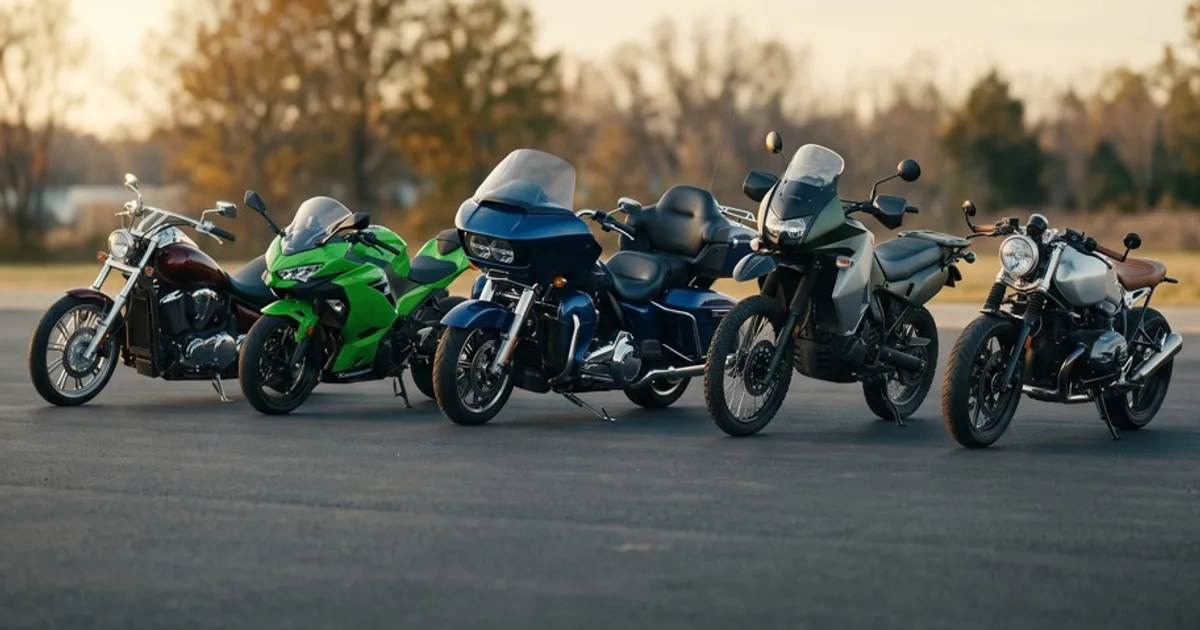

There are more types of motorcycles on the market in 2026 than at any point in riding history, and the differences between them are bigger than most new riders expect. A cruiser and a sport bike share two wheels and an engine, and almost nothing else: seating position, weight, power delivery, comfort over distance, and price all change dramatically from one category to the next. Picking the wrong style is one of the main reasons first bikes get sold within a year.
This guide breaks down the different types of motorcycles, what each one is actually good at, who should skip it, and a specific model worth cross-shopping in each category. Motorcycles also carry real safety stakes, with riders nearly 28 times more likely to die in a crash per mile traveled than car occupants according to NHTSA data, so matching the bike to your skill level isn’t just a comfort decision. We ship every one of these motorcycle styles across the country for a living, which gives us an unusual vantage point on what people actually buy, keep, and move.
Key Takeaways
- Riding position is the fastest way to tell motorcycle types apart: feet-forward cruisers, upright standards, and lean-forward sport bikes suit very different bodies and trips.
- Standard, cruiser, and small-displacement dual-sport motorcycles are the most forgiving choices for new riders, while sport bikes and heavy tourers punish inexperience.
- Typical new-bike prices in 2026 run from about $2,500 for scooters to well over $30,000 for loaded touring models and customs.
- Buying out of state is common with motorcycles because inventory is thin and regional, and shipping the bike is usually cheaper than a two-day ride home.
Motorcycle Types at a Glance
The table below compares the different motorcycle styles on the four things buyers ask about most: how you sit, what the bike is best at, how beginner-friendly it is, and what a new one typically costs in 2026.
| Type | Riding Position | Best For | Beginner Friendly? | Typical New Price |
|---|---|---|---|---|
| Standard | Upright, neutral | All-around riding, first bikes | Yes | $5,000–$10,000 |
| Cruiser | Feet forward, relaxed | Laid-back street riding | Yes (smaller models) | $6,500–$20,000+ |
| Sport bike | Leaned forward, aggressive | Speed, handling, track days | No | $8,000–$18,000 |
| Naked / streetfighter | Upright, sporty | City riding with sport power | Mid-size and up, no | $8,000–$15,000 |
| Touring | Upright, protected | Multi-state trips, two-up riding | No (weight) | $20,000–$30,000+ |
| Bagger | Feet forward, protected | Highway cruising with luggage | No (weight) | $20,000–$30,000+ |
| Chopper | Reclined, stretched | Style and show, short cruises | No | $20,000+ (often custom) |
| Adventure (ADV) | Upright, tall | Mixed pavement and dirt travel | Some mid-size models | $10,000–$22,000 |
| Dual-sport | Upright, tall | Commuting plus real off-road | Yes | $5,000–$8,000 |
| Dirt bike | Standing or upright | Off-road only (most not street legal) | Yes, off-road | $4,000–$10,000 |
| Electric | Upright or sporty | Commuting, short trips, low upkeep | Varies by power | $12,000–$25,000 |
| Café racer | Slight forward lean | Retro style, weekend rides | Yes (modern retros) | $6,500–$13,000 |
| Scooter / moped | Step-through, upright | Urban errands and commutes | Yes | $2,500–$7,500 |
Types of Motorcycles
Read the styles that fit how you’ll actually ride, not how you picture yourself riding, and pay attention to the drawbacks; each one is a reason real owners trade out of the category.
Standard Motorcycles
A standard motorcycle (sometimes called a roadster) is the baseline the other motorcycle styles deviate from: upright seating, mid-mounted foot pegs, moderate power, and no bodywork agenda. They commute, they handle back roads, and they don’t force your body into any particular posture, which is why instructors recommend them for new riders more than any other type. The tradeoff is that a standard is not the best at anything. Riders who discover they love long trips or aggressive cornering usually move to a specialized type within a few seasons.
Best for: new riders, commuters, and anyone who wants one bike that does everything acceptably well.
Our pick: Honda CB650R E-Clutch, around $8,700. Enough engine to keep you interested for years, mild enough not to scare you in month one.
Cruiser Motorcycles
A cruiser is a low-slung motorcycle with feet-forward controls, a wide seat, and an engine tuned for low-end pull instead of top speed. It’s the classic American silhouette, and the seating position is the most relaxed in motorcycling. Low seat heights make cruisers approachable for shorter riders, and smaller models are excellent first bikes. Their weakness shows up in corners and on long interstate runs: limited lean angle, wind hitting your chest at speed, and heavier models that demand respect in parking lots.
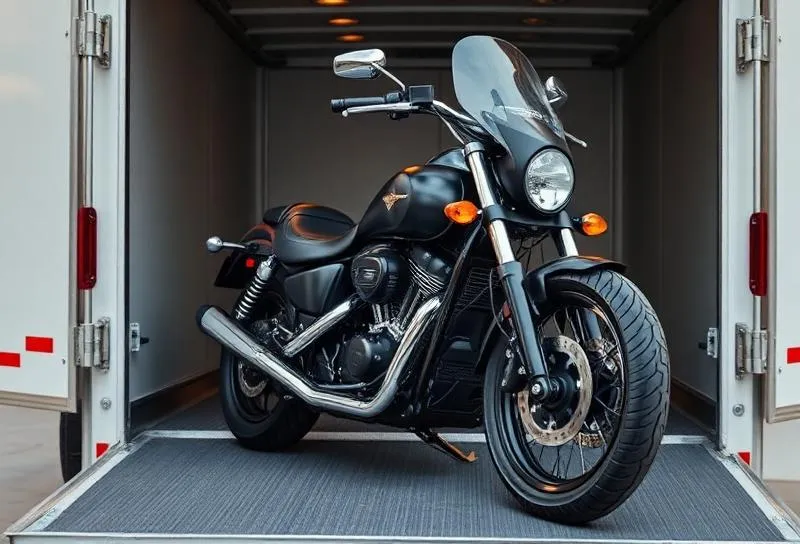
Best for: relaxed street riding, shorter riders, and anyone drawn to the classic V-twin look.
Our pick: Honda Rebel 500, around $6,500, is the beginner cruiser we’d point almost anyone at. Riders committed to the full-size experience should cross-shop the Harley-Davidson Softail Standard.
Sport Bikes
A sport bike is built for maximum speed and cornering, with full fairings, high-rpm engines, and a riding position that folds you over the tank. On a twisty road or a track day, nothing else comes close. The costs are just as sharp: wrists and back fatigue fast in traffic, insurance rates for supersports are the highest in motorcycling, and modern liter bikes make far more power than any public road can use. Most riding instructors, and every insurer’s rate sheet, will tell you a supersport is a second bike rather than a first; we agree.
Best for: experienced riders who prioritize performance and can live with the ergonomics.
Our pick: Yamaha YZF-R7, around $9,200. Real sport-bike feel with power an intermediate rider can actually manage.
Naked and Streetfighter Bikes
A naked bike is a sport bike with the fairings removed and the handlebars raised, trading a little top-end speed for an upright, all-day-usable riding position. The category has boomed for a simple reason: sport-bike engines and brakes, standard-bike comfort. Wind protection is the obvious sacrifice, and the punchy engines on larger models are more than beginners need.
Best for: city riders and commuters who still want genuine sport performance.
Our pick: Yamaha MT-09, around $10,600, one of the best power-to-price ratios in motorcycling.
Choppers
A chopper is a heavily customized cruiser with a stretched frame, raked-out front fork, and high handlebars, built to be seen as much as ridden. Choppers are rolling art, and genuine ones are usually hand-built or professionally customized. As transportation they’re compromised on purpose: long wheelbases resist turning, hardtail frames punish rough pavement, and resale depends entirely on finding a buyer who shares your taste. Most choppers we handle move on enclosed trailers between shows and collectors rather than being ridden distance.
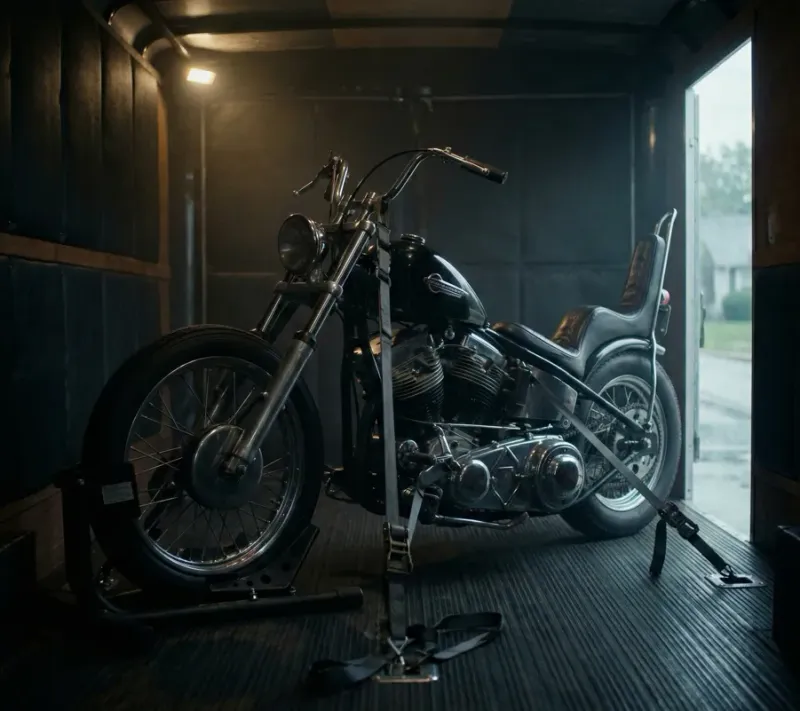
Best for: experienced riders who want a statement piece and accept the handling tradeoffs.
Our pick: this is custom territory, but the Harley-Davidson Breakout, around $22,500, delivers the chopper stance with factory reliability and a warranty.
Adventure (ADV) Motorcycles
An adventure motorcycle pairs long-travel suspension and upright ergonomics with highway-capable engines, built to cross a state on pavement and finish the trip on a forest road. ADV bikes have been among the fastest-growing motorcycle categories of the past decade, and for travelers they’re hard to beat: comfortable, huge fuel range, and luggage systems designed in from the start. Their catch is size. Tall seat heights shut out shorter riders, and a fully loaded 500-plus-pound ADV bike is a handful in sand or mud, where mid-size models often outperform the flagships.
Best for: riders who tour long distances and want dirt-road capability without a second bike.
Our pick: BMW R 1300 GS, from around $19,000, remains the benchmark. The Kawasaki KLR650, around $7,000, covers most of the same ground for a third of the money.
Touring Motorcycles
A touring motorcycle is purpose-built for covering hundreds of miles a day: large fairings, big fuel tanks, integrated luggage, plush two-up seating, and features like heated grips, audio, and adaptive cruise control. Nothing eats interstate miles more comfortably. The bills come in weight and price: full-dress tourers push 800-plus pounds and $25,000-plus stickers, and around town all that mass is simply a burden. Touring bikes are also the type we’re asked to ship to rally season most, since many owners fly out and meet the bike there.
Best for: long-haul riders, couples riding two-up, and retirees chasing horizons.
Our pick: Honda Gold Wing, from around $25,000. Still the standard everyone else measures against.
Bagger Motorcycles
A bagger is a cruiser fitted with hard saddlebags and a fork-mounted fairing, sitting stylistically between a stripped cruiser and a full-dress tourer. Baggers dominate American highway riding because they keep the cruiser look while adding real luggage and wind protection. They share the cruiser’s cornering limits and add serious weight; most run well north of 700 pounds, which makes low-speed maneuvers and gravel driveways genuinely tricky.
Best for: highway riders who want cruiser style with touring practicality.
Our pick: Harley-Davidson Street Glide, around $27,000, the bike this category was invented around.
Dual-Sport Motorcycles
A dual-sport is a street-legal dirt bike: lights, mirrors, and a license plate on a machine with knobby-ready wheels and real off-road suspension. Dual-sports are cheap to buy, cheap to insure, nearly indestructible, and light enough that dropping one is an inconvenience rather than a disaster, which makes them sneaky-good first motorcycles. On the highway they run out of comfort fast, with buzzy single-cylinder engines and narrow seats that get old beyond 60 mph.
Best for: riders mixing commuting with trail riding, and budget-minded beginners.
Our pick: Honda CRF300L, around $5,700. Light, forgiving, and it holds resale value remarkably well.
Dirt Bikes
A dirt bike is an off-road-only machine with maximum suspension travel, minimum weight, and, in most states, no legal path to street riding. For learning bike control, nothing teaches faster. Because most dirt bikes can’t be plated, owners need a truck, trailer, or shipper to get them anywhere, and competition models require maintenance schedules measured in engine hours rather than years.
Best for: off-road riding, motocross, and building fundamental skills at any age.
Our pick: Yamaha YZ250F, around $9,000, for the track. Trail riders should look at the milder Honda CRF250F instead.
Electric Motorcycles
An electric motorcycle replaces the engine and gearbox with a battery and motor, delivering instant torque, near-silent running, and almost zero routine maintenance. As commuters they’re excellent: home charging, no oil changes, no clutch to manage. Range is still the honest limitation in 2026: most street models realistically deliver somewhere between 100 and 170 miles in mixed riding, and fast-charging stops are longer than gas stops, so cross-country electric touring remains a planning exercise. Depreciation has also been steeper than on gas bikes as battery tech improves year over year.
Best for: commuters and tech-forward riders with predictable daily mileage.
Our pick: Zero SR/F, around $20,000. Riders wanting American V-twin character in electric form should look at LiveWire.
Café Racers
A café racer is a retro-styled motorcycle with low handlebars, a humped solo seat, and minimal bodywork, a look borrowed from 1960s British café racing culture. Modern factory café racers deliver the look with fuel injection, ABS, and warranties, and their modest power bands make several of them fine first bikes. The style imposes mild ergonomic costs, with more wrist pressure than a standard, and dedicated café models trade practicality (luggage, pillion comfort) for aesthetics.
Best for: style-conscious riders and vintage fans who want modern reliability.
Our pick: Royal Enfield Continental GT 650, around $6,500, is the affordable entry. The Triumph Speed Twin 900 is the premium play.
Scooters and Mopeds
A scooter is a step-through, automatic-transmission two-wheeler that prioritizes convenience over performance, and a moped is its smaller, often pedal-assisted cousin. For dense urban riding nothing is more practical: automatic transmissions, underseat storage, 70-plus mpg, and insurance that costs less than a streaming subscription. Highway capability is the dividing line, since most scooters under 300cc shouldn’t be on an interstate at all, and riders coming from motorcycles miss the stability of larger wheels.
Best for: city dwellers, campus commuters, and errand runners.
Our pick: Vespa Primavera 150, around $5,900, if style matters. Honda PCX160, around $4,300, if math matters.
How to Choose the Best Motorcycle
The best motorcycle for you is the one that matches your experience level, the riding you’ll do most weeks, and your total budget including gear and insurance. Riders get this backwards constantly, buying for the two big trips they imagine instead of the two hundred short rides they’ll actually take.
Skill Level
Be brutally honest here, because the statistics are. New riders do best on standards, small cruisers, dual-sports, and modern café racers in the 300cc to 650cc range, where mistakes are recoverable. A Motorcycle Safety Foundation course is worth taking before you buy anything; it’s a controlled way to discover which seating position your body actually tolerates, and completing one earns an insurance discount with most carriers.
Riding Style
Map your real riding week. Daily commuting through traffic favors naked bikes, standards, and scooters. Weekend canyon runs favor sport and naked bikes. Two-up trips across state lines favor touring bikes and baggers. If your honest answer is “a bit of everything,” that’s the standard and ADV categories’ entire reason for existing.
Lifestyle
Consider where the bike lives and how it fits your logistics. Apartment dwellers with street parking should think hard about theft-resistant, cheaper-to-lose machines rather than $28,000 baggers. Riders who relocate often, chase rallies, or winter in another state should factor transport into the ownership plan, since seat time and moving a bike across the country are very different problems.
Budget
Price the whole picture, not the sticker. Insurance varies wildly by type, with supersports costing several times what a standard costs to insure for the same rider. Add $1,000 to $1,500 for quality gear on any first bike, plus tires and maintenance that run higher on performance machines. A $9,000 standard with cheap insurance frequently beats a $7,000 used supersport with brutal premiums on total cost within two years.
Tips for First-Time Motorcycle Buyers
New buyers repeat the same handful of mistakes every season, and most are avoidable.
- Take an MSF course before buying so your first miles happen on someone else’s bike.
- Buy your second bike first: the 400cc to 650cc machine you’ll keep three years, not the 250cc you’ll outgrow in six months or the liter bike that outgrows you.
- Budget for full gear (helmet, jacket, gloves, boots) before you budget for chrome.
- Shop used inventory nationally, not just locally, because motorcycle inventory is regional and the exact model you want is often two states away at a better price.
- Sit on everything at a dealership even if you’re buying elsewhere, since seat height and reach numbers on a spec sheet mean nothing until your feet are on the ground.
- Get an insurance quote for the exact model before you commit, not after.
- Negotiate the out-the-door number, not the monthly payment; the fundamentals in our car buying guide apply to bikes without modification.
New vs. Used Motorcycles
New motorcycles come with warranties, current safety tech like ABS and traction control, and financing rates that are often subsidized, while used bikes dodge the steep first-owner depreciation, often 20 to 30 percent in the first two years depending on category. Motorcycles are also seasonal purchases in a way cars aren’t: fall and winter listings run noticeably cheaper than spring, when demand floods back, and the same seasonal logic that applies to timing a car purchase applies double to bikes.
The used market is where out-of-state buying really matters. Motorcycle inventory is thin and regional, so the clean low-mile example of the exact model you want is frequently hundreds of miles away, and rare or discontinued models basically require a national search. That’s routine for us: in SAKAEM’s own shipment data, roughly 75 percent of the motorcycles we move are relocations and 25 percent are out-of-state purchases heading to their new owners, including project bikes and non-running vehicles that can’t be ridden home at any price.
Getting Your Motorcycle Where It Needs to Go
However the bike arrives in your life, at some point most owners need it moved without riding it: an out-of-state purchase, a move, a winter in Florida, or a rally trip where you’d rather fly. Professional motorcycle shipping handles this with soft-strap tie-downs and wheel chocks, and the open versus enclosed decision works the same way it does for cars, with enclosed the default recommendation for customs, vintage bikes, and anything you’d struggle to replace.
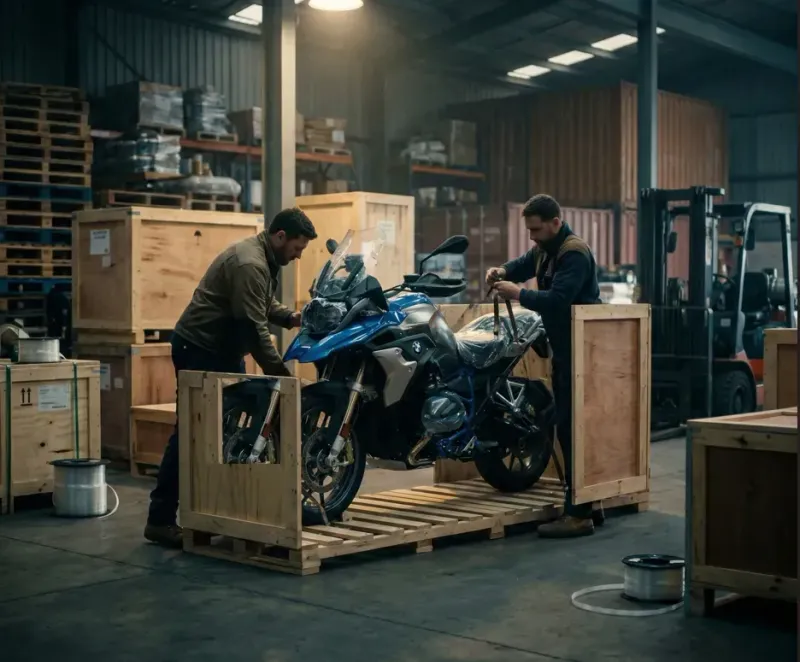
Rally season is the predictable crunch. Every March bikes flow toward Daytona Beach for Bike Week, and every August toward Sturgis, with carriers filling those lanes weeks ahead. Booking two to three weeks early costs nothing; booking rally week itself costs real money. Any legitimate transporter is registered with the FMCSA, and checking that registration takes thirty seconds.
Bottom Line
The different types of motorcycles exist because no single machine can be relaxed, fast, comfortable, dirt-capable, and cheap at once, so figure out which two of those qualities you actually need and the right category picks itself. Start smaller than your ego suggests, budget for gear and insurance, and shop nationally instead of settling for local inventory. SAKAEM Logistics is an auto transport broker (MC 16237) that has shipped motorcycles of every style across the lower 48 since 2017, so when the right bike turns up three states away, get a quote and we’ll bring it to your driveway.
Motorcycle Types & Styles FAQ
What are the main types of motorcycles?
The main types of motorcycles are standard, cruiser, sport bike, naked, touring, bagger, chopper, adventure (ADV), dual-sport, dirt bike, electric, café racer, and scooter. Most other labels you’ll hear, like bobbers, scramblers, and sport-tourers, are variations on these core motorcycle styles.
What type of motorcycle is best for beginners?
Standard motorcycles, small cruisers like the Honda Rebel 500, dual-sports, and modern café racers in the 300cc to 650cc range are the most forgiving types of motorcycles for new riders. They combine manageable power, upright seating, and lower seat heights, and they hold resale value well when you upgrade.
What type of motorcycle is best for long-distance trips?
Touring motorcycles are purpose-built for long distances, with wind protection, luggage, and seats designed for several hundred miles a day. Adventure bikes are the strong second choice, especially if your route includes rough or unpaved roads.
What type of motorcycle is best for highway riding?
Touring bikes, baggers, and larger cruisers handle sustained highway speeds most comfortably thanks to their weight, wind protection, and relaxed engines. Sport-touring and larger ADV models also excel; small dual-sports and scooters under 300cc are the types to avoid on the interstate.
What type of motorcycle is best for riding to Bike Week?
Baggers and touring motorcycles are the most popular motorcycle styles at Daytona Bike Week because they carry a week’s gear comfortably over long distances. Plenty of riders bring cruisers and choppers too, and many skip the ride entirely by shipping the bike and flying down.
How can I transport a touring motorcycle to Bike Week?
Book a motorcycle shipping service two to three weeks before the rally, choosing open or enclosed transport based on the bike’s value. Carriers secure the motorcycle with wheel chocks and soft straps, and you fly in rested instead of arriving off a three-day interstate slog.
What is the difference between a cruiser and a bagger?
A bagger is essentially a cruiser upgraded with hard saddlebags and a fork-mounted fairing for wind protection. Cruisers are lighter and cleaner-looking; baggers trade some agility for luggage capacity and long-haul comfort.
What is the cheapest type of motorcycle to own?
Scooters, dual-sports, and small standards are the cheapest motorcycle types to own once you count insurance, tires, and maintenance, not just purchase price. Supersport bikes sit at the opposite extreme, with the highest insurance rates in motorcycling.
Are electric motorcycles worth it?
Electric motorcycles make excellent commuters, with instant torque, home charging, and almost no routine maintenance. They’re a poor fit for long-distance riders in 2026, since real-world range of 100 to 170 miles and slower charging make touring a planning exercise.
Can I ship a motorcycle I bought in another state?
Yes, shipping out-of-state motorcycle purchases is one of the most common jobs in motorcycle transport, and it’s often cheaper than the flight, fuel, and hotel costs of riding it home. The seller just needs to hand the bike to the carrier, and door-to-door delivery typically takes a few days depending on distance.
Which types of motorcycles hold their value best?
Touring bikes, baggers, and well-known cruisers tend to depreciate slowest, and clean dual-sports stay in demand because supply is thin. Electric motorcycles and supersports have seen the steepest depreciation in recent years, which makes both categories strong used buys.