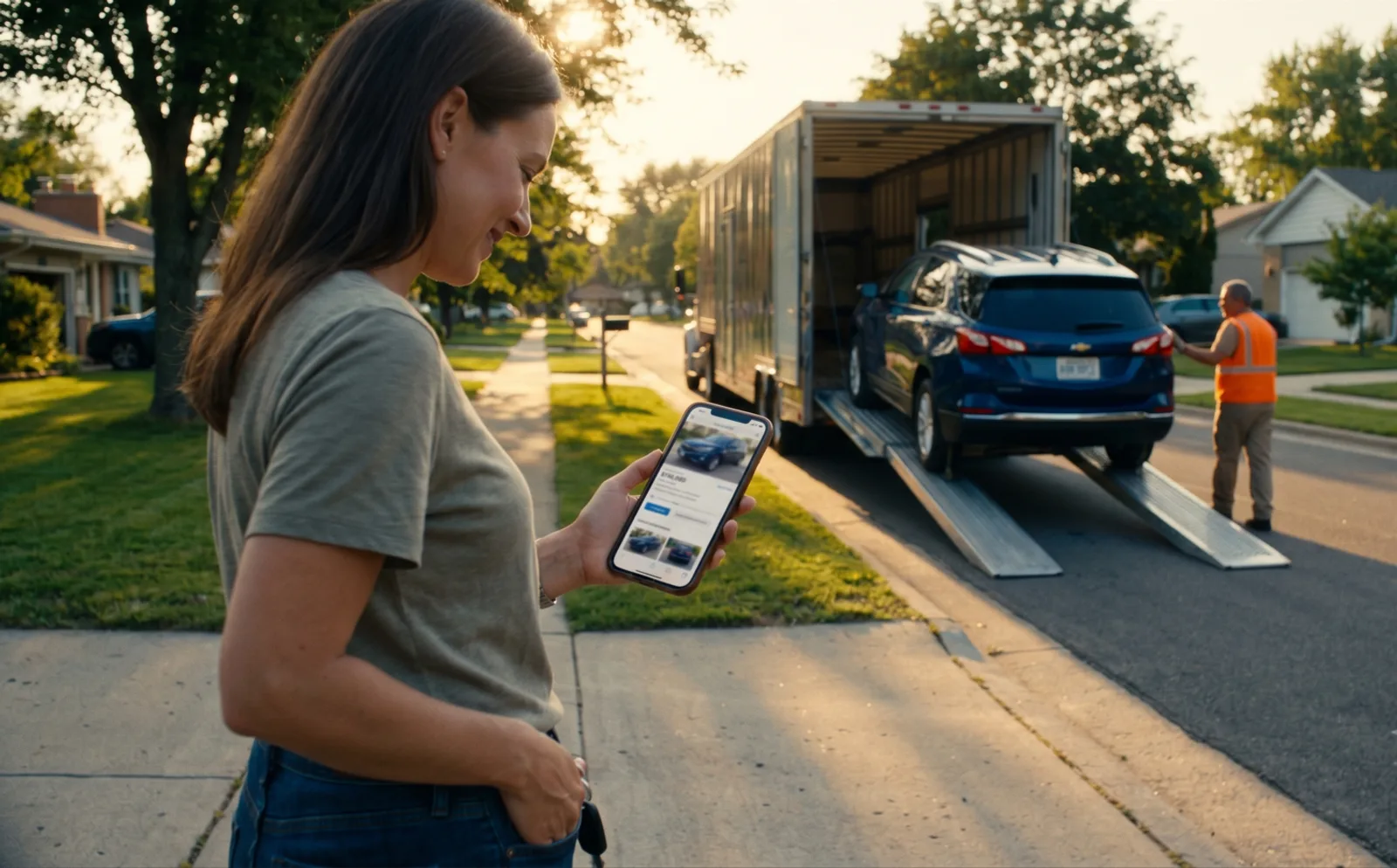
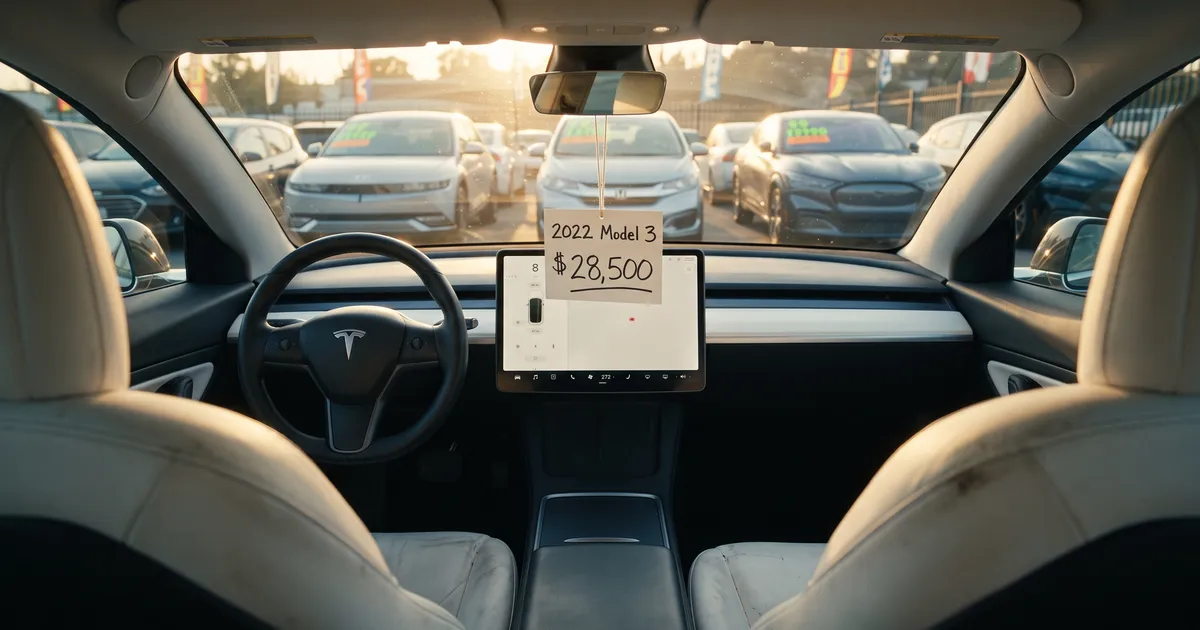

The best used EV to buy in 2026 is the one whose battery you can verify, and that rules out more cars than the badge on the hood does. Used electric cars are no longer the bargain bin of the market: the average one- to five-year-old used EV listed at $33,305 in June 2026, up 7.4% in a year while the rest of the used market slipped 1.3%, according to iSeeCars’ July 2026 price study. SAKAEM Logistics is an auto transport broker, not a dealer, and we have moved 180 EVs for customers since January 2025, most of them bought in one state and delivered to another on carriers we vet against FMCSA safety records. This guide ranks the ten best used EVs by price, battery risk and what it takes to get one home.
Myth: a used EV is a battery gamble. Fact: Geotab’s January 2026 analysis of more than 22,700 EVs found an average capacity loss of about 2.3% per year, and Geotab projects a typical pack would keep about 81.6% of its capacity after eight years, though results vary widely by model, climate and charging, per Geotab’s EV battery health report. Packs fast-charged above 100 kW most of their lives lost about 3.0% a year. Charging history matters more than model year, which is why every pick below comes with the one thing to check before you pay.
Key Takeaways
- The Tesla Model 3, Chevrolet Bolt EV and Hyundai Ioniq 5 are the best used EVs for most buyers in 2026, with the deepest inventory and the most price data.
- More than half of used EV listings in September 2026 were under $30,000, per Recurrent, and the Bolt EV was the fastest-selling used EV at a median $17,990.
- The $4,000 federal used-EV tax credit ended for purchases after September 30, 2025.
- On SAKAEM’s two busiest EV lanes, EVs did not cost more to ship than other vehicles. California to Texas ran a median $1,250 across 9 EVs against $1,300 across 84 other vehicles, a small sample.
Used EV Prices in 2026
Used EV prices rose through the first half of 2026 and have held near their June peak since. The average used EV retail listing was $37,441 in August 2026, 8% above a year earlier, according to Cox Automotive data cited in Recurrent’s Q4 2026 used EV market report. Recurrent ties the rise mainly to fuel, with gas at $4.46 a gallon in late September 2026, more than a dollar above a year earlier. Teslas made up 45% of listings, and 2023 and 2024 model years were more than half of what was for sale.
| Used EV (Recurrent, models with 200+ listings) | June 2026 avg. | Sept 2026 avg. | Change |
|---|---|---|---|
| 2024 Hyundai Ioniq 6 | $25,702 | $27,165 | +5.7% |
| 2020 Tesla Model Y | $25,629 | $26,363 | +2.9% |
| 2023 Hyundai Ioniq 5 | $27,595 | $28,231 | +2.3% |
| 2024 Hyundai Ioniq 5 | $27,271 | $27,729 | +1.7% |
| 2026 Tesla Model Y | $46,885 | $47,732 | +1.8% |
iSeeCars found the same pattern for Tesla: the Model 3 averaged $28,520 in June 2026, up 13.5% in a year, and the Model Y $32,916, up 12.0%. No EV made its list of the twenty biggest price drops. Prices reversed the steep depreciation of the two years before, and whether that holds depends on supply, new-car pricing and incentives.
The 10 Best Used EVs to Buy in 2026
The best used EVs for most buyers in 2026 are the Tesla Model 3, Tesla Model Y and Chevrolet Bolt EV, followed by the Hyundai Ioniq 5 and Ioniq 6. The list favors established battery platforms with real used inventory, a battery warranty of at least eight years or 100,000 miles, and published price data. Newer models appear where the value is compelling, with their shorter track record noted. Where no source publishes a model price, check live listings before you set a budget.
| Rank | Used EV | Best for | Main drawback | Price reference |
|---|---|---|---|---|
| 1 | Tesla Model 3 | Best overall, charging network | Insurance and body repair costs | $28,520 avg, 1-5 yr old (iSeeCars, June 2026) |
| 2 | Tesla Model Y | Families, cargo | Higher used prices, early build quality | $32,916 avg (iSeeCars, June 2026) |
| 3 | Chevrolet Bolt EV / EUV | Budget, home charging | Slow 55 kW fast charging | $17,990 median (Recurrent, Sept 2026) |
| 4 | Hyundai Ioniq 5 | Road trips, warranty | ICCU recall history | $27,729 avg, 2024 (Recurrent, Sept 2026) |
| 5 | Kia EV6 | Charging speed, driving feel | Rear headroom | Tracks Ioniq 5, check listings |
| 6 | Hyundai Ioniq 6 | Highway range | Small trunk opening, thin inventory | $27,165 avg, 2024 (Recurrent, Sept 2026) |
| 7 | Ford Mustang Mach-E | Dealer network | Slower 150 kW charging | Under $25,000 picks (GreenCars, Mar 2026) |
| 8 | Volkswagen ID.4 | Cargo space, value | 2021-22 software, 12V recall | Under $25,000 picks (GreenCars, Mar 2026) |
| 9 | Chevrolet Equinox EV | Cheapest 300-mile crossover | No CarPlay, short track record | $28,390 median (Recurrent, Sept 2026) |
| 10 | Nissan Leaf Plus | Lowest price, second car | Air-cooled pack, CHAdeMO plug | Check listings |
1. Tesla Model 3 (2021 to 2024)
The Model 3 is the best used EV for most buyers because it has the most listings, the most price history and the best fast-charging network of any used electric car. EPA range runs from about 270 miles for rear-drive Standard Range cars to about 360 for Long Range, and the battery warranty is eight years with a 100,000- or 120,000-mile limit depending on trim.
What to check: a 2021 or later car has a heat pump for better winter range. Check the software menu for Full Self-Driving, because a package bought outright normally stays with the car in a private sale, but Tesla has removed it from some cars it resold, and a subscription never transfers. The Model 3 is the EV we ship most, 53 since January 2025.
2. Tesla Model Y (2020 to 2024)
The Model Y is the Model 3 with cargo space, and the used market prices it that way. A 2020 car averaged $26,363 in September 2026 per Recurrent, and the Model Y sold in a median 15 days at a median $33,490, among the fastest of any used EV.
What to check: early 2020 builds had panel-gap and trim complaints, so a 2021 or later car is the safer buy. The 7-seat option cannot be added later. It is our second most-shipped EV at 39 deliveries.
3. Chevrolet Bolt EV and Bolt EUV (2020 to 2023)
The Bolt is the cheapest used EV with a liquid-cooled battery, rated at 259 miles (247 for the EUV). Recurrent reports it as the fastest-selling used EV between June and September 2026, a median 13 days at a median $17,990, roughly half the price of the average used EV.
What to check: the 2021 recall covered 2017 to 2022 Bolt EVs and 2022 Bolt EUVs. Cars that got a full replacement pack received a fresh eight-year, 100,000-mile battery warranty from installation, per Recurrent’s Bolt guide, but some got new modules or software monitoring instead. Run the VIN through the NHTSA recall lookup and ask for paperwork showing which fix the car had. Its 55 kW fast charging suits a home-charging commuter more than a road-tripper.
4. Hyundai Ioniq 5 (2022 to 2024)
The Ioniq 5 is the best used EV under $30,000 for road trips. Its 800-volt platform charges from 10% to 80% in about 18 minutes on a 350 kW charger, and Long Range rear-drive cars are rated at about 303 miles. The battery warranty is ten years or 100,000 miles from first sale and generally carries over to a second owner, while the powertrain warranty drops to five years or 60,000 miles, so confirm the terms in the booklet for your model year.
What to check: skip the 220-mile Standard Range version, as Edmunds advised in its April 2026 picks. Confirm the ICCU charging-unit recall is complete, because a failed unit stops the car charging its 12-volt battery.
5. Kia EV6 (2022 to 2024)
The EV6 shares the Ioniq 5’s platform, charging speed and battery warranty, with the same second-owner caveat, in a lower and sportier body. GreenCars named it among the best used EVs under $25,000 in March 2026. Wind rear-drive cars are rated at about 310 miles. Recurrent publishes no EV6 average, so expect it to track the Ioniq 5 and price it from live listings.
What to check: the same ICCU recall, and rear headroom if you carry adults.
6. Hyundai Ioniq 6 (2023 to 2024)
The Ioniq 6 is the range leader here at about 361 miles for the Long Range rear-drive sedan. A 2024 averaged $27,165 in September 2026 per Recurrent, up 5.7% in three months, the biggest rise in their table, because it costs less than a comparable Model 3 and goes further.
What to check: the small trunk opening and the ICCU recall. Inventory is thin, which is where buying out of state pays.
7. Ford Mustang Mach-E (2021 to 2023)
The Mach-E suits buyers who want a dealer in every town. GreenCars lists it among the best used EVs under $25,000, and extended-range rear-drive cars are rated at up to about 320 miles.
What to check: whether the BlueCruise hands-free term is active, and whether the 2021 high-voltage contactor recall was done. Fast charging peaks around 150 kW.
8. Volkswagen ID.4 (2021 to 2023)
The ID.4 is the quiet value pick. Rear-drive cars with the 82 kWh battery are rated at up to about 291 miles, and it has the biggest cargo hold here at 30.3 cubic feet behind the rear seats. It depreciated harder than its Korean rivals, which is the buyer’s gain.
What to check: 2021 and 2022 cars had slow software and a 12-volt battery recall, so a 2023 car with updated software is the one to buy.
9. Chevrolet Equinox EV (2024 to 2025)
The Equinox EV is the cheapest way into a 300-mile crossover, rated at up to 319 miles front-drive. Recurrent shows it selling in a median 16 days at a median $28,390. It launched for 2024, so every used example is still inside its original battery warranty, though its real-world track record is short.
What to check: it has no Apple CarPlay or Android Auto and never will.
10. Nissan Leaf Plus (2019 to 2022)
The Leaf Plus is the budget pick with a caveat. Its 62 kWh battery is rated at 212 to 226 miles, and it is cheap because it has no liquid battery cooling and uses the CHAdeMO plug that public networks are retiring. For a two-car household that charges at home, neither matters.
What to check: the health bars on the dash (12 when new; many buyers walk away under 10, though price and a measured report can change that), and whether the car lived in a hot state, which ages an air-cooled pack faster.
Best Used Electric Cars by Price Band
The best used electric car under $30,000 is the Hyundai Ioniq 5, and under $20,000 it is the Chevrolet Bolt EV.
| Budget | Best used electric cars in the band | Typical example |
|---|---|---|
| Under $20,000 | Chevrolet Bolt EV and EUV, Nissan Leaf Plus, high-mileage 2018 to 2019 Tesla Model 3 | Bolt EV, median $17,990 (Recurrent, Sept 2026) |
| $20,000 to $30,000 | Tesla Model 3 (2021 to 2023), 2020 Tesla Model Y, Hyundai Ioniq 5 and Ioniq 6, Chevrolet Equinox EV, Volkswagen ID.4 | 2024 Ioniq 5, $27,729 (Recurrent, Sept 2026) |
| $30,000 to $40,000 | Tesla Model Y (2022 to 2024), Kia EV6 GT-Line, Ford Mustang Mach-E Premium, Ioniq 5 all-wheel drive | Model Y, $32,916 (iSeeCars, June 2026) |
The Ioniq 5 wins the $30,000 band for a one-car household on range, charging speed and warranty, while a commuter with home charging gets more for the money from a Bolt. These bands use September 2026 data from Recurrent and June 2026 data from iSeeCars, and they shift month to month.
Used EVs to Think Twice About
These are the cars we would skip, or buy only with eyes open.
- GMC Hummer EV. At around 9,000 pounds it exceeds what a standard open carrier loads alongside other cars, so shipping one means a heavy-haul or enclosed arrangement at a premium.
- Nissan Leaf, 2011 to 2017. The small packs with no thermal management have lost a third or more of their range in hot states, and a replacement pack costs more than the car.
- Fisker Ocean. The company filed for bankruptcy in 2024, leaving parts and software support an open question.
- Jaguar I-Pace. Discontinued in 2025 after a battery recall. Buy one only with documented recall work.
- Any EV with no battery report. If the seller will not let you check battery health, walk away.
How to Check a Used EV Battery Before You Buy
Checking battery health is the most important step before you buy a used EV. Depending on the model, you can get a state-of-health estimate from the car’s own software, a compatible diagnostic tool or an independent inspection, and a third-party report such as Recurrent’s compares the car against others of the same age. Treat a third-party estimate as a screening tool, not a substitute for a dealer diagnostic.
A pack above 90% at three years old is in line with Geotab’s average. A three-year-old car reading below 85% deserves closer investigation against similar cars of the same age and mileage, because heat and frequent fast charging are likely contributors but one reading cannot prove the cause. The battery warranty counts from the day the car was first sold, so get the in-service date. Ask for charging history, since Geotab found heavily fast-charged packs degrade about twice as fast, and check the VIN for open battery recalls.
Buying a Used EV Out of State and Getting It Home
The best used EV for you is often in another state, because inventory follows adoption. California, Florida, Texas and Washington have the most EVs on the road per U.S. Department of Energy registration data. A quarter of the EVs SAKAEM shipped between January 2025 and October 2026 came out of California, Texas and Florida were the top destinations, and our busiest EV lane is California to Texas.
On our two busiest EV lanes, EVs did not cost more to ship than other vehicles, though the EV samples are small. EVs were 3.0% of SAKAEM’s delivered orders from January 2025 to October 7, 2026, rising to 3.7% in 2026, and 66% were Teslas.
| Lane (SAKAEM dispatch data, Jan 2025 to Oct 2026) | EV median | EVs shipped | Other vehicles median | Other vehicles shipped |
|---|---|---|---|---|
| California to Texas | $1,250 | 9 | $1,300 | 84 |
| California to Florida | $1,500 | 5 | $1,632 | 64 |
The EVs we move are newer, a median 2023 model year against 2016 for everything else, and owners of high-value EVs such as a Taycan or Model S more often choose enclosed car shipping. EVs are heavy for their size, so drivers load them over the trailer axles and some carriers cap how many they take per load. In our dispatch experience many carriers prefer an EV at roughly 30% to 50% charge, enough for loading and unloading, so confirm the level with your assigned carrier. Only 1.1% of the EVs we shipped were inoperable, and a dead EV needs a winch-equipped truck at an added fee.
Our electric vehicle shipping page covers how we vet carriers for EVs, and the car shipping cost calculator gives a lane price before you bid. For title, tax and registration, see our guide to buying a car out of state, and for inspection and negotiation, our guide on how to buy a car. To search nationally, our ranking of the best used car websites compares where to look.
Bottom Line
The best used EVs to buy in 2026 are the Tesla Model 3 and Model Y for charging and inventory, the Chevrolet Bolt EV for price, and the Hyundai Ioniq 5, Ioniq 6 and Kia EV6 for range and warranty. Prices rose through 2026, the federal credit is gone, and the thing that separates a good used EV from a bad one is a verified battery.
SAKAEM Logistics has arranged auto transport since 2017 and vets every carrier on USDOT and MC authority, insurance and safety record. If the right used EV is in another state, get an instant quote for the lane before you commit to the purchase.
Best Used EVs FAQ
What is the best used EV to buy in 2026?
The Tesla Model 3 is the best used EV for most buyers in 2026, with the deepest inventory, an average of $28,520 for one- to five-year-old cars per iSeeCars, and Supercharger access. The Hyundai Ioniq 5 is the better pick if you want a longer battery warranty and faster charging on non-Tesla networks.
What is the cheapest used electric car worth buying?
The Chevrolet Bolt EV is the cheapest used EV with a liquid-cooled battery, at a median $17,990 in September 2026 per Recurrent. A Nissan Leaf Plus is often cheaper but works best as a second car.
Is the $4,000 used EV tax credit still available in 2026?
No. The federal used clean vehicle credit, worth 30% of the price up to $4,000 on dealer-sold used EVs of $25,000 or less, ended for vehicles acquired after September 30, 2025, per the IRS used clean vehicle credit page. Some states and utilities still offer their own rebates.
What are the best used electric cars under $20,000?
The Chevrolet Bolt EV and EUV, the Nissan Leaf Plus and high-mileage 2018 to 2019 Tesla Model 3s. The Bolt is the pick for most people, especially one with a documented replacement pack.
How many miles is too many on a used EV?
Charging history matters more than mileage. A 60,000-mile car charged at home can have a healthier battery than a 30,000-mile car that lived on fast chargers, so judge by the state-of-health report, not the odometer.
Is a used Chevy Bolt EV safe to buy after the battery recall?
Yes, if the recall work is documented. Cars with a full replacement pack got a new eight-year, 100,000-mile battery warranty from installation, while others got modules or software monitoring, so check the VIN with NHTSA and ask for the paperwork.
Tesla or Hyundai and Kia for a used EV?
Tesla wins on charging network and inventory. Hyundai and Kia win on battery warranty, ten years or 100,000 miles against Tesla’s eight years, and on charging speed at non-Tesla stations. If you road-trip on Superchargers, buy the Tesla; if you charge at home and want the longer warranty, buy the Hyundai or Kia after confirming second-owner terms.
Does shipping an electric car cost more than a gas car?
Not on SAKAEM’s two busiest EV lanes, though the samples are small. California to Texas ran a median $1,250 across 9 EVs against $1,300 across 84 other vehicles from January 2025 to October 2026. Very heavy EVs like the Hummer EV and inoperable EVs are priced individually.
Can an EV be shipped with a low battery?
Yes. In our experience many carriers prefer roughly 30% to 50% charge, enough to load and unload. A completely dead EV counts as inoperable and needs a winch-equipped truck at an added fee.
Does cold weather matter when buying a used EV?
Cold cuts range on every EV, often by 20% to 30% in freezing weather, but it does not age the battery the way heat does. A model with a heat pump loses less range in winter.
Which states have the most used EVs for sale?
California, Washington and parts of the Northeast have the deepest used-EV inventory, which makes them the first markets to compare when you shop nationally. The lowest price still depends on model, condition and local demand.