
Selling a car comes down to three decisions: how you sell it, what you ask for it, and how you protect yourself during the handoff. Americans will complete roughly 38.4 million used-vehicle sales in 2026, per Cox Automotive, and nearly every one of those sellers faces the same tradeoff: the fast options pay less, and the option that pays most asks the most of you. This guide walks through how to sell a car step by step, from choosing a sales method to pricing, advertising, paperwork, and payment.
One part of this process is our daily work. SAKAEM Logistics is an auto transport broker, and a steady share of the vehicles we have moved since 2017 are cars that just changed hands, often between a seller and a buyer who live hundreds of miles apart. The sections on out-of-state buyers and the final handoff come from that side of the table.
Key Takeaways
- The best way to sell a car depends on what you are optimizing for: instant offers buy speed, private sales buy price.
- The gap between the trade-in and private-party values that pricing guides publish typically runs 10 to 20 percent, and a private sale is how you capture it.
- Never hand over the title until payment has fully cleared, no matter how trustworthy the buyer seems.
- A buyer in another state is not a complication to avoid; delivery is arrangeable, and a wider buyer pool usually means a better price.
Ways to Sell a Car
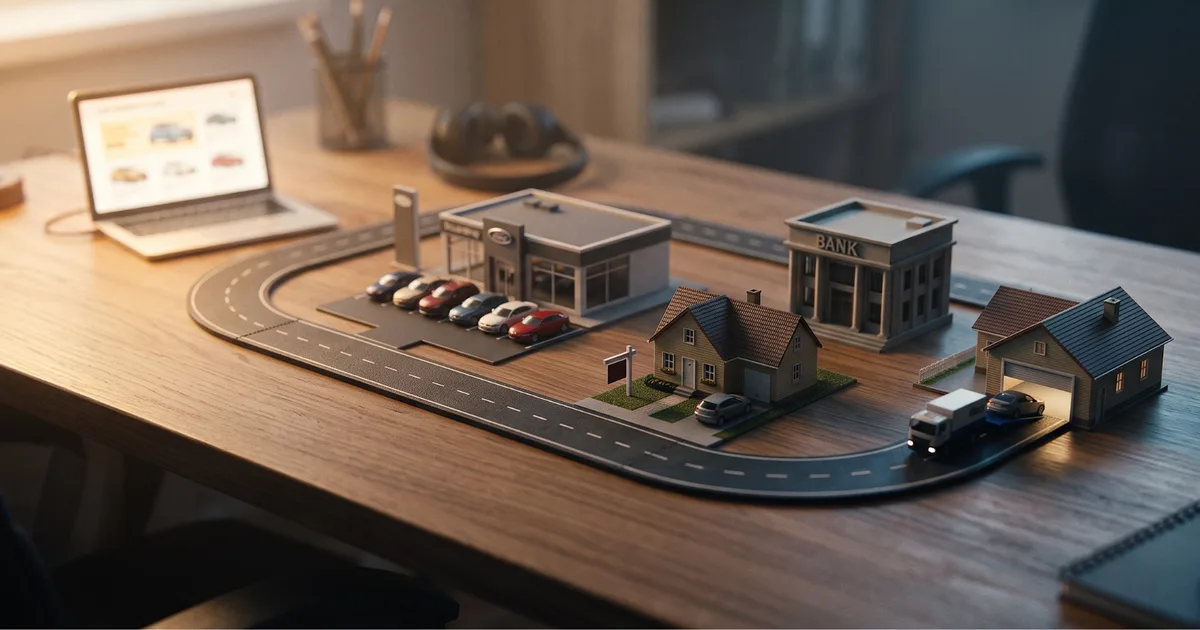
There are three real paths, and the best way to sell a car is the one that matches what you are optimizing for, because the price you can expect and the work required differ sharply between them.
| Method | Typical money | Speed | Effort |
|---|---|---|---|
| Instant cash offer (CarMax, Carvana, dealers) | Lowest to middle | Same day to 7 days | Minimal |
| Dealer trade-in | Lower, plus a sales tax credit in most states | Same day | Minimal |
| Private sale | Highest, capturing the private-party premium | Two to six weeks | Highest |
Dealer Trade-In
Trading in is the path of least resistance: the dealer appraises the car, applies the value against your next vehicle, and handles every piece of paperwork, including paying off a loan. The quiet advantage is tax. In most states, sales tax on your next car is calculated after subtracting the trade-in value, which can claw back several hundred dollars of the price gap versus selling privately. Our guide to trading in a vehicle covers how to negotiate the trade separately from the purchase.
Instant Cash Offer
Companies like CarMax and Carvana will quote your car online in minutes and pay within days, no strangers test-driving your car, no listing to manage. The convenience costs real money versus a private sale, but the offers are firm enough to serve another purpose: they set a guaranteed floor under your negotiations everywhere else. Our breakdown of selling a car to CarMax walks through how the largest of these programs actually works.
Selling It Yourself
A private sale is how to sell your car for the most money. You do the pricing, listing, showing, and paperwork, and in exchange you capture the margin a dealer or instant-offer service would have kept. It is the right call when your car is desirable, your schedule has room, and a few hundred to a few thousand extra dollars matters. For specialty vehicles the gap is even wider, which is why selling a classic car is almost always a private-market or auction exercise.
How Long Does It Take to Sell a Car?
An instant cash offer or trade-in closes the same day to within a week. A private sale typically runs two to six weeks from listing to payment, and your price does most of the deciding: cars priced at the data move in days, while cars priced on hope sit for months. Preparation shortens the timeline more than platform choice does, because complete photos and ready paperwork remove the delays that buyers actually abandon deals over.
How to Get Your Car Ready to Sell
Preparation is the cheapest value you will ever add to a vehicle. Buyers pay for the impression that a car was cared for, and that impression is built in an afternoon.
Ensure the Car Is Clean
Wash and wax the exterior, vacuum and wipe down the interior, and remove every personal item. A professional detail runs $100 to $300 and strengthens first impressions, photos, and buyer confidence, because a spotless car signals a maintained car.
Gather All Relevant Documents
You need the title (or your lender’s payoff information if the car is financed), current registration, and every maintenance record you can find. A folder of oil-change receipts does more for buyer trust than any sentence in your listing. If the title is lost, request a duplicate from your state DMV before you list, not after you find a buyer.
Make Any Needed Repairs
Fix what is cheap and visible: bulbs, wipers, fluid top-offs, a windshield chip. Skip what is expensive, because a $1,200 repair rarely returns $1,200 in sale price. Disclose bigger issues honestly and price them in instead. An inspection report from your mechanic, good or bad, is a negotiating asset either way.
Photograph the Car Before You Need To
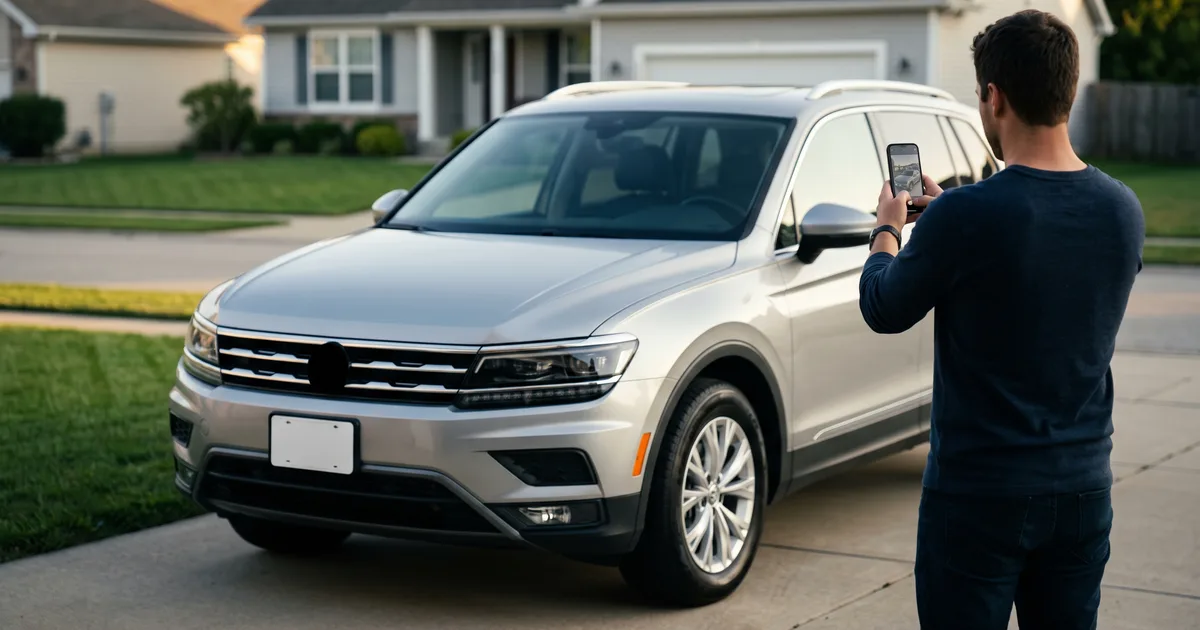
Shoot the car right after detailing, in daylight, before daily driving undoes the work. You will want the photos ready the moment you choose where to list.
Determine the Price for Your Car
Price from data, not attachment. Pull the private-party and trade-in values from the major pricing guides, then check what identical cars, same year, trim, mileage, and region, are actually listed for near you. Our guide on how to find the value of your car compares the pricing tools and explains why their numbers differ. Set your asking price slightly above your real target to leave negotiating room, and know your walk-away number before the first buyer calls. An instant cash offer, collected even if you never take it, turns that walk-away number from a guess into a guarantee.
Expect negotiation and plan for it. Many private buyers open below asking, so a car priced at your true target has nowhere to go but down. Hold your number by pointing at your evidence, the listings you researched and the records folder, rather than by arguing. The seller with data and a firm floor wins most exchanges, and the instant-offer quote in your pocket means you never have to accept a private offer worse than your guaranteed one.
Where to Sell Your Car
Sellers asking where to sell my car usually expect a single right answer, but the honest one is: wherever your specific car’s buyers already look. Where to sell your car well depends on what the car is, not on which platform advertises loudest.
Online Marketplaces
Selling on Autotrader, Cars.com, CarGurus, and the sell-your-car programs on the major platforms reaches the widest audience for mainstream vehicles. Fees and audiences differ meaningfully between them, and our ranked review of the best used car websites covers which platform fits which kind of sale.
Dealerships
Any franchise dealer will buy a clean used car outright in 2026, not just as a trade. Getting a buy offer from two dealers plus one instant-offer service takes a single morning and gives you a real market floor.
Private Selling on Facebook and Craigslist
Facebook Marketplace is one of the largest private-sale channels and tends to work best for lower- and mid-priced vehicles. It is also where the least serious buyers live, so screen hard: talk on the phone before meeting, meet in daylight at a busy public place (many police stations offer exchange zones), and bring a friend to test drives.
Enthusiast Markets and Auctions
Trucks sell well in truck country, convertibles sell in spring, and collector cars sell to collectors. Niche forums, clubs, and online auctions reach buyers who pay for what generalist marketplaces discount.
How to Advertise Your Car
Much of how to sell your car quickly comes down to listing quality. Good listings are not creative writing; they are evidence.
Pictures
Fifteen to twenty useful photos beat five vague ones. Cover every exterior angle, the full interior, the odometer, the engine bay, the tires, and every flaw. Photographing the defects yourself builds more trust than a buyer discovering them in person.
Honesty
State the mileage, accident history, title status, and known issues plainly. Honest listings filter out the buyers who would have walked anyway and pre-build trust with the ones who show up, which shows up later as smoother negotiation.
The Details Buyers Actually Search
Include trim level, drivetrain, fuel economy, maintenance highlights, and how the car was used. “Adult-owned, highway commuter, synthetic oil every 5,000 miles” answers the questions serious buyers ask first.
Closing the Sale: Payment, Title, and Handoff
Once a buyer commits, how to sell your car safely comes down to sequence. Exact title, plate, and tax requirements vary by state, so verify the specifics with your state DMV before closing, then do these in order and nearly nothing can go wrong:
- Payment clears first. Wire transfer, cash counted at a bank, or a cashier’s check verified with the issuing bank. Funds confirm before any document is signed.
- Sign the title and complete the bill of sale. Follow your state’s signature format exactly and record the odometer reading, which federal law requires disclosing for most vehicles under 20 model years old. Both parties keep a copy of the bill of sale.
- Remove your plates. In most states the plates stay with you, not the car. Check your state’s rule before the handoff.
- File the release of liability with your DMV the same day, so tickets and accidents after the sale legally belong to the new owner.
- Cancel your insurance only after the title has transferred and the release is filed, never before the car leaves your possession.
The whole close takes under an hour when the paperwork is ready, which is exactly why the documents folder from the preparation step earns its keep at the finish line.
Selling to a Buyer in Another State
Here is the part of selling a car that has quietly changed the most, and the part we know best. Online listings travel, and the best offer for your car increasingly comes from a buyer two states away, especially for trucks, convertibles, low-mileage cars, and anything with an enthusiast following. Sellers who entertain distant buyers widen their pool and usually their price.
The mechanics are simpler than most sellers expect. Payment clears first, always, by wire transfer or verified funds, before anything moves. The signed title travels by tracked overnight mail or changes hands at delivery, depending on what you and the buyer agree. And the car itself ships on an open carrier, which is our world: door-to-door transport with a vetted, insured carrier, typically picked up within 1 to 3 business days. You do not even need to be there when the truck arrives, since someone you authorize can release the vehicle with the keys.
A typical version looks like this: a seller in Atlanta accepts a wire from a buyer in Chicago, overnights the signed title once the funds clear, and a vetted carrier picks the car up from the seller’s driveway and delivers it to the buyer in Chicago a few days later. Nobody flies anywhere, and the seller got a better price than any local offer.
A steady share of the vehicles SAKAEM moves are exactly these transactions, private sales and online-platform purchases meeting their buyer. Shipping usually costs the buyer a few hundred to a little over a thousand dollars depending on distance, and offering to coordinate delivery is a cheap way to make your listing stand out. Our car shipping service for online buyers and sellers covers how the handoff works end to end.
Bottom Line
Knowing how to sell a car in 2026 mostly means matching the method to your priorities: the best way to sell a car for speed is an instant offer or trade-in, the best way to sell it for money is privately, and every path benefits from clean preparation, data-driven pricing, and patience on payment. And when the best buyer turns out to live 800 miles away, that is a solvable logistics problem rather than a lost sale. SAKAEM Logistics arranges door-to-door transport for exactly these handoffs, backed by vetted carriers and a 4.6-star average across 544+ Google reviews. Get an instant transport quote if your sale needs the car delivered.
Selling a Car FAQ
How do I safely accept payment when selling my car?
Wire transfer and cash counted at the buyer’s bank are the safest options, and a cashier’s check should be verified with the issuing bank before you sign anything over. Never accept personal checks, payment plans, or overpayment arrangements, and never release the car or title until funds have fully cleared.
How do I transfer the title to the new owner?
Sign the title exactly as your state DMV requires, record the odometer reading, and complete a bill of sale with the price, date, and both parties’ information. Requirements vary by state, so check both your DMV rules and the buyer’s, and file the release-of-liability notice with your state promptly after the sale.
What paperwork do I need to sell my car?
At minimum, the vehicle title and a bill of sale. Some states also require an odometer disclosure statement, emissions documentation, or a release-of-liability form, and a financed car adds the lender’s payoff instructions. Confirm the exact list with your state DMV before the sale rather than at the handoff.
Is it better to sell my car to a dealership or an online car-buying service?
They usually land within a few hundred dollars of each other, so get both quotes, since it takes one morning. Dealers can be stronger when your car fits their lot’s needs, while online services win on pure convenience with pickup from your driveway.
Can I sell a car if I still have a loan on it?
Yes. Get a payoff quote from your lender first, and know that dealers and instant-offer services handle lender payoff routinely, which makes them the easiest route for financed cars. In a private sale, close the deal at the lender’s office or through an escrow service so the payoff, title release, and payment happen together.
What are common scams to avoid when selling a car?
The classics are fake cashier’s checks, deliberate overpayment with a refund request, and buyers who want the car shipped before payment clears. The FTC’s consumer guidance covers the current patterns, and one rule defeats nearly all of them: no cleared funds, no car, no title.
Do I need a bill of sale?
Yes, even where your state does not strictly require one. It documents the price, date, mileage, and as-is terms, protecting you if the buyer disputes the condition later or delays registering the vehicle.
What if my buyer lives in another state?
Take payment by wire before anything moves, send the signed title by tracked mail or exchange it at delivery, and arrange transport on an insured carrier. Vehicle shipping for a cross-state sale typically costs a few hundred to a little over a thousand dollars, usually paid by the buyer.
When is the best time of year to sell a car?
Spring through early summer brings the most buyers and the strongest prices for most vehicles. Convertibles and sports cars follow the sun, 4x4s and AWD vehicles sell best heading into winter, and any car sells better before a milestone like 100,000 miles.
Should I let strangers test drive my car?
Yes, serious buyers reasonably expect it, but on your terms: verify a driver’s license first, ride along, plan the route yourself, and meet at a busy public location rather than your home.