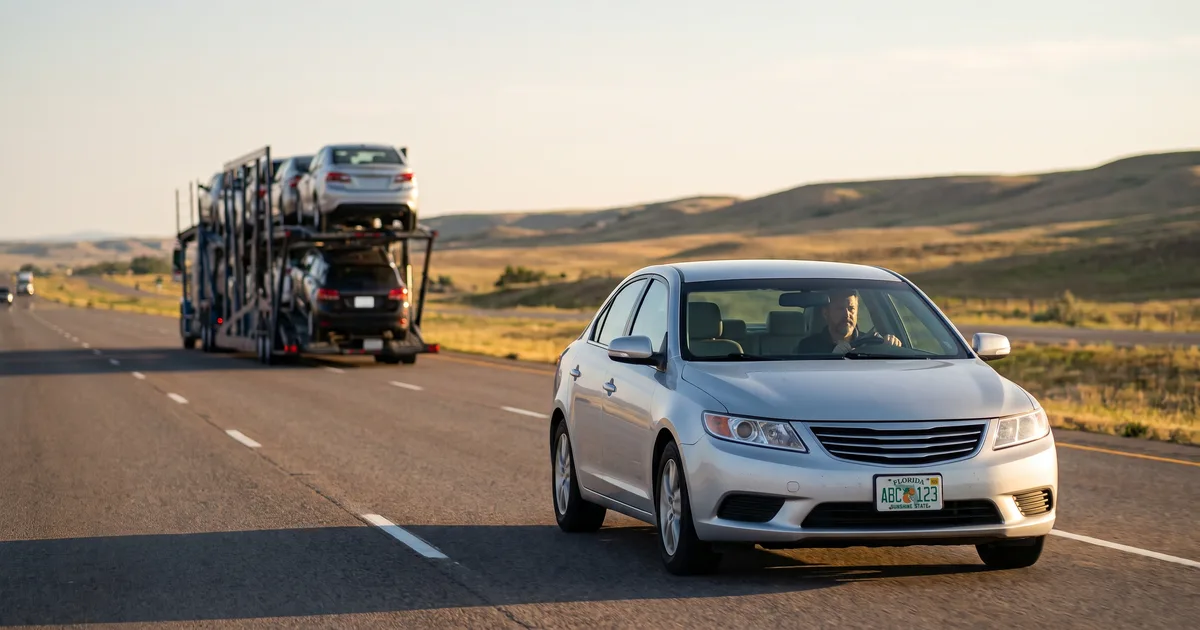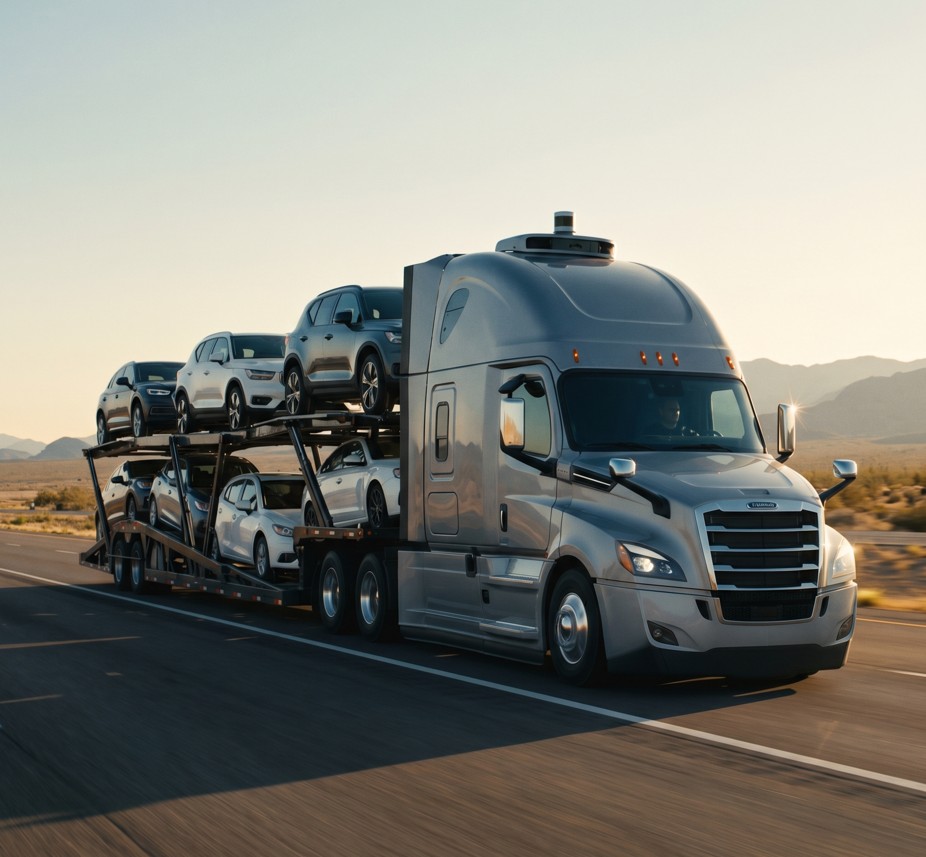


Auto transport is the service of moving a vehicle on a specialized car carrier truck instead of driving it. Driving 2,000 miles sounds cheaper than shipping — until you add fuel, hotels, meals, depreciation, and four days of your life; over long distances, putting the car on a carrier often costs less than driving it yourself. Every legitimate transport company operating across state lines must be registered with the Federal Motor Carrier Safety Administration and carry cargo insurance — which is also why the industry is safer than most first-time shippers expect.
SAKAEM Logistics has arranged interstate vehicle shipments as a licensed auto transport broker since 2017. This guide lays out the advantages of using car carrier transport in 2026 with the actual dollar math, the honest downsides no one advertises, and the situations where driving yourself is the smarter call.
Key Takeaways
- Shipping a 2,000-mile move typically costs $1,050–$1,300 and beats the true cost of driving once wear, lodging, and lost days are counted.
- A cross-country drive adds around 2,800 miles of depreciation and takes four to five days; transport reduces your involvement to two 30-minute handoffs.
- Carrier cargo insurance covers your vehicle in transit, documented by a bill of lading inspection at pickup and delivery.
- Driving yourself still makes sense under about 300 miles, where per-mile transport pricing is at its highest.
What Are Auto Transport Services?
An auto transport service moves your vehicle from one address to another on a car carrier — the same class of truck that delivers new inventory to dealerships. Most shipments are brokered: a licensed broker like SAKAEM prices your route, assigns a vetted carrier, and manages the shipment, while the carrier’s driver does the physical transport. The split matters because the broker’s job is quality control — checking authority, insurance, and safety records before your car ever gets loaded.
The process has three steps. You get a quote based on route, vehicle, and trailer type, then book a pickup window. At pickup, the driver walks the car with you and records its condition — photos included — on the bill of lading, the legal document that doubles as your inspection record. At delivery, you repeat the same inspection against the pickup record before signing off. That paper trail is what makes the insurance protection in benefit four enforceable, so treat both inspections seriously.
The Benefits at a Glance
| Benefit | What it’s worth |
|---|---|
| Time savings | 4–5 driving days become one travel day |
| Total cost | Often $150–$500 less than driving, all-in, past 1,000 miles |
| Vehicle wear | ~$900 of depreciation avoided on a 2,000-mile move |
| Insurance | Carrier cargo coverage, federally required, documented by BOL |
| Door-to-door | Two ~30-minute appointments, no terminals |
| Flexibility | Open, enclosed, multi-car, seasonal, and expedited options |
| Belongings | Up to ~100 lbs ride free with SAKAEM |
| Handling | Professional loading, securement, and hours-of-service compliance |
Benefits of Using Car Carrier Transport
1. You save days, not hours
A coast-to-coast drive covers about 2,800 miles. At a realistic 450 miles a day, that is four to five days behind the wheel, plus the recovery time nobody budgets for. Even a “short” 1,000-mile move eats a full weekend and change. Shipping the car and flying turns the same relocation into a six-hour travel day.
For moves with a hard start date on the other end — a new job, a military report date, a semester start, a closing date on a house — the calendar math alone settles the question. The car travels while you work your notice period, pack, or fly ahead to get the keys.
2. Shipping often costs less than driving — once you count everything
Out-of-pocket driving costs look deceptively low. Fuel for 2,000 miles runs about $270 in a 25-mpg car at 2026 prices of around $3.40 a gallon. It is the hidden line items that flip the comparison, and the IRS’s standard mileage rate — 70 cents per mile, the government’s own estimate of what operating a car actually costs — is the honest yardstick.
| Cost item (2,000-mile move) | Driving yourself | Shipping + one-way flight |
|---|---|---|
| Transport / fuel | ~$270 fuel | $1,050 – $1,300 open transport |
| Lodging (3 nights) | ~$390 | $0 |
| Meals on the road | ~$150 | $0 |
| Flight | $0 | $150 – $250 |
| Vehicle wear and depreciation | ~$900 (IRS rate minus fuel) | $0 |
| Days spent | 3 – 4 days | A few hours |
| Realistic total | ~$1,700 + your time | $1,200 – $1,550 |
Distance works in the shipper’s favor, because carriers price long hauls lower per mile — a full truck running a popular lane uses its capacity efficiently, and that efficiency shows up in your quote:
| Distance | Typical cost per mile (open transport, 2026) | Example |
|---|---|---|
| Under 500 miles | $1.00 – $1.50 | 300 mi ≈ $350 – $450 |
| 500 – 1,000 miles | $0.75 – $1.00 | 800 mi ≈ $650 – $850 |
| 1,000 – 1,500 miles | $0.60 – $0.80 | 1,200 mi ≈ $750 – $1,000 |
| 1,500 – 2,500 miles | $0.50 – $0.65 | 2,000 mi ≈ $1,050 – $1,300 |
| Over 2,500 miles | $0.40 – $0.55 | 2,800 mi ≈ $1,150 – $1,550 |
Run your own numbers before deciding — the break-even point moves with your fuel economy, hotel tolerance, and what a day of your time is worth.
3. Zero added miles, zero added wear
Every mile you drive costs money later — in oil-change intervals, tire tread, brake life, and resale value. A 2,800-mile road trip is a meaningful bite out of a lease mileage cap, where overage charges commonly run 15–30 cents per mile, and a documented deduction from any future appraisal. Used-car buyers and dealers price on odometer bands; crossing one because of a single relocation is an expensive way to move a car.
On a transport truck the odometer stays put, which is exactly why dealers, collectors, and lease-return customers ship vehicles they could technically drive. The math sharpens further for classic and collector cars, where originality and low mileage are the value — and where a highway stone chip costs more than the entire transport.
4. Your car is insured in transit — with a paper trail
Federal rules require motor carriers to carry cargo insurance, and a competent broker verifies it before assigning your vehicle. SAKAEM runs a three-point check on every carrier: active USDOT and MC authority, a certificate of insurance naming the shipment, and the carrier’s safety record, including inspection and crash history in FMCSA’s public database.
If damage does occur — it is rare, and usually cosmetic — the claim path is documented and enforceable. Note the difference at delivery on the bill of lading before signing, photograph it, and file with the carrier’s insurer; straightforward claims typically resolve in two to six weeks. Compare that with a do-it-yourself drive, where a cracked windshield or a parking-lot dent at a motel is simply your problem, and any claim runs through your own policy and deductible.
5. Door-to-door service means two short appointments
Standard service today is door-to-door: the driver picks up and delivers as close to your addresses as the truck can legally and safely operate. A 75-foot car hauler cannot turn around in a cul-de-sac, so occasionally the meeting point is a nearby parking lot — but that is the extent of the compromise.
Your total time commitment is roughly 30 minutes at pickup for the inspection and the same at delivery. The signer doesn’t even have to be you: any adult you designate — a family member, a colleague, the seller of the car you just bought — can hand over or receive the vehicle. That last part is what makes shipping work for online car purchases, where the car ships straight from the seller’s driveway without you ever flying out.
6. There is a service level for every budget and vehicle
The industry offers real choices rather than one product. Open transport is the cost-efficient default that moves most vehicles, including brand-new dealership inventory. Enclosed transport costs roughly 50–60% more and shields high-value vehicles from weather and road debris.
Beyond trailer type, the model flexes to the situation. Shipping multiple cars on one order usually prices better per vehicle, since they fill adjacent slots on the same trailer. Seasonal shippers get a mature, predictable service: the snowbird routes between the Northeast and Florida run like clockwork every October and April, though booking early matters precisely because demand spikes. Students, military families, and expedited-date shippers each have an established option rather than a workaround.
7. Your belongings can ride along — within limits
Most customers assume the car must ship empty. In practice, SAKAEM allows up to about 100 pounds of personal items free of charge, packed in the trunk or rear cargo area below the window line. Above that, acceptance is at the carrier’s discretion and typically adds $75–$100 per additional 100 pounds.
It is not a moving-container substitute — carriers weigh in at DOT scales, and personal items aren’t covered by cargo insurance the way the vehicle is — but a set of seasonal clothes or the last boxes that didn’t fit in the moving truck can legitimately travel with the car. The full rules are in our guide to shipping a car with belongings inside.
8. Professional handling by drivers who do this daily
Loading a vehicle onto a two-deck trailer, securing it against 1,500 miles of vibration, and unloading it on a residential street is a skill. Transport drivers do it several times a day, under federal hours-of-service and securement rules, with equipment built for the job. Low-clearance sports cars ride top-deck with race ramps, non-runners get winched, oversized trucks get measured before booking — each has a loading protocol.
The eight-benefit list ends here for a reason: professional handling is what makes every other benefit deliverable.
The Honest Downsides — What the Sales Pages Skip
No transport company’s benefits page is complete without the tradeoffs, so here are the real ones:
- Windows, not appointments. Standard transport gives you a pickup window of one to a few days, not a fixed hour. Carriers are sequencing ten vehicles across a thousand miles; weather and traffic move schedules. If you need date certainty, expedited service buys it — at a premium.
- Quotes are market-rate, not fixed until assignment. Transport pricing follows lane supply and demand, like airfare. A quote is a well-informed market price for your route and dates, and it can move until a carrier is assigned. Any company promising a locked bargain price weeks out is usually planning to renegotiate at pickup — which brings us to vetting, below.
- Open transport means exposure. Your car rides outside, in weather, like it would on any highway drive. Arriving dusty is normal; that is what the delivery inspection and a car wash are for. If exposure is unacceptable, enclosed transport exists for exactly that reason.
None of these are reasons to avoid shipping — they are reasons to book with accurate expectations and a broker who states them upfront.
Professional Car Transport vs. DIY Car Transport
Auto transport is not the right answer for every move, and pretending otherwise helps nobody. Drive yourself when:
- The route is under about 300 miles. Short hauls carry the highest per-mile transport pricing, and a half-day drive doesn’t cost you lodging or meaningful wear.
- Your dates are rigid to the hour. If a fixed schedule matters more than price and expedited service doesn’t fit the budget, your own steering wheel is the only guaranteed timetable.
- You want the road trip. If the drive is the point, no cost table beats it.
- The math is genuinely close. A fuel-efficient car, one driver, no hotel nights — around the 500-mile mark the comparison can go either way. Run both numbers; our ship-versus-drive breakdown walks through the full calculation.
How to Choose a Transport Company (and the Red Flags)
The benefits above assume a legitimate operator, so verify before you book. Check the company’s USDOT and MC numbers against FMCSA’s database, confirm whether you’re dealing with a broker or a carrier and that the license matches, and read recent reviews on platforms the company can’t edit.
Then watch for the classic warning signs:
- A quote far below everyone else’s. Lowball quotes get cars listed at prices no carrier will accept; the “adjustment” call comes days later, when you’re out of time. Our guide to auto transport scams breaks down how the play works.
- “Fully insured” with no paperwork. Legitimate companies produce a certificate of insurance on request. The phrase without the certificate is a slogan, not coverage.
- Large upfront deposits before carrier assignment. Reputable brokers charge when a carrier is assigned — SAKAEM charges $0 upfront.
- No physical address, no DOT number on the website. Federal registrants must display authority. If you can’t find it, they may not have it.
Bottom Line
The advantages of using car carrier transport add up over any serious distance: a multi-day, wear-heavy drive becomes two short appointments, with the true total cost usually landing below what driving actually costs once lodging, meals, and depreciation are counted. The protection is real and documented: federally required cargo insurance, verified carrier credentials, and a bill of lading inspection at each end. The honest tradeoffs — pickup windows, market-rate pricing, open-air exposure — are manageable with accurate expectations and the right trailer type.
SAKAEM Logistics has brokered exactly this service since 2017, holding a 4.6-star average across 544+ Google reviews. Get an instant quote for your route — pricing is market-rate for your specific lane and dates, with $0 due upfront.
Advantages of Car Carrier Transport FAQ
How much does auto transport cost in 2026?
Most interstate open-transport shipments run $500–$1,800, driven mainly by distance, vehicle size, trailer type, and season. Short routes price higher per mile; cross-country routes drop to roughly $0.40–$0.55 per mile.
Is it cheaper to ship a car or drive it?
Past roughly 500 miles, shipping usually wins once you count fuel, lodging, meals, and the IRS-estimated 70 cents per mile of vehicle operating cost. Under 300 miles, driving is almost always cheaper.
How long does car shipping take?
Coast-to-coast shipments typically take 7–10 days door to door; regional moves of 500–1,000 miles usually deliver in 2–4 days. Pickup windows, weather, and route density all affect timing.
Is auto transport safe for my vehicle?
Yes. Vehicles ride secured on purpose-built carriers, accumulate no road miles, and are covered by the carrier’s federally required cargo insurance. Condition is documented at pickup and delivery on the bill of lading.
Does auto transport include insurance coverage?
The carrier’s cargo insurance covers transit damage as a legal requirement, not an upsell. Ask your broker for the carrier’s certificate of insurance — SAKAEM verifies it before every assignment.
Can I leave stuff in my car during transport?
Yes, within limits: up to about 100 pounds packed below the window line ships free with SAKAEM. Beyond that, carriers may accept more at their discretion for roughly $75–$100 per additional 100 pounds.
What is the difference between open and enclosed transport?
Open transport carries vehicles on an exposed multi-car trailer and is the standard, most economical option. Enclosed transport uses a fully covered trailer for weather and debris protection, at roughly 50–60% more.
Can weather delay car shipping?
Yes. Snow, storms, and high winds can push pickup or delivery windows, since carriers won’t run unsafe roads with ten vehicles in tow. Reputable brokers communicate delays rather than force schedules.
Are there seasonal advantages to shipping instead of driving?
Yes — shipping shines when driving is worst. Winter routes over mountain passes, summer heat across the Southwest, and snowbird season traffic are all risks the carrier absorbs. Book earlier in peak months (January, June–August, October), since demand raises prices and fills trucks.
Can I ship multiple vehicles at once?
Yes — multi-car shipments on the same order are routine and usually price better per vehicle, since they fill adjacent slots on one trailer.
Do I have to be present at pickup and delivery?
Someone over 18 must be there to sign the bill of lading at each end, but it doesn’t have to be you. A family member, friend, or colleague can act as your representative.
Is shipping a car better than renting a trailer or tow dolly?
Usually, yes. Trailer rental for a one-way 2,000-mile move typically costs $400–$800 before the tow vehicle’s extra fuel burn, and you still drive every mile yourself — plus towing insurance gaps and the skill required to back up a loaded trailer. Professional transport costs somewhat more and removes all of it.
Can I ship an electric vehicle?
Yes — EVs ship on the same carriers, though their extra battery weight can affect pricing and trailer slot planning. Ship with the charge between 30% and 50%; details are in our EV shipping guide.
How do I know an auto transport company is legitimate?
Check the company’s USDOT and MC numbers in FMCSA’s public database, confirm insurance, and read recent reviews. A legitimate broker will name the assigned carrier so you can verify its safety record directly.