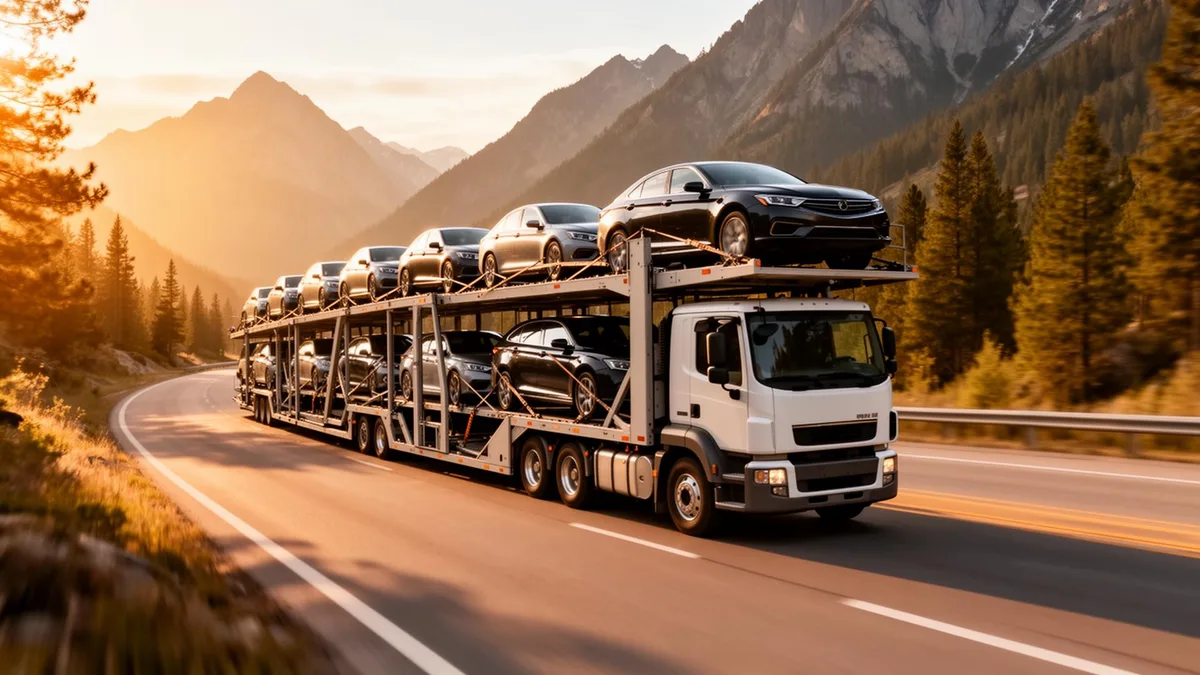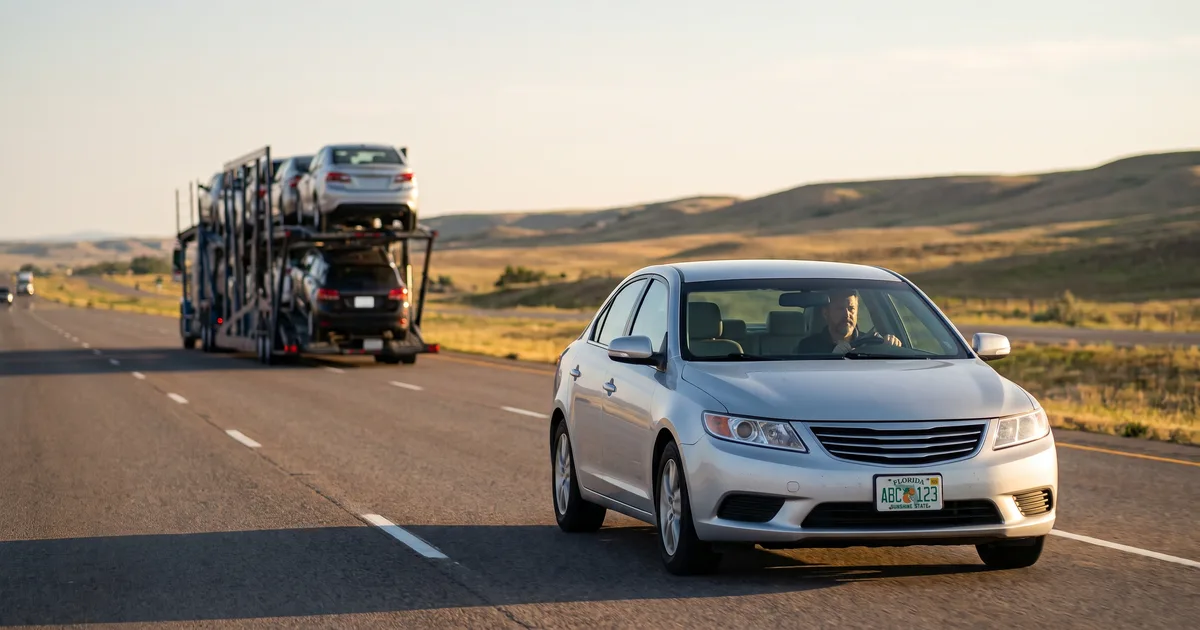
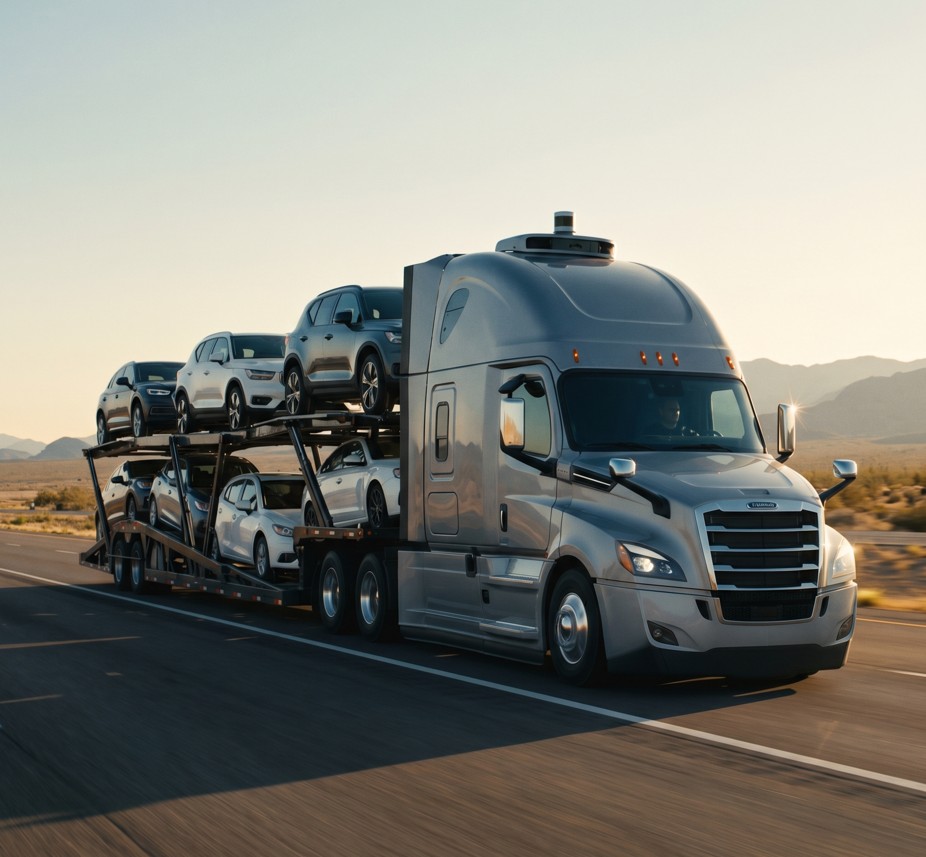

No — self-driving trucks won’t be shipping most consumer vehicles in 2026, and won’t for years. Autonomous freight is expanding fast on highways, but car shipping still depends on humans for the parts that matter most: loading and securing each vehicle by hand, residential pickup and delivery, and the in-person inspection that backs your insurance claim. Self-driving trucks are no longer a concept video — as of 2026 they’re hauling real freight on real highways — but moving an individual car to someone’s driveway is a fundamentally different job. Here’s where the technology actually stands and what it means when you ship a car.
The 30-Second Answer
- Autonomous trucks are real in 2026 — but only on limited highway, hub-to-hub routes, mostly across the Sun Belt.
- Car shipping is still entirely human-operated, and it stays that way in the near term.
- Hand-loading, residential pickup and delivery, and the Bill of Lading inspection can’t be automated today.
- For your move, what matters isn’t robots — it’s choosing a licensed, insured, properly vetted carrier.
It helps to separate hype from reality. The companies leading this space move pallets and containers between distribution hubs on interstate highways. Car shipping is a different animal: specialized carriers, vehicles loaded and secured by hand, residential pickups, and a documented condition inspection at both ends. For the rules that govern every carrier on the road today, autonomous or not, the FMCSA’s safety regulations remain the baseline, and they were written around a human behind the wheel.
Shipping a car now, not in the future?
Get an instant quote online or call us at (888) 725-0005 for a personalized price. Get a Free Instant Quote
Where Self-Driving Trucks Actually Are in 2026
The progress is real, and it accelerated sharply over the past year. Aurora, the current front-runner, surpassed 250,000 driverless miles by early 2026 and began running fully driver-out loads in the spring. Its driverless fleet is small but growing fast: roughly ten driverless trucks today, with plans to exceed 200 by the end of 2026 and more than a thousand the year after.
The footprint is just as telling as the numbers. Aurora’s driverless lanes run through Texas, New Mexico, and Arizona, with expansion mapped across the Sun Belt. Competitors like PlusAI and Waabi are pursuing their own driver-out operations and factory-built autonomous trucks. The pattern is consistent across all of them, and it matters for car shipping:
-
Highway-only, hub-to-hub: The trucks handle long, predictable interstate stretches between freight terminals.
-
Warm, dry, flat geography: Sun Belt routes avoid the snow, ice, and mountain grades that still challenge the sensors.
-
Level 4 with oversight: These are not go-anywhere vehicles. Humans still manage complex city driving and anything outside the mapped corridors.
In other words, 2026 is the year driverless trucking became commercially real on a narrow slice of the freight network. It is not the year trucks learned to do everything a human driver does, and even the people building these systems say so. Aurora’s own leadership has put full replacement of human drivers decades away, not years.
The Economics Pushing It Forward
The reason billions are flowing into this technology comes down to two numbers. The American Trucking Associations pegs the driver shortage at more than 80,000 in 2026, and projects it could reach 160,000 by 2030. An aging workforce, a demanding lifestyle, and too few new entrants mean that gap won’t close on its own, which is a genuine strain on a freight system that moves most of the country’s goods.
The cost math is the other half. A human-driven truck runs about $2.26 per mile on average today. An autonomous truck currently costs far more to operate, around $8.60 per mile, once you account for the sensors, computing, support, and oversight. That is why this is not yet a money-saver. The bet is on the long curve: as the hardware matures and scales, projections put autonomous operation near $2 per mile by 2035, at which point a truck that can legally run without mandatory rest breaks becomes genuinely cheaper for line-haul freight.
For everyday consumers shipping a car, none of that translates into a lower quote today, or soon. The economics that excite freight investors apply to high-volume, point-to-point hauling, not to the lower-volume, hands-on work of moving individual vehicles to people’s homes.
Why Car Shipping Is Harder to Automate Than Regular Freight
This is the part the headlines miss. Most coverage treats “trucking” as one thing, but a car carrier and a freight box truck have almost nothing in common operationally. The table below shows why the freight where driverless trucks are advancing is the opposite of how cars move:
| Freight truck (line-haul) | Car carrier (auto transport) | |
|---|---|---|
| Route | Hub-to-hub on interstates | Door-to-door, residential |
| Cargo | Uniform pallets / containers | Individual vehicles, varied sizes |
| Loading | Forklifts — automatable | Hand-driven on, strapped down |
| Delivery | Wide commercial terminal | Tight neighborhoods, driveways |
| Inspection | Minimal | In-person Bill of Lading at both ends |
Three features of auto transport make it far slower to automate than line-haul freight.
Loading and securing is skilled manual labor. A car hauler isn’t a sealed box you fill with pallets. Each vehicle has to be driven onto a multi-level open or enclosed trailer, positioned with inches of clearance, angled on ramps, and strapped down by hand so it survives hundreds of miles of road vibration. That is judgment and dexterity, not a task a self-driving system performs. Even a fully autonomous highway truck would still need a person to load it.
The job is residential, not hub-to-hub. Driverless freight works because it runs terminal to terminal on interstates. Car shipping is usually door-to-door — the driver navigates real neighborhoods, tight streets, and cul-de-sacs to reach your driveway, then does it again at delivery. That last-mile, into-the-neighborhood reality is precisely the environment autonomous trucks are not cleared for.
Condition inspection is a human, legal step. At pickup and delivery, the driver and customer walk the vehicle together, note any existing damage, take photos, and sign the Bill of Lading. That document is the backbone of any insurance claim. It’s a trust-and-accountability handshake between two people, and it doesn’t have an automated equivalent. For more on how that whole process works end to end, see our guide on how to ship a car.
So even in a future where autonomous trucks own the interstate, the bookends of car shipping — load it, secure it, inspect it, hand it over in a driveway — keep humans essential far longer than they will be for hauling freight between warehouses.
What It Means When You Ship a Car
Stripping out the speculation, here is the honest near-term and long-term picture for customers.
Near term (the next several years): Nothing changes about how your car moves. A vetted human carrier picks it up, secures it, drives it, and delivers it, exactly as today. If anything, the driver shortage is the more immediate force shaping the market — it tightens capacity on some routes and is one reason pricing and delivery timing can swing seasonally.
Long term: The most likely first impact isn’t a robot in your driveway. It’s autonomous trucks taking over the long highway middle of a trip, with human drivers handling the loaded pickup and the final delivery — a hybrid model. If that lowers the line-haul portion of cost over the next decade, some of that efficiency could eventually reach consumer rates. But the personalized, hands-on parts of car shipping are not going away.
There’s also an insurance and liability question worth watching. When a driverless truck is involved in a loss, who is responsible — the technology company, the fleet, or the carrier? Those frameworks are still being written, which is one more reason the industry is moving deliberately. Today, every shipment in our network is backed by active carrier coverage, and understanding auto transport insurance matters far more to your move right now than any autonomous timeline.
When Will Self-Driving Trucks Actually Affect Car Shipping?
No one can predict this precisely, but based on current deployment, economics, and regulation, here’s a realistic outlook. The consistent theme: the hands-on parts of car shipping stay human the longest.
| Timeframe | Likely reality for car shipping |
|---|---|
| 2026 | Human carriers handle all car shipping; driverless trucks haul freight only on limited Sun Belt highways. |
| 2028 | Autonomous hub-to-hub freight routes expand; car shipping remains fully human-operated. |
| 2030 | Possible autonomous line-haul support on major freight corridors; loading, pickup, and delivery unchanged. |
| 2035+ | Falling per-mile costs make autonomous line-haul viable; a hybrid model (automated highway + human last-mile) becomes plausible for freight. |
| 2040+ | Broader autonomous adoption possible — but hand-loading vehicles and residential delivery are still human work. |
Treat these as directional, not dates on a calendar — regulation and public trust will move the timeline as much as the technology will.
The Regulatory and Safety Reality
Regulation is the quiet brake on all of this. As of 2026, no state permits fully driverless commercial trucking across all road types. The driver-out operations that exist run on specific approved corridors, and because there are no purpose-built federal rules for autonomous trucks yet, operators are largely self-certifying their safety. That is a workable arrangement for a few hundred trucks on mapped Sun Belt highways. It is a long way from a legal framework that would let a driverless car hauler roll up to a random address in any state and load a customer’s vehicle.
Until that framework exists — and it will take years of rulemaking, testing, and public trust to build — the safety and accountability of your shipment rests where it always has: on a licensed, insured, properly vetted carrier.
SAKAEM’s Take: Technology-Forward, Human-Vetted
We watch this space closely, because better technology genuinely helps customers. Route optimization, load-matching, and real-time logistics tools already make shipping faster and more reliable than it was even a few years ago. We’re all for the parts of automation that reduce friction.
But the heart of a good auto transport experience is still a trustworthy human driver and a broker who vets that driver properly. Since 2017, SAKAEM Logistics has built its reputation on exactly that, and it’s reflected in a 4.6 out of 5 rating across 544 verified reviews. As a licensed auto transport broker, our job is to confirm every carrier’s authority, insurance, and safety record before your vehicle is ever loaded — the human layer of accountability that no self-driving timeline replaces. Whether you’re shipping a car, a pickup or larger truck, or moving across state lines, the standard is the same.
Self-Driving Trucks and Car Shipping FAQ
Will a self-driving truck ship my car in 2026?
No. Driverless trucks in 2026 are limited to specific highway freight corridors, mostly in the Sun Belt, hauling cargo between terminals. Car shipping is done by human carriers, and that won’t change in the near term.
Are autonomous trucks actually on the road right now?
Yes, but in small numbers. Aurora surpassed 250,000 driverless miles by early 2026 and runs roughly ten driver-out trucks, with plans to exceed 200 by year-end. They operate on approved routes through Texas, New Mexico, and Arizona, not nationwide.
Will self-driving trucks make car shipping cheaper?
Not soon. Autonomous trucks currently cost about $8.60 per mile to run versus $2.26 for a human-driven truck. Costs may fall toward $2 per mile by 2035 for line-haul freight, but car shipping’s hands-on loading, residential delivery, and inspection keep human labor in the equation regardless.
Why can’t car carriers be automated like freight trucks?
Because the job isn’t just highway driving. Each vehicle must be loaded and strapped down by hand, picked up and delivered at residential addresses, and inspected in person at both ends. Those tasks require human skill and judgment that autonomous systems don’t have.
Will truck drivers be replaced by automation?
Not anytime soon. Even autonomous-trucking executives put full replacement decades away. The near-term model is hybrid — automated highway stretches with human drivers handling complex and last-mile work — especially in car shipping.
Is it safe to ship a car with autonomous trucks?
The question is mostly hypothetical for car shipping today, since human carriers do the work. For autonomous freight, no state yet allows fully driverless trucking on all roads, and operators self-certify safety on approved corridors.
Who is liable if a driverless truck damages a vehicle?
Liability frameworks for autonomous trucks are still being developed, which is one reason the industry is moving carefully. For today’s shipments, the carrier’s active cargo insurance and the signed Bill of Lading govern any claim.
Does the driver shortage affect car shipping?
Yes. The American Trucking Associations estimates a shortage of more than 80,000 drivers in 2026, rising toward 160,000 by 2030. That tightens capacity on some lanes and is a real factor in pricing and scheduling — more so than automation right now.
What should I look for when shipping a car today?
Focus on the fundamentals that still decide a good move: a licensed, insured carrier, verified reviews, transparent pricing, and a clear pickup and delivery process. Automation doesn’t change what makes a shipment go smoothly.
The Bottom Line
Self-driving trucks are a real and fast-moving development, and over the next decade they’ll reshape how freight crosses the country — starting with the highway middle of long hauls. But car shipping isn’t long-haul freight. The work that protects your vehicle — loading it by hand, reaching your driveway, inspecting it with you, and standing behind it with insurance — is human work, and it will stay that way well past the point where robots are hauling boxes between warehouses.
So when you ship a car in 2026, you’re hiring people, not algorithms — and the smartest move is still choosing a company that vets those people properly. See what your move costs and get a free instant quote today.