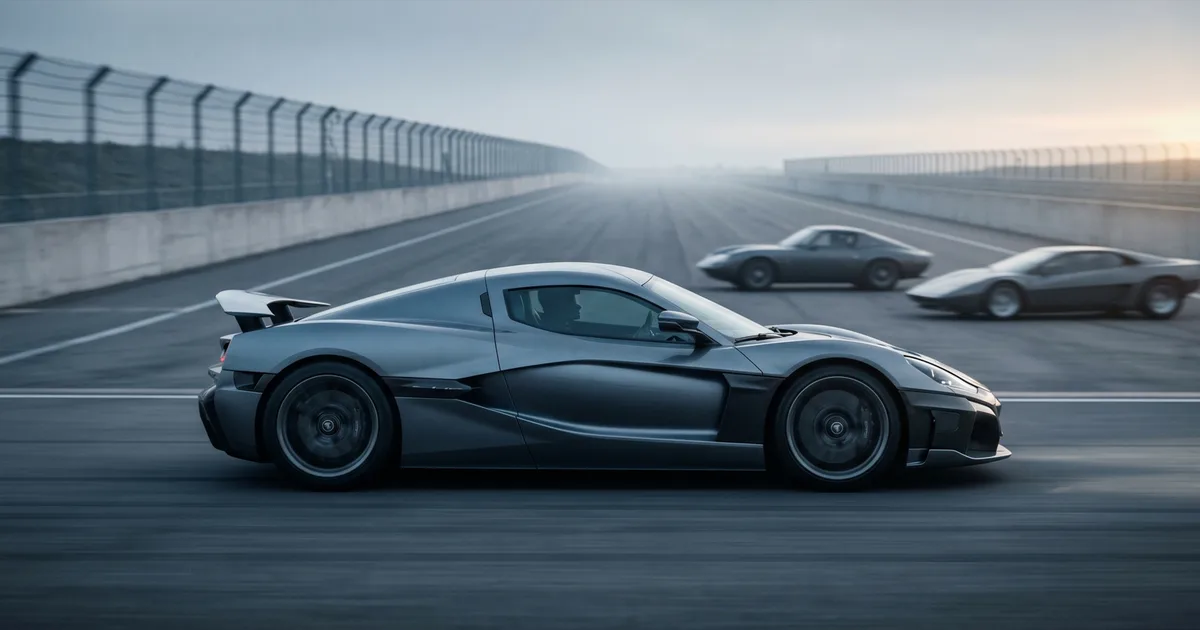

The fastest car in the world in 2026 is the Yangwang U9 Xtreme, which reached a verified 308.4 mph (496.22 km/h) on the ATP Papenburg high-speed track in Germany on September 14, 2025 — dethroning the Bugatti Chiron Super Sport 300+ that had held the production-car crown since 2019. With 2,977 horsepower (2,220 kW) split across four in-wheel electric motors and the world’s first production 1,200-volt architecture, BYD’s halo car redrew the line between gasoline hypercars and the electric machines now chasing them.
This guide covers the 12 fastest cars in the world right now, separating verified track records from manufacturer claims, walking through the safety engineering that keeps them controllable at extreme speed, and explaining how vehicles worth $1 million and up actually move between owners, auctions, and driving events.
Key Takeaways
- Yangwang U9 Xtreme holds the verified production-car top-speed record at 308.4 mph (set September 14, 2025), unseating the Bugatti Chiron Super Sport 300+.
- Top speed and acceleration are different crowns — Rimac Nevera R owns 0-60 mph at 1.74 seconds; McMurtry Spéirling does it in 1.4 seconds in prototype trim.
- Manufacturer-claimed speeds (Koenigsegg Jesko Absolut’s theoretical 330 mph) are not the same as verified two-way runs — the gap matters.
- Most hypercars are moved by enclosed transport rather than driven, with costs from $2,000 to $15,000+ per move depending on distance, climate control, and security requirements.
What Is the Fastest Car in the World in 2026?
The Yangwang U9 Xtreme is the fastest production car in the world as of 2026, with a top speed of 308.4 mph (496.22 km/h). BYD’s flagship electric hypercar achieved the record at the ATP Automotive Testing Papenburg track in Germany on September 14, 2025, beating the previous Bugatti Chiron Super Sport 300+ record (304.77 mph, set 2019) by more than 3 mph.
The run was completed by Marc Basseng, a veteran sports-car and endurance racer. The U9 Xtreme generates 2,977 horsepower (2,220 kW) from four independent in-wheel electric motors, each spinning to 30,000 rpm. The 1,200-volt electrical architecture is the first ever in a production car — twice the voltage of the existing 800V U9 — and the lithium-iron-phosphate Blade Battery is rated for 30C discharge. On the same day in September, the U9 Xtreme also clocked a sub-7-minute Nürburgring lap. Top Gear named it Moment of the Year.
Although “fastest car” and “fastest vehicle in the world” are often used interchangeably, the production-car category specifically excludes prototypes, track-only specials, and one-off concepts. By that standard, the U9 Xtreme is now the fastest vehicle in the world that an individual buyer can homologate, register, and own.
Production is capped at 30 units. No public US pricing has been announced — analysts expect a number above $1 million when it reaches private collectors.
The U9 Xtreme matters strategically. For the first time, the fastest production car in the world is electric — closing a chapter that began with combustion-engine speed records dating to the 1980s.
Top Speed Records: Verified vs Claimed vs Theoretical
Hypercar speed claims fall into three categories, and the difference between them is the difference between a record and a marketing line. For the historical record of every verified production-car speed run, see Wikipedia’s list of production car speed records.
| Category | What it means | Examples |
|---|---|---|
| Verified | Two-way average run on a measured track, witnessed by a third party (Guinness, sanctioning body) | Yangwang U9 Xtreme (308.4 mph), Bugatti Chiron Super Sport 300+ (304.77 mph), SSC Tuatara (282.9 mph two-way) |
| Manufacturer-claimed | Single-direction run or simulation, no third-party verification | Hennessey Venom F5 (~300 mph claimed), Bugatti Bolide (311 mph claimed track-only) |
| Theoretical | Calculated based on power, drag coefficient, and gearing — never actually attempted | Koenigsegg Jesko Absolut (330 mph theoretical) |
Verified records are what hold up. Manufacturer claims and theoretical top speeds make for great press releases, but they don’t dethrone the record holder until the run actually happens with witnesses.
The 12 Fastest Cars in the World
Yangwang U9 Xtreme
The current record holder. 308.4 mph verified, 2,977 hp, all-electric, four in-wheel motors, world’s first production 1,200V architecture. The car that ended the combustion era at the top of the speed charts. Limited to 30 units. Price: undisclosed, estimated >$1M.
Bugatti Chiron Super Sport 300+
Held the production-car crown from 2019 to 2025. 304.77 mph verified at VW’s Ehra-Lessien test track, with Andy Wallace driving. 1,578 hp from a quad-turbo 8.0L W16. 30 units built. The last W16 Bugatti to chase a production top-speed record. Price: ~$5M.
Bugatti Bolide
Track-only hypercar. Manufacturer claims 311 mph top speed, never independently verified. 1,824 hp W16. 40 units built. Not road-legal in any market. The most extreme W16 Bugatti ever built. Price: ~$4M.
Koenigsegg Jesko Absolut
Engineered specifically for outright top speed. Theoretical 330 mph based on power and aero modeling, but Koenigsegg has not attempted the run. 1,600 hp twin-turbo V8. 125 units planned. The only modern hypercar designed exclusively for top speed. Price: ~$3M.
Hennessey Venom F5
American hypercar. Claimed 311 mph, achieved 271 mph in single-direction testing — full two-way verification still pending. 1,817 hp twin-turbo V8. 24 units planned. The most credible American challenger to European hypercar speed dominance. Price: ~$2.1M.
SSC Tuatara
US-built hypercar with a contested record history. Verified 282.9 mph two-way average in 2022, with earlier claims up to 295 mph still requiring further verification. 1,750 hp twin-turbo V8. ~100 units planned. The most controversial speed record in modern hypercar history. Price: ~$1.6M.
Rimac Nevera R
Verified 256 mph top speed and the fastest-accelerating production car ever made: 0-60 mph in 1.74 seconds. 2,107 hp from four electric motors. 40 units built. Acceleration king of the production world. Price: ~$2.4M.
McLaren Speedtail
Hyper-GT with a 250 mph verified top speed. 1,036 hp hybrid V8. 106 units built. McLaren’s only three-seat hypercar — center driving position flanked by two passenger seats. Price: ~$2.25M.
Aston Martin Valkyrie AMR Pro
Track-only hypercar with a claimed 250 mph top speed. Cosworth-developed 6.5L V12 producing 1,000 hp at 11,000 rpm. 40 units built. The highest-revving V12 ever fitted to a production-derived hypercar. Price: ~$4M.
Ferrari SF90 XX Stradale
Ferrari’s highest-performance road car. 199 mph top speed. 1,016 hp plug-in hybrid V8. 799 coupes + 599 spiders built. Ferrari’s first XX-badged Stradale — a track car you can legally drive on the road. Price: ~$880K.
Lamborghini Revuelto
Lamborghini’s V12 plug-in hybrid flagship. 217 mph top speed. 1,001 hp combined output. Open production run. Lamborghini’s first V12 plug-in hybrid — a deliberate transition piece, not a sunset model. Price: ~$608K.
Porsche 918 Spyder
Still relevant a decade after launch. 214 mph top speed. 887 hp hybrid V8. 918 units built. The hybrid hypercar that proved electrification belonged at the top of the performance ladder. Current used market: $1.5M-$2M.
Acceleration vs Top Speed: Two Different Crowns
Top speed and 0-60 acceleration are different physics problems. Top speed depends on power, drag, and gearing at high velocity. Acceleration depends on instant torque and traction off the line — electric motors win on both because they deliver peak torque from zero rpm.
| Record | Vehicle | Time / Speed | Notes |
|---|---|---|---|
| Production car top speed | Yangwang U9 Xtreme | 308.4 mph | Verified September 14, 2025 |
| Production car 0-60 mph | Rimac Nevera R | 1.74 sec | Verified |
| Overall 0-60 mph (prototype) | McMurtry Spéirling | 1.4 sec | Fan-powered downforce, limited production |
| Quickest gasoline production car 0-60 | Bugatti Chiron Super Sport | 2.2 sec | Verified |
The shift from gasoline to electric at the top of both charts is the defining story of the 2020s hypercar market.
Safety Features in the Fastest Cars
Reaching 300 mph requires more than power. Modern hypercars layer in safety and stability engineering that has trickled down from Formula 1 and Le Mans prototypes.
Active Aerodynamics
Movable wings, splitters, and underbody flaps adjust automatically based on speed and steering input. At 250+ mph, downforce becomes the only thing keeping the car on the ground.
Stability and Traction Control
Modern systems can intervene in milliseconds, distributing torque across wheels independently in EVs or reducing fuel delivery in combustion cars. Rimac’s vehicle dynamics system runs 100 times per second, adjusting each wheel’s torque separately.
Carbon-Ceramic Brakes
Carbon-ceramic brake discs handle the heat dissipation needed to stop a 4,000-pound car from 200+ mph repeatedly without fade. Iron rotors would warp on the first hot stop.
High-Voltage Battery Management (EVs)
Electric hypercars require constant battery thermal management. Coolant systems run liquid through the cells to prevent thermal runaway during sustained high-power output.
Crash Structures
Carbon-fiber monocoque chassis, FIA-spec fuel cells in combustion hypercars, and integrated roll structures meet motorsport safety standards even on road-legal cars. The Aston Martin Valkyrie’s tub is built to LMP1 specifications.
How the World’s Fastest Cars Actually Get Moved
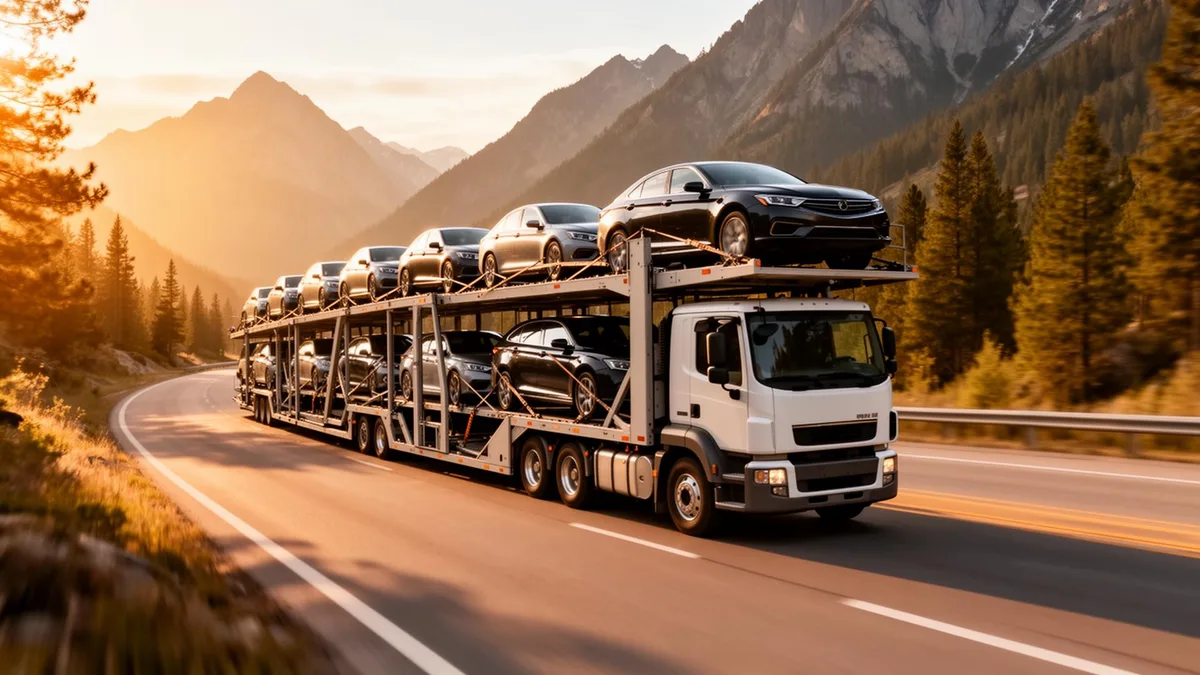
Hypercars rarely drive on public roads. Owners ship them between garages, auctions, driving events, and track days — and the logistics matter as much as the engineering. SAKAEM coordinates enclosed transport for high-value vehicles regularly — the full cost anatomy is in our exotic car transport cost guide — and the structure looks roughly like this:
| Service tier | Typical cost | What it includes |
|---|---|---|
| Open transport | $1,000-$2,500 (coast-to-coast) | Not used for hypercars — exposure to road debris and weather |
| Standard enclosed transport | $2,000-$5,000 (coast-to-coast) | Hard-side trailer, lift-gate loading, no climate control |
| Premium enclosed with climate control | $5,000-$10,000 (coast-to-coast) | Climate-controlled trailer, single-car or low-density load, soft-tie straps |
| White-glove with security escort | $10,000-$15,000+ (coast-to-coast) | Two-driver team for nonstop transit, frequent driver check-ins, security escort optional |
| Air freight (international) | $15,000-$50,000+ per car | Used for inter-continental moves where time-on-water risk is unacceptable |
For most North American moves, enclosed ground transport beats air freight — it’s cheaper, allows climate control, and avoids the cargo-hold loading risks that air freight introduces. Air freight makes sense for transatlantic and trans-Pacific moves where shipping by sea would take 6-8 weeks.
Loading is the part most owners underestimate. Hypercars sit millimeters off the ground — many have less than 3 inches of front-splitter clearance. A standard enclosed-trailer ramp creates an approach angle that will rip a carbon splitter clean off the car. The only safe loading method for low-clearance vehicles is a hydraulic lift-gate that lowers fully to ground level and lifts the car horizontally onto the trailer. Any quote that doesn’t specify hydraulic lift-gate equipment is the wrong quote for a hypercar.
EV hypercars add their own protocol. Battery state-of-charge for transit should sit between 20% and 50% — high enough to avoid the cell stress of deep discharge, low enough to limit thermal runaway risk in the event of an incident. EV-experienced carriers use non-conductive soft-tie wheel straps (never chains or hard tie-downs that could compromise high-voltage routing), and monitor battery thermal state during long hauls. Owners of Rimac, Yangwang, and other EV hypercars should confirm the carrier has these protocols before dispatch.
Insurance is the other half of the equation. Standard auto transport insurance cargo coverage (typically $100K-$250K per vehicle) does not cover a $4M Bugatti. Hypercar moves require either a custom cargo rider raising the per-vehicle cap into the millions, or a transport company that already carries high-value coverage on its policies. SAKAEM verifies coverage before dispatch on any vehicle over $250K and coordinates with owners on supplemental coverage when the appraised value exceeds standard limits.
For collectors moving between events or owners shipping between homes, enclosed car shipping is the default, with classic and exotic shipping services handling the specialized cases. For EV hypercars specifically, see our electric vehicle shipping guide for the full battery, charging, and handling protocol. If you’re new to vehicle transport, our how to ship a car overview walks through the standard pickup-to-delivery workflow.
Hypercar Market in 2026
The fastest-cars segment is small but growing. Combined annual production across all the cars on this list runs under 1,500 units worldwide — limited by hand-built assembly, homologation costs, and supply of carbon-fiber tubs. Verified record-holder cars have repeatedly traded for material premiums over original MSRP at recent auctions, with the Bugatti Chiron Super Sport 300+ specifically commanding values above sticker on the rare resales that surface.
The electric shift matters. Five years ago, hypercar collectors saw EVs as outside the category. Today, Rimac, Yangwang, and Lotus’s Evija sit in the same conversations as Koenigsegg, Hennessey, and Bugatti — and the speed records confirm it. For buyers who want electric performance without a hypercar budget, our ranking of the best used EVs covers the models worth buying in 2026.
Bottom Line
The Yangwang U9 Xtreme’s 308.4 mph run in 2025 ended the gasoline era at the top of the production-car speed charts. The next records will likely come from electric architectures, with Koenigsegg’s theoretical 330 mph still on the table for whoever attempts the run first.
For owners of these cars, the moments that matter most aren’t on the speedometer — they’re at the loading dock. A $4 million hypercar doesn’t drive between events; it rides in a climate-controlled trailer loaded by hydraulic lift-gate, with a custom cargo insurance rider matched to appraised value, and a vetted driver team. SAKAEM coordinates enclosed transport for high-value and exotic vehicles, vets carriers for the specific equipment a low-clearance hypercar needs, and helps owners arrange supplemental cargo coverage when appraised value exceeds standard policy limits. Get a quote or read more about our enclosed shipping services for vehicles where ordinary transport isn’t an option.
Fastest Cars FAQ
What is the fastest car in the world in 2026?
The Yangwang U9 Xtreme holds the verified production-car top-speed record at 308.4 mph, set September 14, 2025, at the ATP Papenburg track in Germany. The previous record was the Bugatti Chiron Super Sport 300+ at 304.77 mph.
What’s the difference between top speed and acceleration records?
Top speed measures how fast a car can go in a straight line on a long track — Yangwang U9 Xtreme at 308.4 mph. Acceleration measures how quickly it reaches 60 mph from a standstill — Rimac Nevera R at 1.74 seconds. Different physics, different winners. Electric motors win on both because they deliver peak torque from zero rpm.
Are these cars actually driven on public roads?
Most are not. Track-only hypercars like the Bugatti Bolide and Aston Martin Valkyrie AMR Pro aren’t road-legal anywhere. Even the road-legal ones (Bugatti Chiron, Koenigsegg Jesko, Rimac Nevera) typically accumulate fewer than 500 miles per year. Owners move them between garages, auctions, and driving events by enclosed transport rather than driving them.
How much does it cost to ship a hypercar?
Enclosed transport for a hypercar typically runs $2,000-$5,000 coast-to-coast for standard service, $5,000-$10,000 for climate-controlled premium enclosed, and $10,000-$15,000 or more for white-glove single-car service with a two-driver team. International air freight runs $15,000-$50,000+ per car. Hydraulic lift-gate equipment is required for low-clearance hypercars regardless of tier.
What insurance do you need for shipping a hypercar?
Standard auto-transport cargo coverage maxes out at $100,000-$250,000 per vehicle, which is below the value of any car on this list. Hypercar transport requires either a custom cargo rider that raises the per-vehicle cap, or a transport partner that already carries higher coverage. Always verify coverage matches appraised value before dispatch.
What’s the difference between production cars and prototypes?
Production cars are built in serial runs (even if limited) and have VINs that meet road-legal homologation in at least one market. Prototypes and track-only specials are built in small numbers and skip homologation. The McMurtry Spéirling, which clocked 0-60 in 1.4 seconds, is a prototype — not eligible for production-car records.
Which is faster — gasoline or electric hypercars?
Electric has taken both the top speed crown (Yangwang U9 Xtreme, 308.4 mph) and the acceleration crown (Rimac Nevera R, 1.74 seconds 0-60). Gasoline hypercars still dominate in heritage, sound, and driving feel, but the raw speed records have shifted electric since 2024.
Can a hypercar realistically reach its claimed top speed?
Rarely. Most public roads, track lengths, and tire ratings cap real-world top speeds well below manufacturer numbers. Reaching 300+ mph requires a specialized high-speed track (Ehra-Lessien, Papenburg, Kennedy Space Center runways), purpose-developed tires, and a near-perfect weather window. Claimed top speeds are a benchmark for engineering capability — not an everyday driver expectation.