

Terminal-to-terminal car shipping sounds like the budget option, and that is exactly how it is advertised. The reality in 2026 is different: the terminal network that made this method work has mostly disappeared, the discount is usually smaller than the storage fees that come with it, and many of the companies advertising the service will quietly steer you to door-to-door the moment you call. This guide explains how both methods actually work, runs the honest math, and covers the few situations where a terminal or port drop-off still makes sense. Before booking with anyone, verify the company’s authority in the FMCSA’s company snapshot database; every legitimate broker and carrier has a searchable record there.
What Is Terminal-to-Terminal Car Shipping?
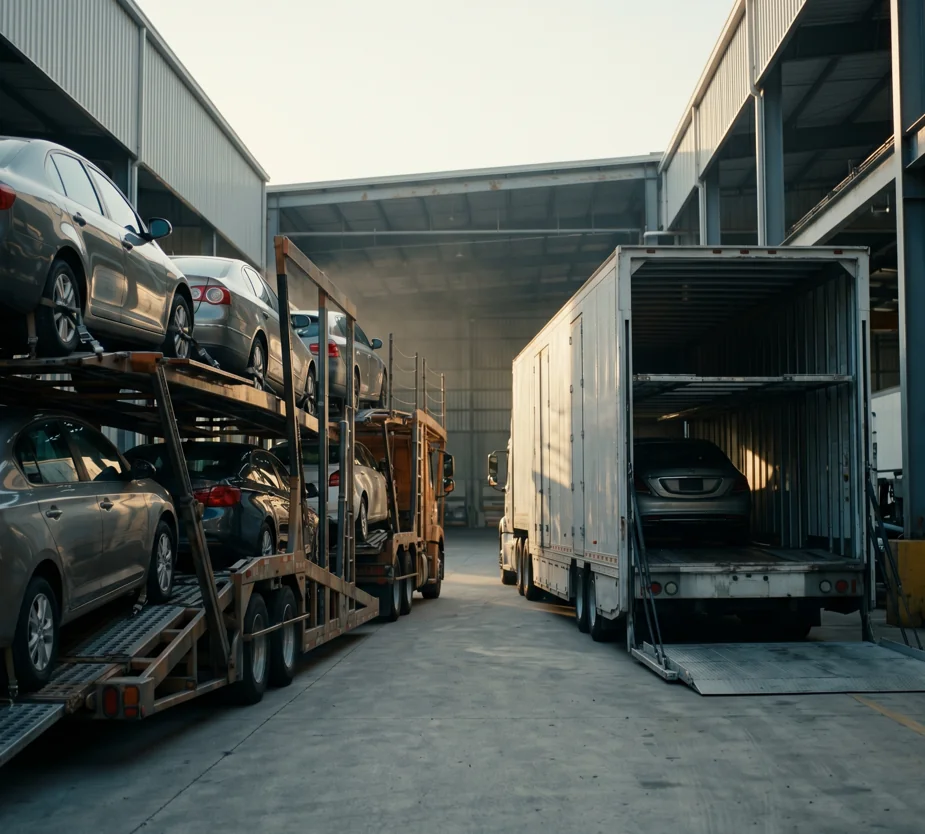
Terminal-to-terminal car shipping is an arrangement where you drive your vehicle to a designated storage yard, leave it there until a carrier collects it, and then pick it up from a second storage yard near your destination. The terminal acts as a consolidation point: carriers can fill a trailer from one location instead of driving to individual homes, and customers can drop off or collect on their own schedule during yard hours.
The method dates from an era when major cities had active auto terminals and carriers ran fixed routes between them. You trade convenience for a lower rate, handle the first and last legs yourself, and accept that your car sits outdoors in a yard, sometimes for days, on either end of the trip.
What Is Door-to-Door Car Shipping?
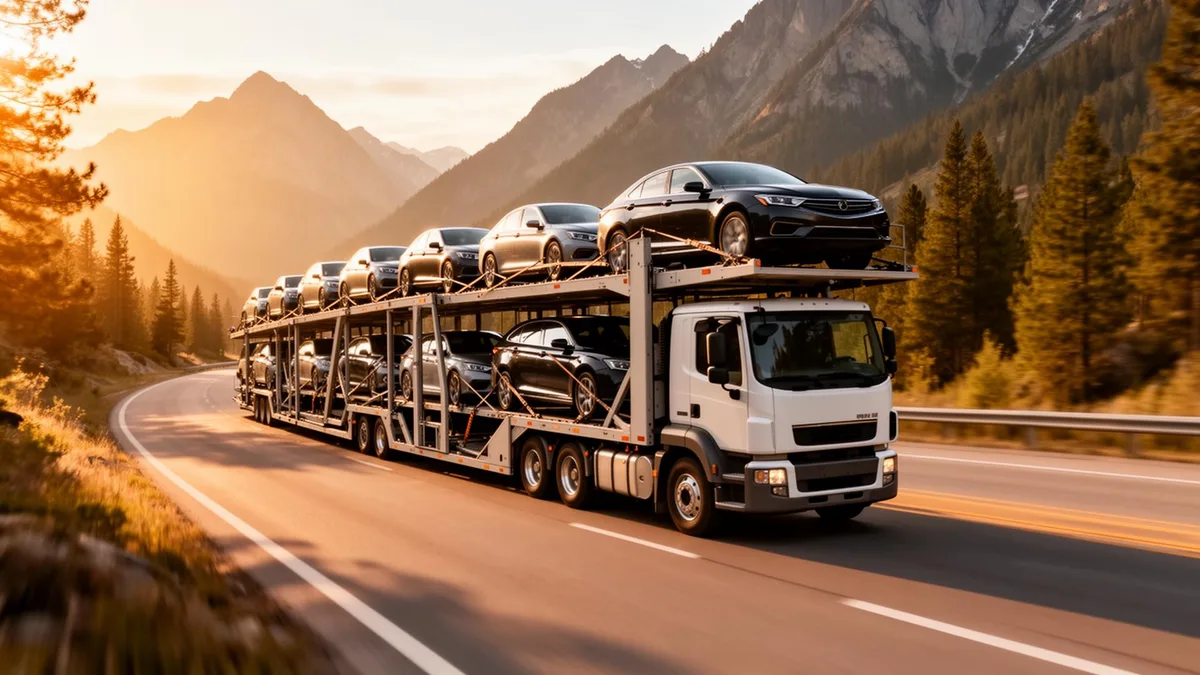
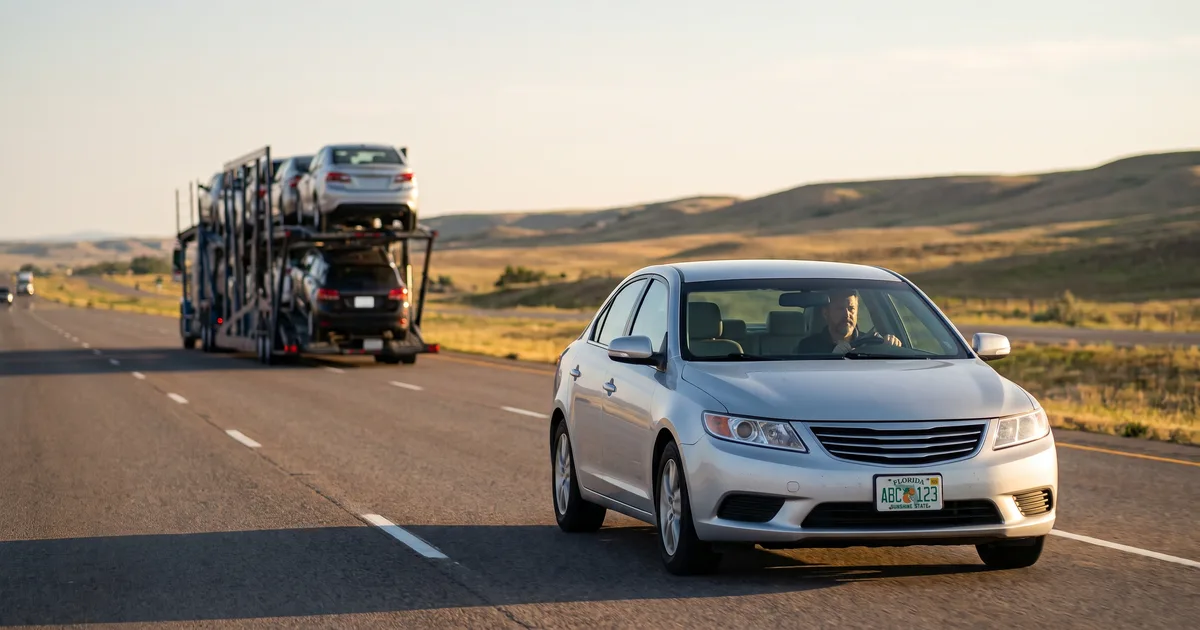
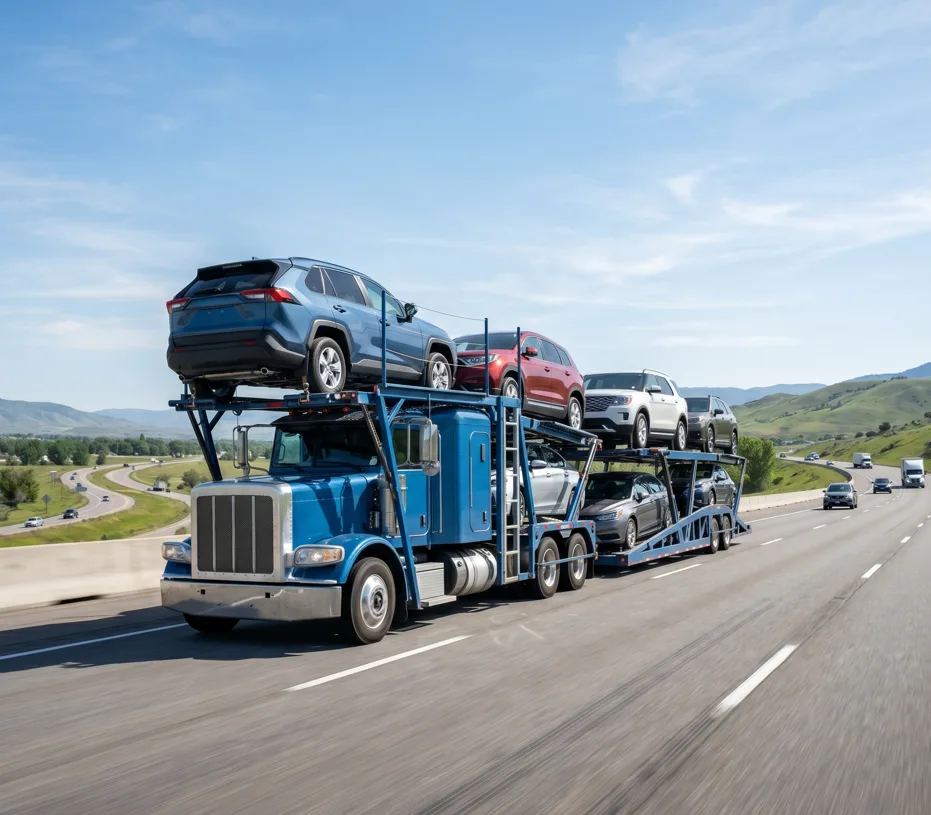
Door-to-door car shipping means the carrier picks the vehicle up at your address, or as close to it as the truck can safely and legally get, and delivers it the same way. There are no storage yards, no second trips, and no daily fees; the car goes from your hands to the driver’s trailer and back. It is the standard method in the U.S. today, and it is how SAKAEM’s door-to-door service works on every domestic route.
The Industry Secret: Most Companies Advertising Terminal-to-Terminal Don’t Offer It
Here is the part nobody ranking for this keyword will tell you: in SAKAEM’s experience as a broker since 2017, many companies that advertise terminal-to-terminal shipping do not actually provide it, and ultimately quote customers for door-to-door service instead. The pages exist because people search the term, not because the service is available. Call and ask for a terminal booking, and in most cases you will hear some version of “door-to-door is actually a better deal right now” within the first two minutes.
We can say this plainly because SAKAEM Logistics, an FMCSA-licensed auto transport broker (MC 16237), does not offer domestic terminal-to-terminal shipping at all, and does not advertise otherwise. The honest reason applies industry-wide:
- The terminals are mostly gone. Outside a handful of port cities, dedicated auto terminals have closed as demand shifted to door-to-door. There is no national network left to book against.
- Carriers don’t want the stop. A storage yard adds a detour, paperwork, and a handoff where nobody who knows the car is present. Most carriers price that hassle in or decline it.
- Nobody wants the liability window. While your car sits in a yard, it is not in the carrier’s custody, and the carrier’s cargo policy generally does not cover the storage period. Coverage falls to the yard’s own policy and terms, and that gap produces exactly the disputes brokers prefer to avoid.
If a company insists it can book you terminal-to-terminal on a domestic route, ask for the terminal’s physical address, its daily storage rate, and who insures the vehicle while it sits there. The answers tend to end the conversation.
Terminal-to-Terminal vs Door-to-Door: Side by Side
The honest comparison is not “cheap versus convenient.” It is “a discount that usually evaporates versus a service that includes everything.” Here is how the two methods stack up in 2026:
| Terminal-to-terminal | Door-to-door | |
|---|---|---|
| Pickup / delivery | You drive to a yard on both ends | Carrier comes to your address |
| Availability | Rare; few genuine terminals remain | Standard nationwide |
| Base rate | Sometimes $50 to $150 lower | Market rate for the lane |
| Storage fees | Typically $15 to $35 per day, per end | None |
| Extra trips | Two drop-offs, two pickups, plus rides home | None |
| Insurance in transit | Carrier cargo policy | Carrier cargo policy |
| Insurance in the yard | The yard’s policy, not the carrier’s | Not applicable |
| Vehicle exposure | Outdoors in a lot, days at a time | Loaded and moving |
| Typical timeline | Transit plus yard wait on both ends | Transit only |
The Real Math: Does Terminal-to-Terminal Actually Save Money?
Usually not, once you count everything the discount is supposed to offset. At the rates published by companies that operate or book terminals, the advertised savings on a terminal booking typically run $50 to $150 against a door-to-door quote for the same lane, while storage runs $15 to $35 per vehicle per day, and actual rates vary by facility and market. The costs that come back out of that discount are concrete:
| Line item | Typical cost |
|---|---|
| Terminal discount | save $50 to $150 |
| Storage at origin yard, 2 days at $25/day | pay $50 |
| Storage at destination yard, 3 days at $25/day | pay $75 |
| Rides home from origin yard and to destination yard | pay $40 to $80 |
| Net result | often $15 to $55 worse off |
The storage days are not pessimism; they are how consolidation works. The yard holds your car until a trailer on your route has space, and at destination the car waits from whenever the trailer arrives until you can get to the yard during its business hours. A weekend on either end adds days you pay for. Storage fees of $15 to $35 per vehicle per day erase a typical terminal discount within the first week, and that is before valuing your own time across four extra trips.
If the goal is a genuinely lower price, the levers that actually move a quote are flexibility on dates, open transport instead of enclosed, and shipping outside peak season. Our guide to the cheapest way to ship a car walks through each one with numbers, and the cost to ship a car page covers what drives the price of a lane in the first place.
Why Terminals Nearly Disappeared
Terminal shipping declined because the economics that created it reversed. Decades ago, fewer carriers ran long-haul routes, so consolidating cars at fixed hubs was the only way to fill trailers. As the carrier market grew and dispatch went digital, filling a trailer door-to-door across a metro area became routine, and the hubs lost their reason to exist. The overwhelming majority of consumer vehicle shipments move on open door-to-door carriers today, and the open versus enclosed choice is now the main fork in the road for most shippers, not the terminal question.
What remains of the terminal world is concentrated where it still earns its keep: ports, military logistics, and a few high-volume seasonal corridors. Everywhere else, the yards were sold, and the searches outlived the service.
”A Big Truck Can’t Reach My Street” Is Not a Reason to Use a Terminal
The most common argument for terminals is access: tight streets, HOA rules, low trees, no room for a 75-foot rig. The door-to-door answer to that problem is simpler than a storage yard, and it is built into how every carrier already operates. The driver calls ahead, and if your street won’t work, you agree on the nearest safe spot with room to load, usually a shopping center or wide lot minutes from your address.
In SAKAEM’s dispatch records, fewer than 1 in 10 pickups require an alternate meeting point, and when they do, the fix is a nearby parking lot coordinated by the driver, not a terminal across town with a daily fee. You are present at loading, the inspection happens in front of you, and the bill of lading is signed with you standing there, none of which is true when a yard attendant releases your car to a carrier you never meet.
When a Terminal or Port Drop-Off Genuinely Makes Sense
A few real cases remain, and it is worth being precise about them, because they are the exception that the advertising leans on:
- Hawaii and Alaska shipments. Ocean legs run port to port by definition. A Hawaii car shipping move is door-to-port-to-door: a carrier collects your vehicle at your address, delivers it to the departure port terminal, and the ocean carrier takes it from there on a RoRo vessel. The terminal is a genuine, unavoidable part of the route, and it is staffed infrastructure, not a parking lot with a padlock.
- Military and overseas moves. POV shipments for service members route through the designated vehicle processing centers run under the Defense Department’s program, which are terminals in the true sense, with scheduled drop-off appointments.
- A traveler with a genuinely unpredictable schedule. If you cannot be reachable at either end even by phone, and no friend or family member can release or receive the car for you, a stored handoff has a logic to it. In practice, naming a trusted person as your contact solves this for free, and it is what nearly all of our customers in that situation do.
Outside those cases, “terminal-to-terminal” in 2026 is mostly a keyword, not a service.
How Door-to-Door Actually Runs, Start to Finish
Booking door-to-door with a broker works like this: you get a quote for your lane, set a first available date, and the broker assigns a vetted carrier. Based on SAKAEM’s internal dispatch data, 95% of vehicles are picked up within 1 to 3 business days of the first available date, against the five days many companies quote. The driver calls before arrival, inspects the car with you, and both of you sign the bill of lading; the same inspection repeats at delivery. Transit itself follows distance, and our guide to how long car shipping takes breaks down timelines by mileage band. If you are weighing whether to skip shipping entirely and drive, the driving versus shipping comparison runs that math honestly too.
Terminal-to-Terminal Car Shipping FAQ
What is terminal-to-terminal car shipping?
It is a method where you drop your vehicle at a storage yard, a carrier moves it to a yard near your destination, and you collect it there. You handle the first and last legs yourself, and the vehicle waits at both yards until the carrier and then you arrive.
Is terminal-to-terminal cheaper than door-to-door?
At published yard rates, the base rate can be $50 to $150 lower, but daily storage fees of $15 to $35 per end plus four extra trips usually consume the entire discount. On most routes the realistic total cost is equal to or higher than door-to-door.
How much do car shipping terminals charge for storage?
Published yard rates typically run $15 to $35 per vehicle per day, with higher rates near major metros. Fees usually start after a short free window and accrue on both ends, including weekends.
Why do so few companies actually offer terminal-to-terminal?
The terminal network shrank as door-to-door became standard, carriers dislike the extra stop and the unattended handoff, and nobody wants responsibility for a vehicle sitting in a yard outside the carrier’s cargo coverage. Many companies keep advertising the term because people still search for it.
Does SAKAEM offer terminal-to-terminal shipping?
No. SAKAEM Logistics is a door-to-door auto transport broker on all domestic routes. The only terminal handoffs in our shipments are port terminals on Hawaii and Alaska routes, where the ocean leg requires them.
What happens if a transport truck can’t fit on my street?
The driver arranges a nearby meeting point with room to load, usually a shopping center or wide lot a few minutes away. In our operations fewer than 1 in 10 pickups need this, and it costs nothing.
Is my car insured while it sits at a terminal?
Coverage can change while a vehicle sits in storage rather than in the carrier’s custody. The carrier’s cargo policy generally applies in transit, and any coverage at the yard depends on the terminal operator’s own policy and terms, which vary by facility. Ask both the company and the terminal to confirm coverage in writing before leaving a car there.
Is terminal-to-terminal faster than door-to-door?
No. The over-the-road transit is the same, and yard waits on both ends add days. Door-to-door is almost always the faster total timeline.
Can I leave personal items in the car at a terminal?
It is a bad idea. Vehicles at yards sit unattended, sometimes for days, and neither the carrier nor most terminals accept responsibility for contents. Door-to-door shipments allow around 100 lbs in the trunk with SAKAEM; a stored vehicle should be empty.
How do I know if a company really offers terminal service?
Ask for the terminal’s street address, its daily storage rate, and who insures the vehicle on the lot. A company with a real terminal answers all three immediately. Vague answers mean the page you found was marketing, and you will be routed to door-to-door anyway.
The Bottom Line
Terminal-to-terminal car shipping survives mostly as an advertising keyword. The genuine version exists at ports and military processing centers; the domestic version advertised alongside door-to-door quotes rarely does, and where it does, storage fees and extra trips usually erase the savings. Door-to-door remains the default for a reason: one handoff, one inspection you attend, continuous carrier custody, and no daily meter running in a storage yard.
SAKAEM Logistics has brokered door-to-door transport since 2017, holding a 4.6 rating across 580+ Google reviews, with every carrier vetted on authority, insurance, and safety record before a vehicle is assigned. Get an instant quote for your route, and if your street is tight or your schedule is odd, say so in the notes; solving that on the phone takes two minutes and costs nothing.