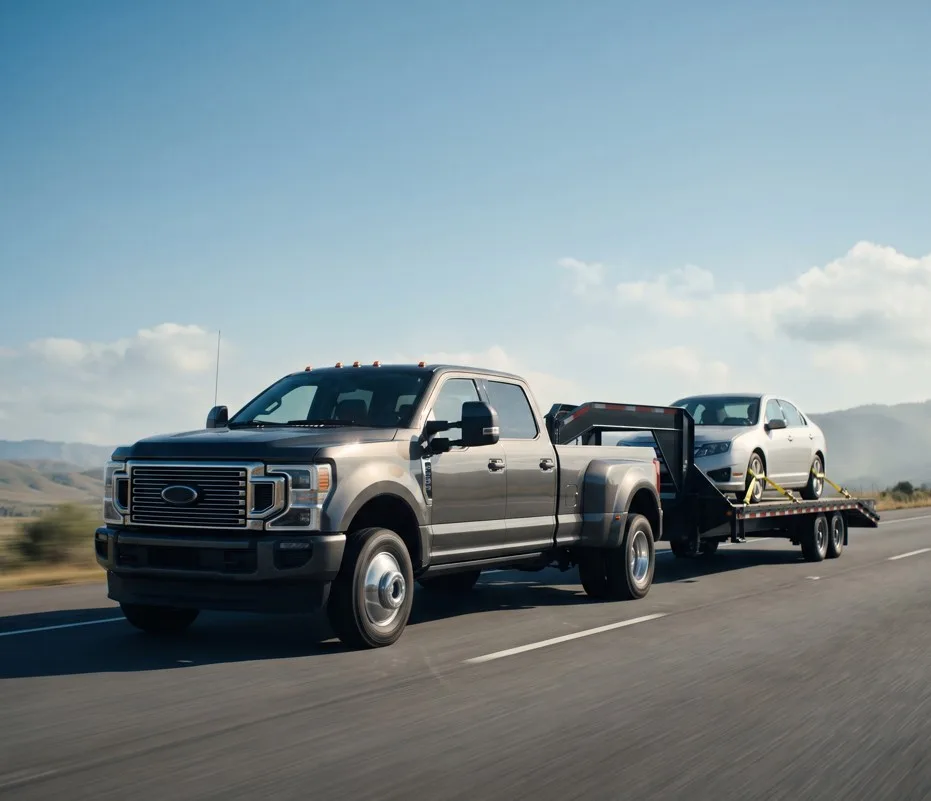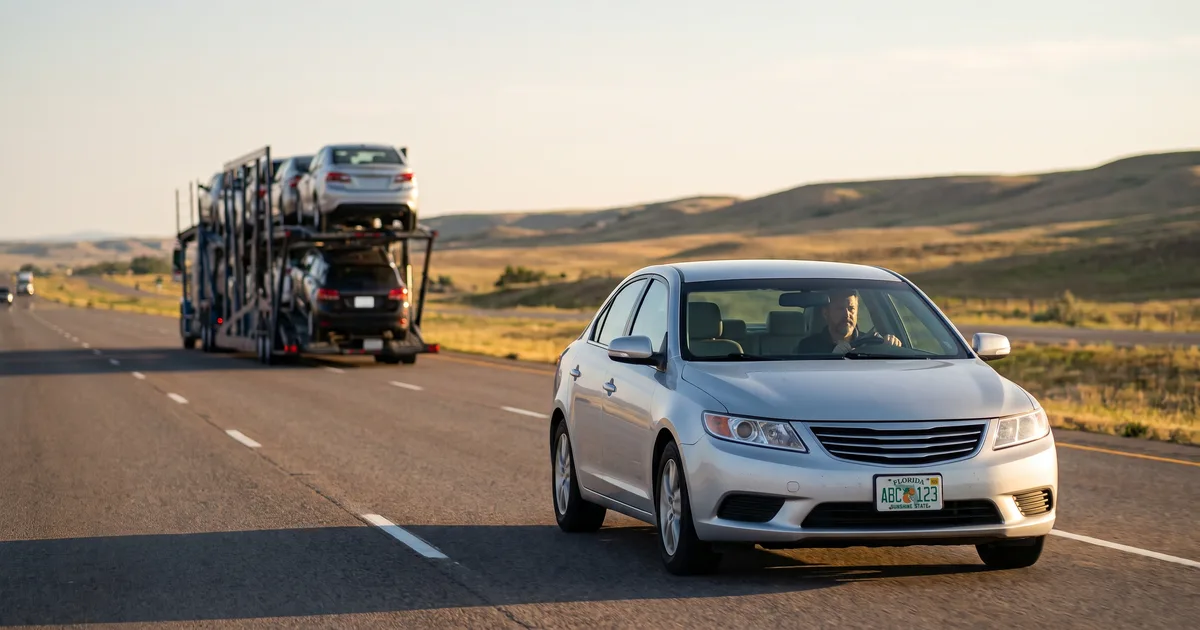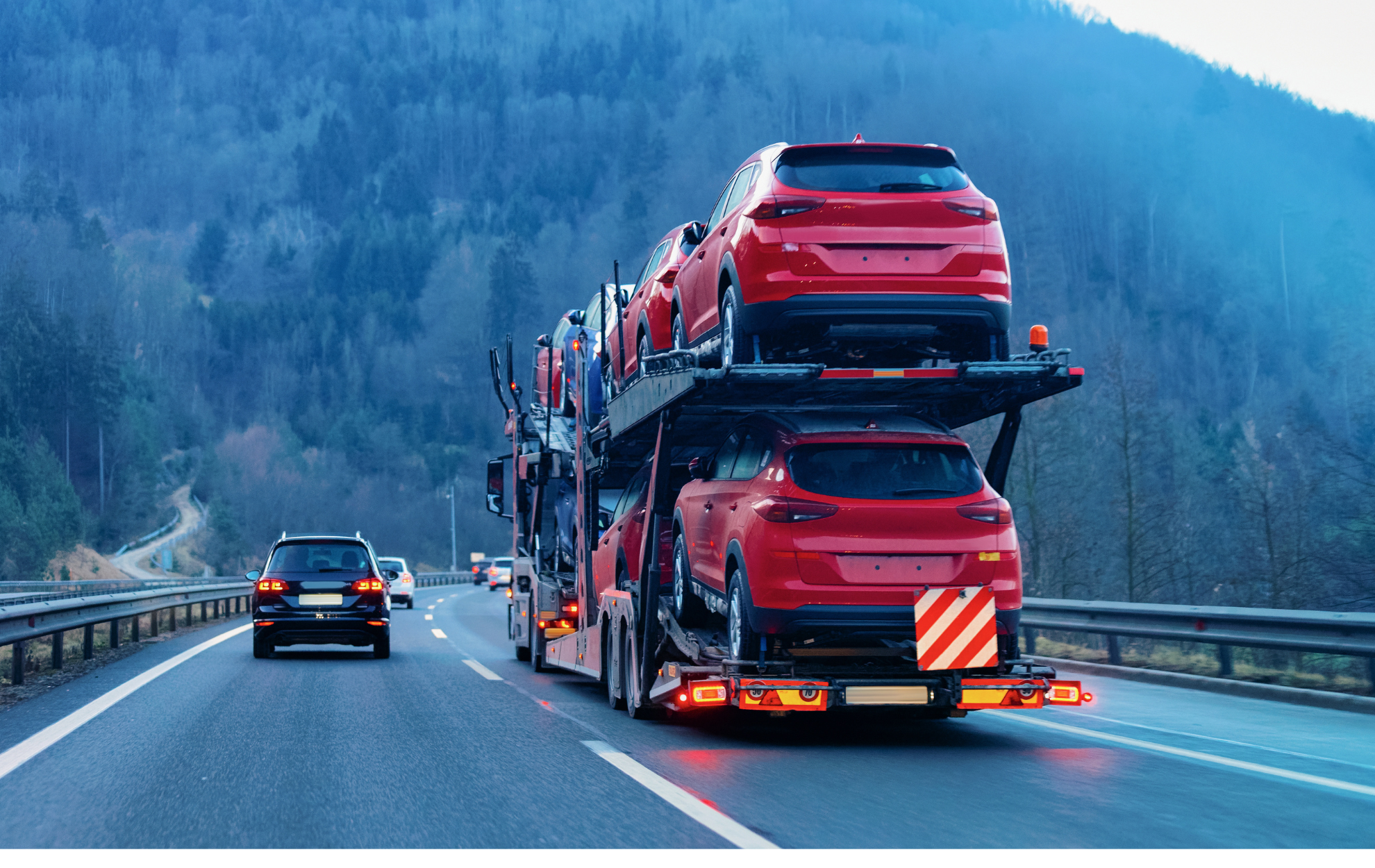


How long it takes to ship a car depends on two separate clocks. Most shipments in the continental U.S. are delivered within one to two weeks of booking: a few business days for a carrier to be assigned and pick the vehicle up, then transit itself, which runs at roughly 500 miles per day. At SAKAEM the pickup clock is short; our standard window is 1 to 3 business days, and we’ve operated on that standard for the past five years, while much of the industry quotes up to five. A 700-mile shipment usually spends two days on the truck. A coast-to-coast run takes six to eight.
Those numbers come from how the industry actually operates, not from marketing. Federal hours-of-service rules cap a truck driver at 11 hours of driving per day, and a loaded car hauler averages 50 to 60 mph across fuel stops, inspections, and other pickups. Multiply those out and you land almost exactly on the 500-mile figure carriers use when they give us delivery estimates. This guide walks through how long car transport takes on your specific route, what makes shipments run faster or slower, and where the honest uncertainty in every estimate lives.
Key Takeaways
- Total shipping time is pickup (SAKAEM’s standard window is 1 to 3 business days) plus transit at roughly 500 miles per day of driving.
- Distance is the biggest factor, but flexibility on dates and choosing open transport shorten the carrier search more than anything else.
- Expedited shipping compresses the pickup window for a premium, but no honest broker guarantees an exact delivery date.
- Weather, rural locations, and carrier scheduling can each add a day or two that no quote can fully predict.
Car Shipping Time by Distance
How long car shipping takes depends first on mileage. Transit time is the number of days between the carrier loading your vehicle and delivering it, and at the industry’s working pace of about 500 miles per day, the bands below hold for the vast majority of shipments SAKAEM Logistics arranges.
| Distance | Transit time | Typical door-to-door total* |
|---|---|---|
| Under 500 miles | 1 to 2 days | 2 to 5 days |
| 500 to 1,000 miles | 2 to 3 days | 3 to 6 days |
| 1,000 to 1,500 miles | 3 to 4 days | 4 to 7 days |
| 1,500 to 2,000 miles | 4 to 5 days | 5 to 8 days |
| 2,000 to 2,500 miles | 5 to 7 days | 6 to 10 days |
| Over 2,500 miles (coast to coast) | 6 to 8 days | 7 to 11 days |
*Door-to-door total includes SAKAEM’s standard 1-to-3-business-day pickup window after your first available date. Companies working on a 5-day window will run longer.
Two things about this table are worth saying plainly. First, these are working estimates, not promises; a single snowstorm or breakdown can push any shipment a day or two. Second, the wide “total” column exists because pickup timing varies more than transit does. Once your car is on the truck, delivery is fairly predictable. Getting it on the truck is where timelines stretch.
Pickup Window vs. Transit Time: The Two Clocks
Most frustration in auto transport comes from mixing up two different waits. The pickup window is the time between your first available date and a carrier actually loading the car; with door-to-door shipping rather than terminal drop-off, no storage days are added on either side of it. SAKAEM’s standard pickup window is 1 to 3 business days, the standard we’ve worked to for the past five years; across the industry, quotes of up to five business days are common. Transit time only starts after that.
The pickup window exists because brokers like SAKAEM don’t own trucks; we match your vehicle to vetted carriers already running your route. How fast that match happens depends on how attractive your shipment is to a driver passing through. Two things you control move this clock the most:
- Trailer type. Open transport gets carriers assigned much faster in our experience: across the carrier market we work with, open capacity is roughly nine times as common as enclosed. If your priority is speed rather than maximum protection, open is the faster call, and it costs 30 to 40 percent less.
- Flexibility. A pickup window that starts “today only” fights the market. A window with two or three workable days lets us take the first good carrier that comes through instead of waiting for a perfect fit.
Route popularity matters too. Los Angeles to Dallas has carriers passing daily; a small town in Montana might see one suitable truck a week. Metro-to-metro shipments consistently hit the short end of the pickup range.
The 500-Miles-a-Day Rule
When carriers give us transit and delivery dates, they almost always work off the same rule of thumb: 500 miles of progress per day. It isn’t arbitrary. FMCSA hours-of-service regulations allow 11 driving hours within a 14-hour on-duty window, followed by a mandatory 10-hour break. At realistic loaded speeds, that produces 500 to 600 miles on a good day, less when the driver is also loading and unloading other vehicles along the route. A nine-or-ten-car hauler is running a small delivery route, not a nonstop express.
There is one exception worth knowing about. Some carriers run team drivers, two drivers alternating shifts in the same truck, which lets the rig keep moving through rest periods. A team operation can nearly double daily mileage and turn a six-day coast-to-coast transit into three or four. Team-driven trucks are a minority and usually cost more, but when a customer genuinely needs a car across the country fast, that’s the setup we look for.
What Slows Car Shipping Down
Every estimate carries a few risk factors that decide how long car shipping takes in practice. These are the ones that actually move delivery dates, in roughly the order we see them.
Time of Year
Demand for auto transport spikes in early summer, in January, and along the snowbird corridors between the Northeast, Midwest, and Florida each fall and spring. When more cars chase the same trucks, pickup windows stretch first and prices rise second. Winter adds a different problem: snow and ice through the Rockies or across the northern corridor can shut down a route entirely for a day or two, a delay documented every season in FHWA road weather data. Summer shipments mostly run on schedule; February shipments through Denver deserve a built-in buffer.
Rural Pickup or Delivery
Car haulers earn their living on density. A pickup 90 minutes off the interstate means a detour that only pays if the rest of the load cooperates, so fewer carriers bid and the window stretches. If you’re rural, meeting the driver at a truck-accessible location near the highway, a big-box parking lot is the classic choice, often saves days.
Vehicle Type and Condition
Oversized trucks and SUVs take up more deck space and reduce what else a carrier can load, which shrinks the pool of trucks that want the job. Inoperable vehicles need a carrier with a winch and a spot they can roll into, which again means fewer candidates. Neither makes shipping slow, exactly; both make the carrier search more selective.
Enclosed Carrier Availability
Enclosed transport is the right choice for classic, luxury, and low-clearance vehicles, but enclosed rigs are far scarcer and carry fewer cars each. Expect the pickup window to sit at the longer end of the range, and on less-traveled routes, occasionally beyond it.
Carrier Scheduling
Here’s a detail most shipping guides skip: once a carrier picks up your car, they want it delivered as fast as possible, because they don’t get paid until it’s off the truck and they can’t load the next vehicle into that spot. Speed is built into their economics. That said, a carrier will sometimes hold a vehicle in their yard for a day or two to line up deliveries of the other cars on the load. It’s a scheduling reality of multi-car hauling rather than a problem, but it’s why we quote transit in ranges instead of exact dates, and why anyone who promises you a guaranteed delivery day is selling certainty they don’t have.
Typical Transit Times on Popular Routes
The bands above translate into concrete numbers showing how long car transport takes on the lanes customers ask about most. Our popular routes directory has route-by-route detail; here’s the short version.
| Route | Distance | Typical transit |
|---|---|---|
| Boston to New York City | ~215 miles | 1 to 2 days |
| Los Angeles to Dallas | ~1,440 miles | 3 to 4 days |
| Miami to New York City | ~1,280 miles | 3 to 4 days |
| Chicago to Los Angeles | ~2,015 miles | 5 to 6 days |
| Los Angeles to Miami | ~2,730 miles | 6 to 8 days |
| New York City to Los Angeles | ~2,790 miles | 6 to 8 days |
| Seattle to Atlanta | ~2,635 miles | 6 to 8 days |
California to Texas and California to Florida are the two heaviest lanes in our own shipment data, which works in customers’ favor: high-volume corridors have more trucks competing, shorter pickup windows, and the most predictable transit of any routes in the country. For a price on any of these routes, use our car shipping cost calculator.
How to Get Your Car Delivered Faster
Some speed levers are free, and one costs money. In order of value:
- Book ahead of your first available date. Giving us even three or four days of lead time means a carrier can be lined up before your window opens instead of after.
- Choose open transport unless your vehicle genuinely needs enclosed protection. Faster assignment, lower price.
- Be flexible on pickup days and meeting points. The shipments that move fastest are the ones that can say yes to the first qualified truck.
- Ship outside peak season if your dates are movable. A route that stretches toward ten days door-to-door in peak July demand can close in six or seven during a quieter month like October.
- Stay reachable. A surprising number of delays are just phone tag between the driver and the customer at pickup or delivery.
- Pay for expedited service when the deadline is real. Expedited car shipping compresses the pickup window to one or two days by pricing your shipment above the market so carriers take it first. It works. What it doesn’t do is guarantee an exact delivery date, because the truck still drives through the same weather and the same hours-of-service limits as everyone else. If your timeline has a few days of slack, save the money; expedited is for the customer who needs the car picked up now, not for shaving one day off transit.
Can You Track Your Car During Shipping?
Honest answer: there’s no customer portal where you watch a dot move across a map, and we’d rather tell you that than pretend otherwise. What we do have is dispatch-level visibility. Most shipments we arrange run through a dispatch platform where drivers share live GPS location, which in practice covers roughly three out of four orders. When location sharing is on, our team can pull up where the truck is and give you a real answer when you call or text. For the remainder, we get updates the traditional way, directly from the driver. Either way, you’ll have the carrier’s contact information from pickup onward, and the driver is usually the fastest source for “where’s my car right now.”
How the Car Shipping Process Works
Understanding how car shipping works end to end makes the timeline predictable instead of mysterious. The short version:
- Quote and booking (day 0). You get a market-based quote and set your first available date. No payment is due at booking with SAKAEM.
- Carrier assignment (1 to 3 business days, our standard window). We match your vehicle to a vetted carrier running your route, verify their FMCSA authority, insurance, and safety record, and confirm your pickup window.
- Pickup (a few hours). The driver inspects the vehicle with you, notes its condition on the Bill of Lading, and loads it.
- Transit (roughly 500 miles per day). The driver typically calls a day before arrival to arrange the delivery meeting.
- Delivery. You inspect the car against the pickup report before signing off, then pay the carrier’s portion, typically in cash or certified funds.
If you’re shipping because of a move, our guide to shipping a car to another state covers the planning side, and the cheapest ways to ship a car breaks down where the timeline and the budget trade against each other.
Bottom Line
How long car shipping takes comes down to two clocks. Plan on roughly one week door to door for most shipments, up to a week and a half coast to coast: 1 to 3 business days to get your car on a truck on SAKAEM’s standard window, then about 500 miles of progress for every day it’s in transit. You can shorten the first clock with flexibility, open transport, and early booking; the second clock is governed by federal driving limits and only genuinely bends for team drivers. SAKAEM Logistics has arranged shipments on these timelines as a licensed auto transport broker (MC 16237) since 2017, with a 4.6-star average across 544 Google reviews. Get a quote with your route and first available date, and we’ll give you a realistic window instead of a number that sounds good on the phone.
How Long Does Car Shipping Take FAQ
How long does it take to ship a car cross country?
Cross-country car shipping takes 6 to 8 days in transit for the typical 2,500-to-2,800-mile route. With SAKAEM’s standard 1-to-3-business-day pickup window, plan on 7 to 11 days door to door; companies working on five-day windows run closer to two weeks.
How long does it take to ship a car 500 miles?
A 500-mile shipment usually spends 1 to 2 days in transit. Including carrier assignment and pickup on SAKAEM’s standard 1-to-3-business-day window, most 500-mile moves complete within 2 to 5 days of your first available date.
How long after booking will my car be picked up?
SAKAEM’s standard pickup window is 1 to 3 business days after your first available date; many companies quote up to 5. Popular metro routes and open transport land at the short end; rural locations and enclosed trailers push toward the long end.
How many miles can a car carrier travel in a day?
About 500 miles is the standard figure carriers use for transit estimates. Federal hours-of-service rules limit drivers to 11 hours of daily driving, and loading stops along the route eat into that. Team-driver trucks can roughly double the daily distance.
Why do some car shipments take longer than others?
Distance sets the baseline for how long car transport takes, then route popularity, season, trailer type, and vehicle size move it. A compact sedan on open transport between two major cities ships fastest; an inoperable SUV needing an enclosed trailer in a rural area sits at the other extreme.
Can weather delay car shipping?
Yes. Snow and ice can close mountain passes and interstate corridors for a day or two, and hurricanes can pause pickups across a whole region. Carriers won’t drive through conditions that put a loaded trailer at risk, so winter and storm-season shipments should build in a buffer.
How does traffic affect vehicle shipping times?
Day-to-day traffic is already baked into the 500-mile pace, so it rarely changes a delivery date on its own. Major closures from accidents or construction detours can add a few hours, which usually only matters on tight schedules.
Can I track my vehicle while it’s being transported?
There’s no self-serve tracking portal, but most shipments run through a dispatch platform with driver GPS sharing, so our team can usually tell you exactly where the truck is when you ask. You’ll also have the driver’s direct contact from pickup onward.
Does expedited shipping guarantee a delivery date?
No, and be wary of any company that says otherwise. Expedited service reliably compresses the pickup window to 1 or 2 days by making your load a priority, but transit is still bound by driving-hour limits and weather.
How long does it take to ship a car to Hawaii or Alaska?
Shipments to Hawaii or Alaska add an ocean leg to the ground transport, so plan on 2 to 4 weeks total depending on port schedules and your distance from the departure port.