The cheapest way to ship a car in 2026 is open transport, booked on a flexible pickup window, during a slower shipping season. Those three levers move your quote more than anything else, and together they can separate a fair market price from one that runs hundreds of dollars higher for the exact same vehicle and route. The rest comes down to how you book, who you book with, and how much lead time you give the market. Demand also follows migration: the states people are moving to in 2026 are the lanes where prices swing the most.
This guide breaks down what car shipping actually costs in 2026, with real per-mile rates and route examples, then walks through eight proven ways to lower your quote without cutting the corners that get cars damaged or claims denied. Every legitimate broker and carrier moving your vehicle is registered with the Federal Motor Carrier Safety Administration (FMCSA), and verifying that registration is the line between a cheap quote and a costly mistake. SAKAEM Logistics has arranged budget-conscious auto transport across all 50 states since 2017, so the numbers and tactics below reflect how pricing works on real lanes, not a sales pitch.
What Is the Cheapest Way to Ship a Car?
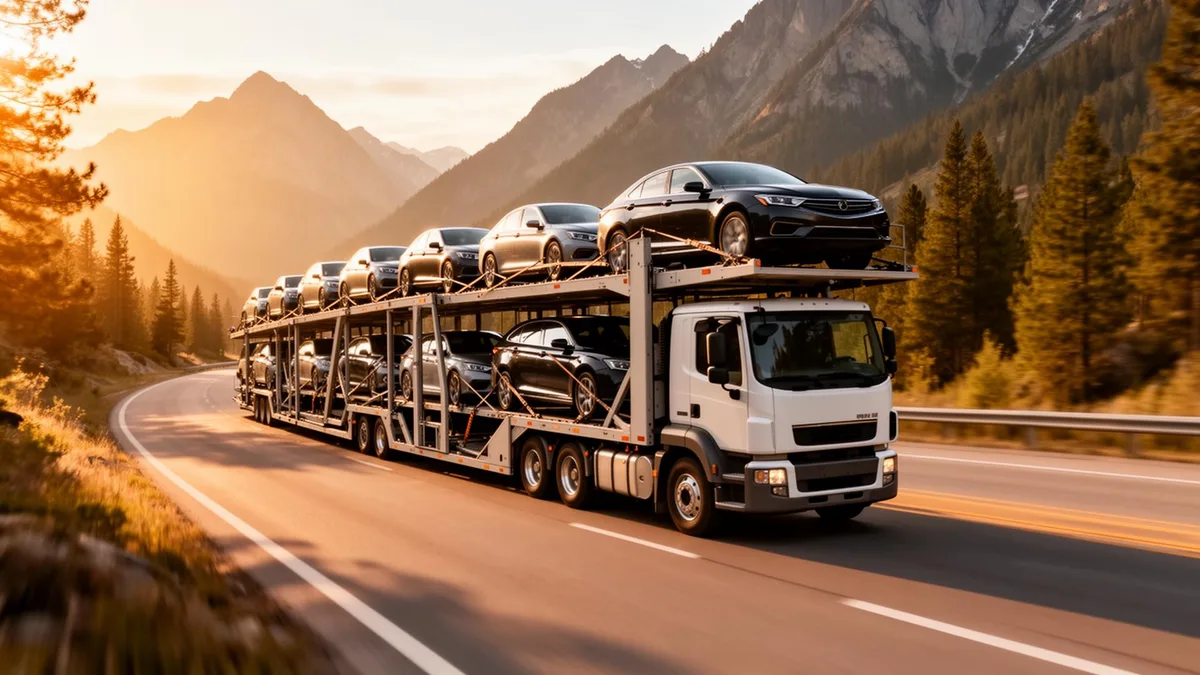
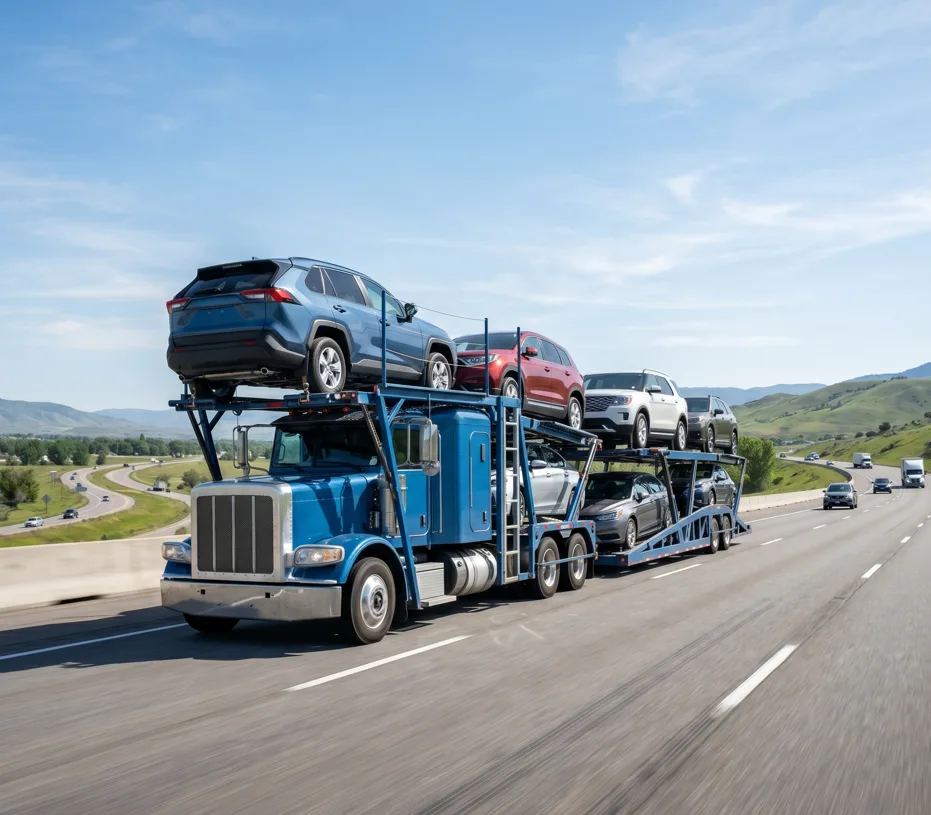
The single cheapest method of professional auto transport is an open carrier on a flexible schedule. Open carriers haul up to ten vehicles on a two-level trailer, so the cost of the trip is split across every car on board, which is why roughly nine out of ten shipments move this way. You give up nothing in safety for the savings on a standard vehicle, because open transport is the same method dealerships and manufacturers use to move new inventory.
From there, four choices decide how low your final price lands: the transport type, the delivery method, the timing, and the lead time you give carriers to bid. Each one is a dial you control, and the sections below show exactly how much each is worth in 2026 dollars.
Cheapest Car Shipping Methods Compared
Not every “cheap” option is actually cheap once you add up the full cost. Here is how the realistic methods stack up for a typical sedan, before the money-saving tactics later in this guide.
Open vs. Enclosed Transport
Open car transport is the budget standard and the cheapest professional option for everyday vehicles. Because the trailer carries multiple cars and is cheaper to operate, open shipping costs well below the enclosed alternative on the same lane. For most sedans, SUVs, and trucks, that savings comes with no meaningful downside.
Enclosed auto transport seals your vehicle inside a covered trailer, protecting it from weather and road debris, which is why owners of classic, exotic, and high-value cars choose it. The protection is real, but so is the premium: across SAKAEM’s lanes, enclosed transport runs roughly 55% to 85% more than open. Unless your car’s value or condition justifies that cost, open transport is the cheaper and entirely sensible choice.
Terminal-to-Terminal vs. Door-to-Door
Terminal-to-terminal shipping has you drop the car at a carrier’s lot and collect it from another lot near the destination. It can shave a modest amount off the quote because the driver avoids navigating residential streets, but the savings are smaller than they once were, and you take on the hassle and any storage fees on each end. Many lanes no longer offer a true terminal option at all.
Door-to-door delivery brings the carrier as close to your pickup and drop-off addresses as the truck can safely reach. It is the default for most shipments and usually costs only slightly more than terminal service once storage and your own driving time are counted. For the small price gap, door-to-door is the better value for most people.
Driving It Yourself
Driving the car yourself looks free, but it rarely is once you run the full math. A 2,800-mile cross-country drive burns roughly $350 to $450 in fuel alone at 2026 prices, then adds two or three nights of lodging at $120 to $180 each, plus meals and the wear that puts real miles and depreciation on the vehicle. Add the value of three or four days of your time, and a “free” drive often costs as much as an open transport quote while leaving you exhausted.
For a short hop of a few hundred miles, driving usually does win on pure cost. Past about 500 miles, professional shipping a car across the country tends to close the gap or beat it once every expense is counted.
Train and Plane
Shipping a car by train is limited to a handful of routes and is generally not cheaper than a carrier once you handle the drive to and from the rail terminals. Air freight exists for vehicles, but at several thousand dollars per shipment it is the most expensive option on the board, reserved for rare and exotic cars on tight timelines. Neither belongs in a conversation about the cheapest way to move a standard vehicle.
How Much Does It Cost to Ship a Car in 2026?
Car shipping is priced largely by the mile, and the per-mile rate drops sharply as distance grows, because long hauls spread the trip’s fixed costs over more miles. The table below shows 2026 market averages for open transport, with a sample total for each distance band. These are industry averages across major auto transport marketplaces and will vary by route, season, and vehicle.
| Distance | Open rate/mile | Sample open total |
|---|---|---|
| 0–500 mi | ~$1.00 | 300 mi ≈ $300 |
| 500–1,000 mi | ~$0.75 | 800 mi ≈ $600 |
| 1,000–1,500 mi | ~$0.70 | 1,200 mi ≈ $840 |
| 1,500–2,000 mi | ~$0.55 | 1,750 mi ≈ $960 |
| 2,000–2,500 mi | ~$0.45 | 2,300 mi ≈ $1,035 |
| 2,500–3,000+ mi | ~$0.40 | 2,800 mi ≈ $1,120 |
The pattern is consistent across the industry: a short 300-mile move costs about $1.00 per mile, while a 2,800-mile cross-country haul falls to roughly $0.40 per mile. That is why long-distance shipping often feels like a better deal per mile even though the total is higher. You can run your own numbers on a specific origin and destination with our car shipping cost calculator before requesting quotes.
What the Cheapest Customers Actually Paid
Industry averages tell you the middle of the market. The numbers below tell you the floor: the price paid by the cheapest quarter of customers in SAKAEM’s database of 335,037 completed shipments, by distance band. If your quote lands near these figures on a standard running vehicle, you are getting a genuinely cheap price — not a teaser.
| Distance | Cheapest 25% paid | Typical (median) | Budget $/mile |
|---|---|---|---|
| ~500 miles | $662 | $737 | ~$1.32 |
| ~1,000 miles | $870 | $972 | ~$0.87 |
| ~1,500 miles | $993 | $1,106 | ~$0.66 |
| Cross-country (~2,300 mi) | $1,174 | $1,310 | ~$0.51 |
Source: SAKAEM pricing database, updated July 2026. Two things to read from this table. First, the gap between the budget floor and the typical price is about 10% on most bands — that is the realistic amount the tactics in this guide can save you, not the “70% off” some sites promise. Second, a quote dramatically below these floors is almost never real; the section on lowball quotes below explains why.
What Cars Actually Cost to Ship: Real Lane Averages
The table below is not a calculator’s estimate. It is the average open-transport price SAKAEM customers paid on each of these state-to-state lanes, drawn from completed shipments and excluding the abnormal April–May 2026 spike covered later in this guide. These are real bookings, not industry guesses.
| State-to-state lane | Average open-transport price |
|---|---|
| California → Texas | ~$1,300 |
| Texas → California | ~$1,025 |
| California → Florida | ~$1,600 |
| Florida → California | ~$1,410 |
| California → New York | ~$1,650 |
| New York → Florida | ~$1,120 |
| Florida → New York | ~$1,100 |
| Texas → Florida | ~$1,020 |
| Florida → Texas | ~$1,030 |
| California → Georgia | ~$1,550 |
| Georgia → California | ~$1,350 |
| North Carolina → California | ~$1,470 |
Two patterns stand out. Lanes between dense, well-traveled markets such as Texas and Florida price lower because carriers run them constantly and compete for the loads. Direction matters too: shipping out of California costs more than shipping into it, because carrier supply and demand are rarely balanced both ways on a route. If you are moving between states, our state-to-state car shipping costs guide breaks the pricing down further by region.
8 Proven Ways to Lower Your Car Shipping Quote
The methods above set the baseline, but these eight tactics are where you actually cut the bill. Most cost you nothing but a little flexibility and lead time.
- Choose open transport. Open shipping costs far less than enclosed — on SAKAEM’s lanes, enclosed runs 55% to 85% more — yet it stays perfectly safe for standard vehicles, which makes it the largest single saving available to most shippers.
- Give a flexible pickup window. A firm “must move today” date forces a premium, while a three-to-five-day window lets the broker match your car to a truck already running your lane, which lowers the price.
- Book about two weeks ahead. Lead time puts your shipment in front of more carriers and invites more competitive bids; last-minute orders cost more because fewer trucks are available.
- Use the main freight corridors. Shipping city-to-city between major metros is cheaper than door service deep in a rural area, so meeting a carrier near a major route can trim the quote.
- Ship in the slower season. Demand and prices climb in summer and during the winter snowbird rush, while late fall and early spring are softer and cheaper on many lanes.
- Combine multiple vehicles. Moving two or more cars together on one order often earns a per-vehicle discount, since the carrier fills more of the trailer in one stop.
- Give accurate vehicle details. An inoperable car, an oversized truck, or added roof racks all change the price, and quoting them honestly up front avoids a re-rate or a refused pickup that costs you time and money.
- Work with one trusted broker, not ten. Blasting your details to a dozen sites floods your phone and invites lowball bait-and-switch quotes; a single vetted broker shops the carrier market for you and holds the price.
Cheapest Time of Year to Ship a Car
Timing is one of the few levers that can swing a quote by 20% or more, because carrier capacity tightens and loosens across the calendar. When demand is soft, more empty trailer space is chasing your business, and that competition pushes prices down on routes that would cost more in peak months.
Late fall through early spring is the cheapest stretch on most lanes, roughly October to November and again January to March, when general moving activity slows and trucks have open slots to fill. Summer is the most expensive season by a wide margin, since May through August is peak moving time for families and students, and tight capacity lets carriers hold firm on higher rates. The winter holidays around late December can also spike short-term as drivers take time off and available trucks thin out.
Snowbird routes are the exception that proves the rule, because they run on their own schedule rather than the national one. Southbound lanes into Florida, Arizona, and Texas surge in October and November as retirees head to warmer states, then northbound lanes surge again in March and April for the return trip. If your move runs with one of those migrations, booking several weeks ahead matters even more, and shifting your date by a week or two outside the peak can meaningfully lower the price.
Market shocks can override the seasonal pattern entirely. SAKAEM’s own booking data shows the average shipment holding near $1,100 through 2025 and into early 2026, then jumping to roughly $1,350 in April and May 2026 as a nationwide carrier shortage collided with a sharp spring 2026 spike in diesel prices. Rates began easing in June but had not fully returned to normal. The takeaway for timing a cheap move is that a fuel or capacity shock can swamp the calendar, so checking where the market sits right now matters as much as picking a traditionally slow month.
What Makes Car Shipping More Expensive?
Understanding what drives a quote up helps you avoid surprises and spot a price that is too good to be true. Five factors do most of the work.
- Distance and route density. Longer trips cost more in total even as the per-mile rate falls, and lanes off the main freight routes carry a surcharge for the extra driving.
- Vehicle size and condition. Larger or heavier vehicles take up more trailer space and weight capacity, and a non-running car requires a winch and extra labor, both of which raise the price.
- Transport type. Enclosed protection costs more than open, and top-load placement on the trailer can add a premium.
- Season and timing. Peak summer moves and the seasonal snowbird migrations tighten carrier capacity and push rates higher.
- Fuel and market conditions. Diesel prices and overall carrier supply ripple straight into quotes, so the same lane can price differently month to month.
These same factors apply whether you ship a car to another state or across the country, and a good broker explains how each one affects your specific quote rather than hiding it.
Cheap vs. Too Cheap: Avoiding Lowball Bait-and-Switch
The lowest number on the screen is not always the price you pay. Auto transport runs on a national load board, the central dispatch system where brokers post each shipment and carriers choose which loads to accept. A lowball broker wins your booking with a price no real carrier will take, then posts your car to that board at the same unrealistic rate, where it sits untouched because every driver passes on it.
Your move date then arrives with no truck assigned, and the broker calls with a familiar story about a carrier falling through or fuel spiking, saying it will take another few hundred dollars to get the load moving. The original quote was never real; it was bait, and the stall is the leverage. A quote that beats every other bid by a wide margin is the warning sign, not the bargain.
A fair market quote, by contrast, reflects what carriers on your lane will actually accept, which is why SAKAEM provides market-rate quotes rather than a teaser number designed to reel you in. SAKAEM is an auto transport broker, not a carrier, and that role is the point: we shop a vetted national carrier network to find the genuine best price for your route instead of pushing whatever truck we happen to own. Before any carrier is assigned, we verify its active USDOT and MC authority, confirm a valid certificate of insurance, and check its safety record, so a low price never comes at the cost of a vehicle handed to an unqualified hauler.
SAKAEM also requires no upfront payment to book, and our 4.6-star rating across 544 Google reviews reflects customers who got the price they were quoted. When you compare quotes, weigh the company and its reviews alongside the number, because the cheapest way to ship a car is the lowest honest price that still gets your vehicle delivered on time and intact.
Cheapest Way to Ship a Car FAQ
What is the cheapest way to ship a car?
The cheapest professional method is open transport booked on a flexible pickup window with about two weeks of lead time, ideally during a slower shipping season. Together those choices give carriers room to fit your car onto a truck already running your route, which is what lowers the price.
How much does it cost to ship a car in 2026?
Open transport averages roughly $1.00 per mile on short trips under 500 miles and falls to about $0.40 per mile on cross-country hauls. A typical 1,000-mile move runs around $700 to $840 for a standard vehicle on an open carrier.
Is open or enclosed transport cheaper?
Open transport is the cheaper option by a wide margin. On SAKAEM’s lanes, enclosed shipping runs roughly 55% to 85% more than open, in exchange for the covered protection that high-value, classic, and exotic cars benefit from.
Is it cheaper to ship a car or drive it yourself?
For short distances under about 500 miles, driving usually wins on cost. Beyond that, fuel, lodging, meals, vehicle wear, and the value of your time often push the true cost of driving up to or above an open transport quote.
What is the cheapest way to ship a car cross country?
Cross-country routes are the cheapest per mile, because the trip’s fixed costs spread across 2,000-plus miles. A standard vehicle on an open carrier typically runs $1,000 to $1,500 coast to coast, and booking about two weeks out while steering clear of peak summer trims it further.
Does booking in advance make car shipping cheaper?
Yes, giving carriers about two weeks of lead time generally lowers the price. More lead time means more trucks can bid on your shipment, while last-minute orders cost more because fewer carriers are available to accept them.
Is terminal-to-terminal cheaper than door-to-door?
Terminal-to-terminal can be slightly cheaper, but the gap has narrowed and you take on the drive to each terminal plus any storage fees. For most shipments, door-to-door is the better overall value once your time is counted.
What time of year is cheapest to ship a car?
Late fall and early spring are typically the softest and cheapest periods on most lanes. Summer and the winter snowbird season tighten carrier capacity and push rates higher.
Why are some car shipping quotes so cheap?
An unusually low quote is often a bait-and-switch, set below market to win your booking before the company comes back asking for more money when no driver accepts the load. A fair quote reflects what carriers on your lane will actually take, which is why comparing reviews matters as much as comparing prices — it’s the scam Reddit’s car shipping threads warn about more than any other.
Does the type of vehicle affect shipping cost?
Yes, larger and heavier vehicles cost more because they take up more trailer space and capacity. A non-running car also costs more, since it requires a winch and extra handling to load.
Is it cheaper to ship multiple cars at once?
Often, yes, because moving two or more vehicles on a single order can earn a per-vehicle discount. The carrier fills more of the trailer in one pickup, and that efficiency can be passed back to you.
What is the cheapest way to ship a car to another state?
Interstate pricing tracks distance and route density, not state lines themselves. A move along a busy freight corridor between major metros prices well below door service into a rural area, so meeting a carrier near a main highway is often the easiest way to lower an out-of-state quote.
Does the cheapest option take longer to deliver?
It can, because a flexible pickup window and open transport are priced lower partly in exchange for letting the carrier fit you into an efficient route. If your timing is wide open the savings are real, but if you need a guaranteed fast pickup, expect to pay a premium for the priority.
Do I have to pay anything upfront to book?
With SAKAEM, no upfront payment is required to book your shipment. You secure your order without paying in advance, which protects you from the deposit-and-disappear pattern some low-quality operators rely on.
The Bottom Line
The cheapest way to ship a car in 2026 is not a single trick but a stack of smart choices: open transport, a flexible window, two weeks of lead time, and a slower season, all booked through a broker that quotes the real market instead of a number designed to hook you. Done right, a standard vehicle moves cross-country for roughly $1,000 to $1,500 and a shorter regional haul for a few hundred, with no upfront payment and no surprises.
SAKAEM Logistics shops a vetted national carrier network to find your genuine lowest price, verifies every carrier’s FMCSA authority and insurance before assignment, and backs it with a 4.6-star rating across 544 reviews. Get a free, no-obligation market-rate quote today and see exactly what your route costs before you commit.