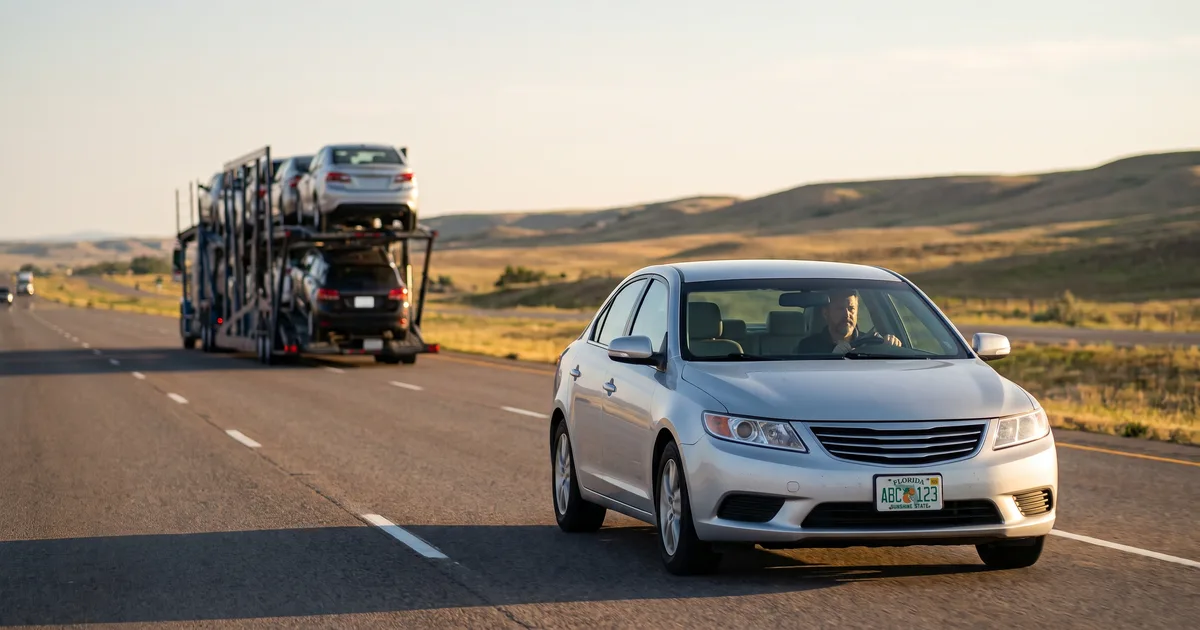


An auto transport broker is a licensed company that arranges your vehicle’s shipment by matching it with a vetted, insured carrier that runs your route. The broker prices the move, assigns the truck, verifies the carrier’s authority and insurance, and manages the shipment from booking to delivery, while the carrier does the physical driving. Every legitimate broker holds federal broker authority from the FMCSA and posts a $75,000 surety bond, a federal financial-accountability requirement most customers never hear about.
SAKAEM Logistics is an auto transport broker, licensed under MC 16237 and operating since 2017, so this guide explains the model from the inside: what brokers actually do, where the model’s honest weak points are, and how the pricing really works, including the part most brokers never explain.
Key Takeaways
- An auto transport broker arranges and manages your shipment, while a separate vetted carrier physically moves the vehicle.
- About 95% of car shipping carriers are small operators, which is why brokers are the practical booking layer for most shipments.
- Quotes are predictions of what a carrier will accept, so a quote priced far below market usually means your car will sit unassigned.
- Verify any broker in two minutes through the FMCSA’s public database before you book.
What Are Auto Transport Brokers?
An auto transport broker, sometimes called an auto freight broker or car shipping broker, is a federally licensed intermediary that connects vehicle owners with the carriers that physically ship cars. Whichever name a company uses, the license behind it is the same FMCSA broker authority. Brokers do not own trucks. Their product is the matching: taking your route, dates, and vehicle, finding a carrier that fits, and standing behind the shipment while it happens. In the United States, brokers must register with the FMCSA, hold an MC number, and maintain the surety bond that backs their obligations.
One naming clarification, because the terms collide: an auto transport broker arranges vehicle shipping. That is a different business from a car broker who helps you buy a car from dealers and private sellers. This guide covers the shipping kind.
What Do Auto Transport Brokers Do?
A broker’s work happens in the layer between your booking and your delivery. On a typical shipment that means pricing the route against the live market, posting the shipment where carriers can accept it, screening the carriers that respond, and locking in the one that fits your dates. Before any carrier is assigned, we run three checks: active USDOT and MC authority, a current certificate of insurance pulled from the carrier’s insurer, and the carrier’s safety record, including inspection history and crash data. After assignment, the broker coordinates pickup, stays on top of the shipment in transit, and manages the claim process in the rare case something goes wrong.
That last part matters more than it sounds. Fewer than 1 percent of SAKAEM shipments this year have had any damage reported, but when a claim does happen, the broker is the party that knows the carrier’s insurer, the paperwork, and the leverage points. A customer alone with a carrier’s insurance company is in a much weaker spot.
Why Car Shipping Brokers Are Needed
The car shipping industry is not built the way most customers imagine. There is no national fleet with a booking website. About 95% of carriers in this industry are small operators, businesses running a handful of trucks, often family-owned, with no marketing arm and no customer service department. We work with them every day, and brokers across the industry largely draw from this same carrier pool, which means the real difference between brokers is vetting and pricing, not access. Carriers are excellent at moving vehicles and mostly invisible to the public.
Brokers exist because someone has to bridge that gap:
- Access. Small carriers fill their trucks through broker networks, not through their own websites. The truck running your exact route this week is almost never findable on your own.
- Vetting. Authority and insurance status change constantly in trucking. Brokers check them per shipment, at assignment time, which is not something a customer booking one move every few years can realistically do.
- Backup. Trucks break down and schedules slip. When a carrier falls through, a broker re-covers the load from its network. A customer who booked one truck directly starts over from zero.
- Accountability. The broker’s bond, license, and reputation sit on top of every shipment, which puts a second accountable business behind your move with something to lose.
Broker vs. Carrier: What Is the Difference?
A carrier owns trucks and drives your vehicle. A broker arranges, verifies, and manages. Most companies you find when searching for car shipping are brokers, whether they say so or not.
| Auto transport broker | Carrier | |
|---|---|---|
| Owns the trucks | No | Yes |
| Moves your car physically | No, assigns a vetted carrier | Yes |
| Coverage | All 50 states through a network | The routes its trucks run |
| Pricing | Quotes the live market across many carriers | Quotes only its own trucks |
| If a truck falls through | Re-covers from the network | You start over |
| Insurance role | Verifies the carrier’s cargo coverage | Carries the cargo policy |
| Federal license | FMCSA broker authority + $75,000 bond | FMCSA carrier authority |
Booking directly with a carrier is possible and occasionally cheaper, but it only works when a carrier you can find, vet, and schedule happens to run your route on your dates. In practice that alignment is rare, which is why the best way to ship a car for most people runs through a broker.
Advantages of Car Shipping Brokers
For the customer, the broker model buys convenience and protection:
- One booking covers any route. A broker’s network spans the country, so a Maine-to-Arizona move books as easily as a popular lane.
- Competitive pricing. Carriers effectively compete for your shipment inside the network, which keeps the price honest against the market.
- Verified insurance on every move. The cargo policy protecting your car is checked before assignment, not assumed.
- A manager, not just a driver. Scheduling, paperwork, updates, and claims all have a responsible party whose job is your shipment.
- Flexibility for odd cases. Inoperable cars, oversized trucks, enclosed transport for a collector car: a network has a truck for it, a single carrier usually does not.
Drawbacks of Car Shipping Brokers
An honest guide has to include this section, and most broker-written ones do not. The model’s real limitations:
- Pickup is a window, not an appointment. Your date depends on a truck’s route, so brokers assign pickup within a window. SAKAEM’s standard window is 1 to 3 business days from your first available date, while much of the industry quotes up to 5. In our operation about 95% of vehicles are picked up inside that window. The other 5% are the hard cases, remote routes or big, heavy vehicles that fewer trucks can carry, and those can need an extra day to three.
- The broker does not drive the truck. Delivery-day execution belongs to the carrier. Good brokers control this with vetting and carrier ratings, but no broker controls traffic or weather.
- Quotes reflect a live market, not a fixed menu. Prices move with fuel, season, and lane demand, so a quote is an expert prediction rather than a printed price. The next section explains what that means in practice.
- Quality varies wildly between brokers. The license is the floor, not the ceiling. The gap between a good broker and a lead-reseller with a website is enormous, which is why the verification steps below matter.
How Broker Pricing and Quotes Work
A car shipping quote is a prediction of what a carrier will accept to move your vehicle on your route this week. That is why two brokers quote the same move differently: they are making different predictions, and some are not really predictions at all.
The trap to understand is the lowball quote. A quote priced hundreds below everyone else usually is not a better deal. Carriers see the offered price when a shipment is posted, and they simply do not accept underpriced loads. The car sits unassigned while the customer thinks it is booked, and days later the “market changed” call comes, asking for the number the honest quotes showed all along. If one quote is dramatically cheaper than the rest you gathered, that is the mechanism you are looking at.
Priced at the real market rate, the system works the way it should: carriers accept the load quickly, which is exactly what makes a short pickup window possible. At SAKAEM, quotes are market-rate from the start, nothing is due until a carrier is assigned, and we match competitive quotes for the same service level.
What Happens When the Market Moves Against a Quote
Occasionally a route reprices after booking. Carrier capacity tightened, fuel jumped, a seasonal surge hit, and no reputable carrier will take the load at the original number. Here is exactly what happens at SAKAEM when that occurs, because this is the moment where brokers earn or lose your trust. We call you before anything else and walk you through the actual offers we have gathered from carriers on your route, starting with the lowest one from a carrier that passes our vetting. Then you decide: take the market’s real number, wait to see if the lane softens, or cancel at no charge. What we will not do is let your car sit unassigned for a week hoping you will not notice, which is the standard move behind most cheap-quote horror stories.
How to Find An Auto Transport Broker
The license is public, the records are free, and ten minutes of checking filters out most of the industry’s problems.
Research and Compare
Shortlist two or three brokers and read their recent reviews, paying attention to how problems were handled rather than the star average. In transport, problem-handling is the product. Reviews that mention renegotiated prices or unreachable support after booking tell you more than a hundred five-star ratings.
Verify Credentials
Look up every broker on your shortlist in the FMCSA’s public database at safer.fmcsa.dot.gov. Active broker authority and a displayed MC number on the website are the minimum. No MC number anywhere on the site is a walk-away signal, not a yellow flag.
Ask for Referrals
Dealers, mechanics, and anyone who has relocated recently usually know which companies performed. A referral that says “they picked up when they said they would” is worth more than any advertising claim in this industry.
Review Customer Service Policies
Before booking, know three answers: what happens if the price needs to change, what the cancellation terms are, and who you call during transport. A good broker answers all three plainly. Vague answers before you book do not improve after you book.
Request Multiple Quotes
Get three or four quotes for the same vehicle, dates, and service level. The cluster tells you the real market price. Use the cluster to spot the outlier, not to chase it: the cheapest number in the set is usually the one that will not move your car. If budget is the priority, the honest levers are covered in our guide to the cheapest way to ship a car, and none of them involve the lowest quote.
Watch for Red Flags
Beyond lowball pricing, the big one is double brokering, where your assigned carrier secretly hands the job to an unvetted company, breaking the insurance chain. Protect yourself with one habit: confirm the company name on the truck at pickup matches the carrier your broker assigned, and call the broker if it does not. Our guide on what to do if a car is damaged in transport covers why this matters for claims. Demands for large upfront deposits before a carrier is assigned belong on the same list.
Bottom Line
An auto transport broker is the practical way to ship a car in a market built on small carriers, which make up roughly 95% of the industry and which you cannot realistically find or vet on your own. The model works when the broker prices honestly, vets carriers for real, and tells you the truth when the market moves. SAKAEM Logistics has run shipments that way since 2017, across more than 300,000 vehicles, with a 4.6-star average across 544+ Google reviews. Get an instant quote, compare it against the others you collect, and judge us by the cluster.
Auto Transport Broker FAQ
Is using an auto transport broker safe?
Yes, when the broker is licensed and you verify it. Every legitimate auto transport broker holds FMCSA authority backed by a $75,000 bond, and a two-minute lookup in the federal database confirms it before you book.
Are auto transport brokers responsible if my vehicle is damaged during transport?
The carrier’s cargo insurance covers the damage, and the broker’s job is to have verified that policy before assignment and to manage the claim. Our auto transport insurance guide explains how the coverage layers work.
How do auto transport brokers find carriers?
Through industry networks where brokers post shipments and carriers running that route accept them, plus relationships built over years of repeat loads. Brokers then screen the responding carriers for authority, insurance, and safety history before assigning one.
Can an auto transport broker ship any type of vehicle?
Nearly anything on wheels: cars, trucks, SUVs, motorcycles, classics, and inoperable vehicles that need winch loading. Oversized and heavy vehicles ship too, though fewer trucks can carry them, which can add a day or two to pickup.
Is it cheaper to skip the broker and book a carrier directly?
Sometimes, if you can find a reputable carrier running your exact route on your dates and verify its insurance yourself. For most routes that search costs more time than the broker fee costs money, and you give up the backup network if the truck falls through.
Do auto transport brokers charge a fee?
Yes. The broker’s fee is part of your total price rather than a surprise charge added later: the carrier receives the transport portion and the broker keeps the difference for pricing, vetting, and managing the shipment. Reputable brokers charge nothing until a carrier is actually assigned to your vehicle.
How can I tell if a company is a broker or a carrier?
Look it up at safer.fmcsa.dot.gov, which shows whether the company holds broker authority, carrier authority, or both. Most companies advertising nationwide car shipping are brokers, and an auto freight broker listing there with active authority is exactly what you want to see.
What is double brokering and why does it matter?
Double brokering is when your assigned carrier hands your vehicle to a different, unvetted company without telling anyone, which can void the insurance chain if damage occurs. Confirm the truck that arrives matches the carrier name your broker gave you before releasing the keys.
Can I choose which carrier moves my car?
You can set the requirements, such as enclosed transport or a specific pickup window, and a good broker will tell you which carrier was assigned and share its credentials. Hand-picking a specific truck is not how the market works, but verifying the assigned one absolutely is.