
Autotrader is one of the oldest and largest car marketplaces in the country, and in 2026 it works differently than most sellers remember: private sales now run through its Private Seller Exchange, with verified buyers, secured payment, and listing fees starting at $9. Used correctly, an Autotrader listing puts your vehicle in front of a national audience for less than most people spend detailing it. This guide covers the whole process: preparation, pricing, the listing itself, fees, and the handoff, including what to do when your best offer comes from a buyer three states away and the car needs to travel on an FMCSA-regulated carrier.
Choosing where to sell matters as much as how: the best way to sell a car depends on your car, your timeline, and your tolerance for strangers in your driveway. Autotrader sits squarely in the private-sale lane: more money than an instant offer, more structure than Craigslist.
Key Takeaways
- Autotrader listings cost $9 for cars under $10,000 and $49 above it, plus a 0.99% seller-protection fee (minimum $99) when the car sells.
- The Private Seller Exchange verifies buyer identities and processes payment before the keys change hands, removing the classic private-sale risks.
- Price from the valuation tools and local comparables, not from hope, and leave room to negotiate.
- A national marketplace means distant buyers, so decide up front how you’ll handle an out-of-state sale rather than turning down the best offer.
How Does Autotrader Work for Private Sellers?
How does AutoTrader work in 2026? For private sellers, everything runs through the Private Seller Exchange (PSX). You create the listing, and it appears on both Autotrader and Kelley Blue Book, since the two share a platform. Interested buyers must verify their identity before they can contact you, and all communication runs through the platform’s chat rather than your personal phone number. When a deal is struck, payment processes through the platform’s secured system, the funds clear before you release the car, and the platform walks both parties through title transfer. It even coordinates loan payoffs for financed cars.
That structure adds a layer of protection open classifieds don’t provide: buyer identity verification, on-platform communication, secured payment, and paperwork guidance. It also answers the first question most sellers type into a search bar, which is how does AutoTrader work compared with just posting on Facebook. The difference is exactly that structure, instead of a stranger with an envelope of cash.
What It Costs to Sell on Autotrader in 2026
The current fee structure, per Autotrader’s Private Seller Exchange help center:
| Fee | Amount |
|---|---|
| Listing, car priced under $10,000 | $9 |
| Listing, car priced $10,000 or more | $49 |
| Seller-protection fee at sale | 0.99% of sale price ($99 minimum) |
| AutoCheck vehicle history report | Included free |
Worked examples: an $8,000 car costs $9 to list and $99 at sale, or $108 all-in. A $15,000 car runs $49 plus about $149, roughly $200 total. When people search “Auto Trader sell my car” expecting hidden costs, this is genuinely the whole list. The fee structure is flat, paid at listing and at sale, with no commission percentage beyond the 0.99%. That is dramatically cheaper than the several-thousand-dollar gap between trade-in and private-party value on most vehicles, which is the whole argument for selling privately in the first place. Watch for two situational fees: a $99 lost-title service and late-document fees if you stall past deadlines after a sale.
Prepare Your Car for Selling
Preparation is the cheapest value you can add before listing anywhere.
Deep Clean Your Car
Wash, wax, vacuum, and clear out every personal item. A professional detail runs $100 to $300 and strengthens photos and first impressions, which is where listings are won.
Get an Inspection
A pre-sale inspection from your mechanic surfaces anything a buyer’s mechanic would find later, on your schedule instead of mid-negotiation. Fix what’s cheap and visible; disclose what isn’t.
Gather Your Paperwork
Title (or lender payoff details), registration, and maintenance records. Autotrader’s free AutoCheck report covers the history side, but a folder of service receipts still sells cars.
Determine the Value
Price from data, not attachment. The number you list at decides how fast the car sells more than any other choice you make.
Use Valuation Tools
Pull the private-party value from Kelley Blue Book and Edmunds, and remember pricing-guide numbers differ for knowable reasons. Since Autotrader and KBB share a platform, buyers will absolutely be looking at the KBB number next to your asking price.
Consider Market Conditions
Check what identical cars (year, trim, mileage, region) are actually listed for near you. Convertibles price better in spring, AWD heading into winter, and anything under 100,000 miles beats the same car just over it.
Determine Your Pricing Strategy
Set the ask slightly above your target to leave negotiating room, and know your walk-away number before inquiries arrive. An instant cash offer collected beforehand, from CarMax or a similar buyer, gives you a guaranteed floor so you never negotiate from desperation.
Create a Listing
A good listing is evidence, not creative writing. Photos and honest specifics do the selling before a buyer ever messages you.
Take High-Quality Photos
Fifteen to twenty useful photos beat five vague ones: every exterior angle, full interior, odometer, engine bay, tires, and every flaw. Shoot right after detailing, in daylight.
Highlight the Features
Trim level, drivetrain, fuel economy, recent maintenance, and how the car was used. “One owner, highway commuter, synthetic oil every 5,000 miles” answers what serious buyers ask first.
Write a Detailed, Honest Description
State mileage, accident history, title status, and known issues plainly. Honest listings filter out buyers who would have walked anyway and pre-build trust with the ones who show up.
Post Beyond Autotrader
Cross-listing costs little and widens the pool: the best used car websites each reach a different slice of buyers, and the right platform depends on what you’re selling.
Find the Right Buyer
PSX verification does the first screening for you; what remains is responsiveness and sensible test-drive habits.
Be Responsive
Listings go stale fast. Answer chat inquiries within hours rather than days: responsive sellers keep interested buyers engaged and reduce the chance they move on to another vehicle.
Schedule Test Drives Safely
Verify a driver’s license, ride along, plan the route, and meet at a busy public location. PSX identity verification filters most bad actors before this point, but the basics still apply.
Make the Sale
Closing is a sequence, not a moment: payment clears, paperwork transfers, then the car moves. In that order, nearly nothing can go wrong.
Secure Payment
On-platform, this is the easy part: PSX processes payment and funds clear before you hand anything over. If you take a deal off-platform, the old rules return: wire transfer or bank-verified funds only, and never release the car or title before money has fully cleared. The FTC’s guidance on payment scams covers the patterns worth knowing, and one rule defeats nearly all of them: no cleared funds, no car.
Transfer Ownership
Sign the title per your state’s format, record the odometer, complete a bill of sale, and file your state’s release-of-liability the same day. The full closing sequence takes under an hour when the paperwork folder is ready.
Deliver the Car
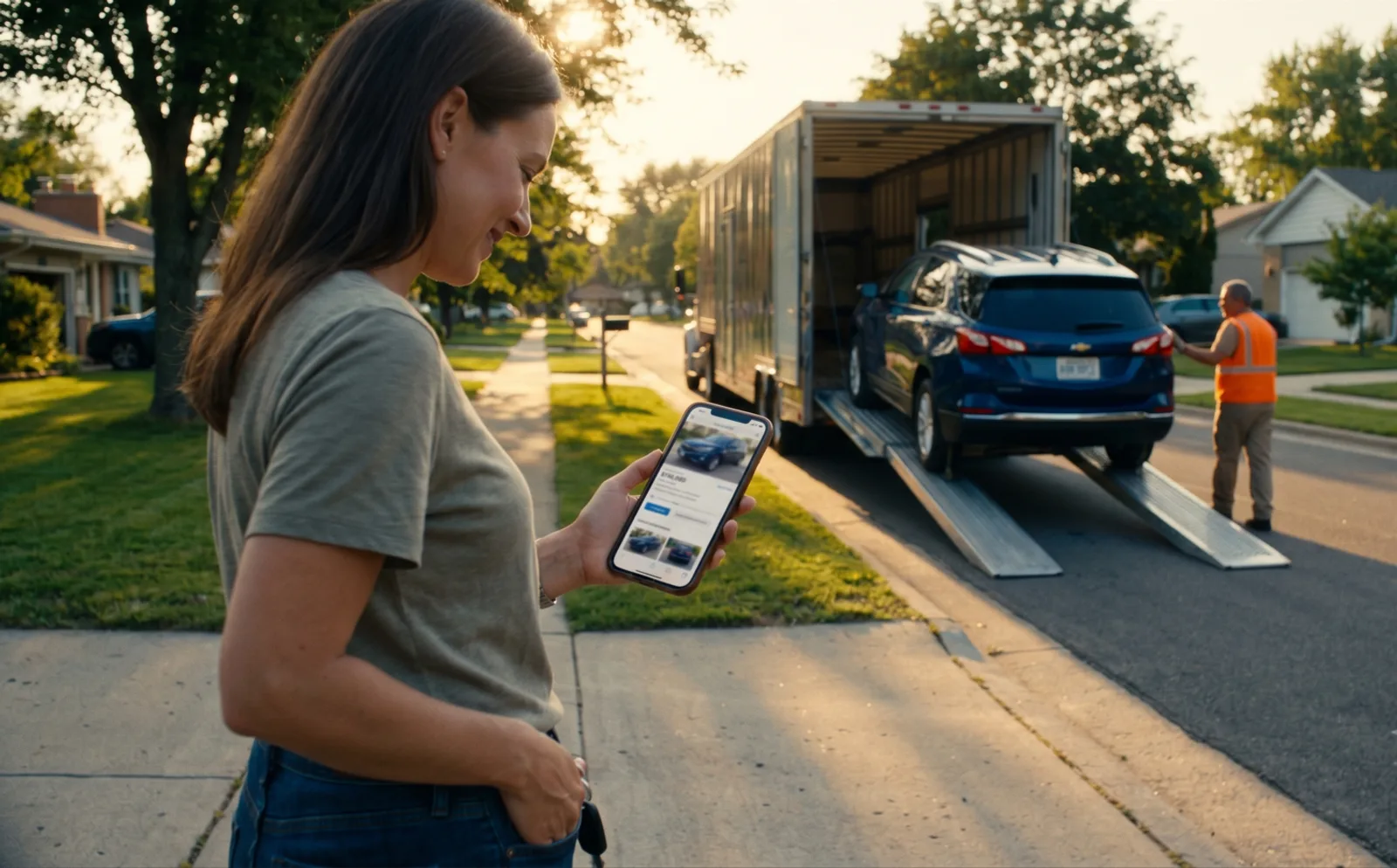
Here is the step national marketplaces create that local sales never had: your best offer may come from a buyer 500 miles away. Do not turn it down, because the mechanics are simpler than they look. Payment clears first through the platform, the signed title travels by tracked mail or with the vehicle, and the car ships on an insured open carrier, door to door. In our experience arranging these handoffs, most sellers don’t even need to be present when the truck arrives, since anyone you authorize can release the vehicle with the keys. Shipping typically costs the buyer a few hundred to a little over a thousand dollars depending on distance, and offering to coordinate it makes your listing stand out. Our service for online car sales handles exactly this handoff.
Is Autotrader a Good Place to Sell a Car?
Is autotrader a good place to sell a car? For most mainstream vehicles priced above a few thousand dollars, yes: national reach, verified buyers, secured payment, and modest fees make it one of the strongest private-sale platforms in 2026. It is not the right tool for everything, and an honest guide says so:
- Vehicles older than 1990 aren’t accepted on the Private Seller Exchange, so classic sellers should work the classic-car channels instead.
- Very cheap cars carry proportionally heavy fees: on a $2,000 car, $108 in fees is over 5% of the sale.
- Sellers in a hurry are better served by an instant offer, which closes in a day at a lower price.
- Salvage and rebuilt titles face a narrower buyer pool anywhere; disclose the branded title in the first line rather than losing the sale at paperwork time.
| Best for | Less ideal for |
|---|---|
| Mainstream used cars | Very cheap cars, where fees weigh heaviest |
| Sellers maximizing price | Sellers needing a same-day sale |
| Reaching out-of-state buyers | Pre-1990 classics |
| Payment protection | Zero-effort selling |
Bottom Line
Selling your used car on Autotrader in 2026 means listing once, reaching a national verified-buyer pool, and paying a modest listing fee plus the 0.99% seller-protection fee when the vehicle sells, which is a fair trade for capturing the private-party premium. Prepare the car, price from data, photograph it honestly, and don’t fear the distant buyer: SAKAEM Logistics, an auto transport broker licensed under MC 16237 and operating since 2017, arranges door-to-door transport for exactly these sales, with vetted carriers and a 4.6-star average across 544+ Google reviews. If your Autotrader buyer lives states away, get an instant transport quote and close the deal anyway.
Selling a Car on AutoTrader FAQ
What fees should I expect when I sell a car on AutoTrader?
A listing fee of $9 (cars under $10,000) or $49 (over $10,000), plus a seller-protection fee of 0.99% of the sale price with a $99 minimum when the car sells. A free AutoCheck history report is included.
Should I accept the first offer I receive on AutoTrader?
Not automatically. Early offers signal your price is attractive, but give a well-priced listing at least a few days of inquiries before committing, and measure every offer against the instant-offer floor you collected before listing.
Is selling a used car on AutoTrader better than trading it in?
It usually nets more money: the gap between trade-in and private-party values typically runs 10 to 20 percent in the pricing guides. The trade-in wins on speed and, in most states, a sales-tax credit on your next car, so run both numbers before deciding.
Can I sell a car on AutoTrader if it has a salvage or rebuilt title?
Branded-title cars can be listed, but disclose the title status in the first line of the description. Expect a smaller buyer pool and lower offers, and have the state-specific branded-title paperwork ready.
How do I ship a car to a buyer?
Payment clears first, always. Then an auto transport broker arranges a vetted, insured carrier to pick the car up at your address and deliver it to the buyer, typically for a few hundred to a little over a thousand dollars depending on distance, usually paid by the buyer.
How does the Private Seller Exchange keep me safe?
Buyers verify their identity before they can message you, communication stays on-platform, payment processes through a secured system that clears before you release the vehicle, and the platform guides the title transfer.
Can I list on Autotrader and other sites at the same time?
Yes, and you should. Cross-listing on two or three platforms widens the buyer pool at minimal cost. Just keep price and description identical everywhere, since buyers compare.
How long does it take to sell a car on Autotrader?
There is no fixed timeline. A well-priced mainstream car can attract serious inquiries within days, while overpriced or unusual vehicles can take several weeks or longer. Price does most of the deciding.
What documents do I need before listing?
The title (or your lender’s payoff information), current registration, and maintenance records. If the title is lost, request a duplicate from your DMV before listing, or use the platform’s $99 lost-title service.