

Edge Pipeline connects more than 200 independent auto auctions and 50,000+ active dealers through a single online wholesale marketplace, with hundreds of thousands of vehicles in active inventory at any given week. The platform — owned by Auction Edge — is primarily a buyer’s tool for licensed dealers sourcing inventory beyond what national auctions like Manheim and ADESA list. Independent auctions, corporate consignors, and OEM remarketing programs feed inventory into one searchable system. This 2026 guide walks through how Edge Pipeline works, what it costs, what makes it different from the larger national auctions, and how dealers handle the logistics of getting auction-bought vehicles back to the lot.
The 30-second answer: Edge Pipeline is a wholesale auction marketplace for licensed dealers. Registration is free, but bidding and pickup require an active dealer license and an established auction account. Fees vary by auction; budget the buyer’s premium (typically $100–$500) plus transport from auction state to your lot ($600–$2,200 depending on distance). The platform’s edge over Manheim or ADESA is independent-auction inventory most dealers can’t find elsewhere — but cars sell sight-unseen and condition descriptions vary widely between auctions.
Key Takeaways
- Edge Pipeline aggregates inventory from 206 independent auto auctions and corporate consignors — buyers are licensed dealers, sellers are auctions and consignors.
- Registration is free, but actual bidding requires an active dealer license plus accounts at the individual auctions feeding inventory into Pipeline.
- Beyond the winning bid, dealers should budget for the buyer’s premium, gate/processing fees, Pipeline Market Report subscription if used, and transport from auction to lot (usually $600–$2,200 per vehicle).
- Edge Pipeline’s advantage over Manheim and ADESA is access to independent-auction inventory that the national auctions don’t list — fleet returns, repos, off-lease vehicles, and direct OEM remarketing.
What Is Edge Pipeline?
Edge Pipeline is the marketplace product from Auction Edge, the technology company behind much of the independent auto auction industry. The platform combines live simulcast bidding, online proxy bidding, pre-sale research tools, and real-time market pricing data into a single interface. Where Manheim and ADESA operate their own physical and online auctions, Edge Pipeline aggregates inventory from 200+ independent auctions across the United States — many of which buyers couldn’t easily access otherwise.
That includes regional powerhouses like McConkey Auction Group in the Pacific Northwest, BSC America’s Bel Air and Tallahassee lanes in the Mid-Atlantic and Southeast, Carolina Auto Auction in the Carolinas, Greater Erie Auto Auction in the Northeast, and dozens of family-owned independent auctions whose inventory the national platforms don’t list. For buyers chasing specific regional inventory — fleet returns out of Florida, off-lease wholesalers in California, fleet repos out of Texas — Pipeline is often the only way to see them in one place.
The platform serves three main user groups: independent auctions listing their lanes, corporate consignors (fleet operators, leasing companies, OEM remarketing) placing vehicles, and licensed dealers buying. While anyone can browse public listings, bidding requires an active dealer license and an established account at each participating auction.
For dealers, the main value is reach. A single search can return matching inventory from auctions in 30+ states without logging into each auction’s site individually. Pre-sale tools let buyers research condition reports, run pricing comparisons through the Pipeline Market Report, and set proxy bids before the lane goes live.
How Edge Pipeline Works
The buying flow tracks the same pattern as most wholesale auto auctions, with one wrinkle: Edge Pipeline itself doesn’t sell the cars — the individual auctions do. Pipeline is the discovery and bidding layer on top.
Dealer License Requirement
Active bidding requires a valid dealer license from the dealer’s home state. The platform does not sell to consumers — buyers without a license have a different set of options, mapped in our guide to the best car auction sites, with enthusiast platforms such as Cars & Bids open to anyone with a credit card.
Register for Platform Access
Account creation on Edge Pipeline itself is free. The dealer provides a license number, contact information, and business verification documents. Registration takes a few business days for verification.
The catch: Edge Pipeline access alone doesn’t let a dealer bid. Each participating auction maintains its own buyer registration. Dealers need accounts with the specific auctions whose inventory they want to bid on — and many auctions require dealer-license verification, deposit on file, and sometimes a transport agreement before activating bidding privileges.
Browse Inventory
Once registered, dealers can search across all participating auction inventory. Filters cover year, make, model, mileage, location, condition grade, and lane (live vs online). The Pipeline Market Report subscription overlays pricing data from recent comparable sales — a real-time wholesale pricing reference that’s particularly useful for off-the-run vehicles where standard pricing guides lag.
Make a Bid
Two main bidding modes:
- Simulcast live: The lane runs in real time. Bidders see the in-lane camera feed and bid against in-person buyers + other online bidders. Bid increments and pacing match the physical lane.
- Proxy bids: Set a maximum amount in advance. The system auto-bids on the dealer’s behalf up to that ceiling. Useful when the dealer can’t be online during the run.
Most independent auctions run their main lanes on specific weekdays. Pipeline aggregates the schedules so a dealer can see which auctions are running that week.
Complete the Purchase
Winning bid + buyer’s premium + any gate fees + processing charges = total due to the seller. Payment terms vary by auction: most require payment within 48–72 hours of the winning bid. Some accept ACH, wire, or floor plan financing. Dealers who default on payment risk losing buyer privileges across the Auction Edge network.
Arrange Logistics
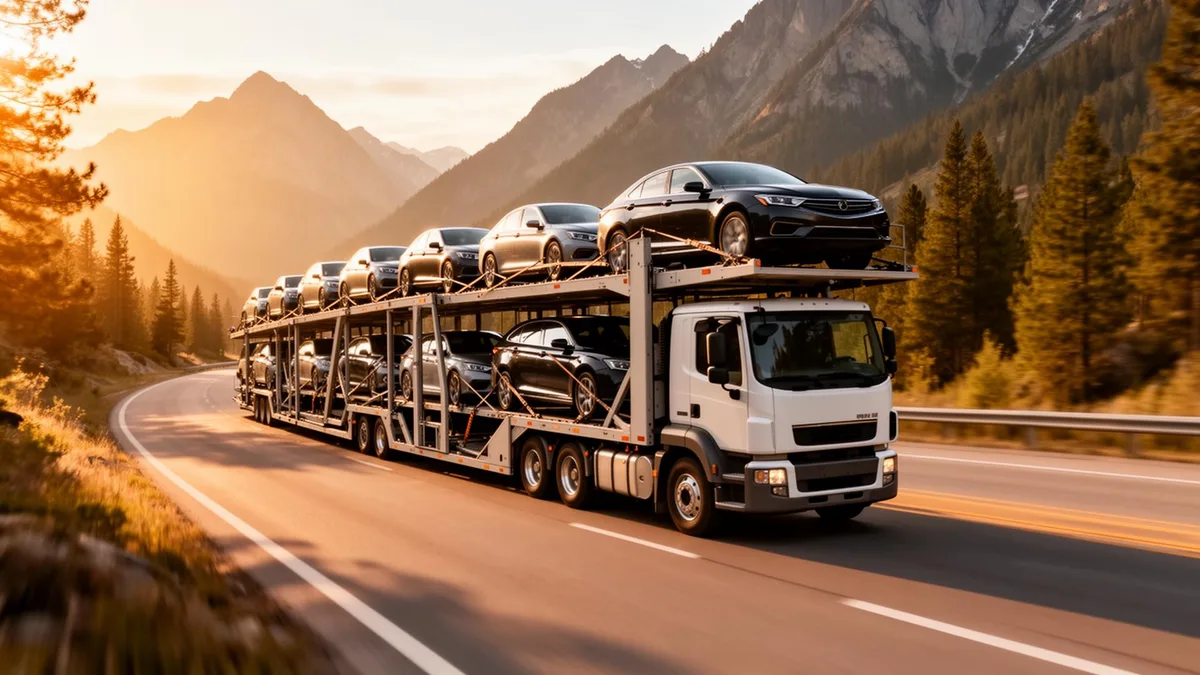
Edge Pipeline doesn’t handle transport. Once the vehicle is paid, the dealer arranges pickup from the auction’s lot. Each auction has its own pickup window — usually 5–10 business days — and may charge daily storage fees beyond that. Most dealers use an auto transport partner to coordinate auction pickup and delivery to their lot. Multiple-vehicle shipping is common when a dealer buys several vehicles in the same week from auctions in the same region.
How the Bidding System Works
Edge Pipeline supports the bidding mechanics that traditional auto auctions use, translated into a digital interface:
- Live simulcast mirrors the physical lane. As the auctioneer calls bids on the in-lane vehicle, online bidders compete against the in-room crowd in real time. The cadence matches a live auction — fast bidding windows, escalating increments, and an auctioneer’s hammer to close.
- Proxy maximums let dealers commit to a ceiling without watching the lane. The system bids in standard increments up to the maximum, then stops. This is the dominant mode for dealers buying across multiple auctions on overlapping schedules.
- Pre-bid offers are accepted at some auctions before the lane runs. The seller can review and accept early; otherwise the offer goes into the live run.
Vehicles sell as-is unless the auction’s specific terms say otherwise. Each lane vehicle gets a condition report — usually a written grade, photos, and announced defects. Arbitration windows exist for undisclosed mechanical issues but are short (typically 24–72 hours after delivery) and require documentation. Buyers who don’t inspect the condition report carefully or skip the arbitration window absorb the loss.
Pipeline Market Report (PMR)
The Pipeline Market Report is Edge Pipeline’s pricing data product, drawn from actual sale prices across the 175+ auctions that share data into the system. PMR shows recent comparable sales, average wholesale prices by region, and trend lines for specific year/make/model combinations. For dealers buying off-the-run vehicles where Manheim Market Report or KBB don’t have strong data, PMR fills the gap.
The PMR subscription is separate from basic Pipeline access. Some dealer subscribers consider it the platform’s single biggest competitive advantage over Manheim’s pricing tools because it pulls from independent-auction transactions that the bigger national auctions don’t see.
Edge Pipeline vs Manheim, ADESA, Copart, ACV, and OPENLANE
The wholesale auction landscape isn’t a single market — different platforms serve different inventory pools. The table below covers the main options dealers compare against Edge Pipeline.
| Platform | Vehicle volume | Buyer access | Inventory focus | Unique feature |
|---|---|---|---|---|
| Edge Pipeline | ~331K active | Licensed dealers only | 206 independent auctions, fleet returns, OEM remarketing | Pipeline Market Report; aggregates inventory most dealers can’t see otherwise |
| Manheim | ~120K weekly | Licensed dealers only | Largest national auction network, dealer trade-ins, off-lease, repos | Manheim Market Report; physical + digital lanes coast to coast |
| ADESA | ~80K weekly | Licensed dealers only | Off-lease, repos, fleet/rental returns from major lessors | OPENLANE upstream marketplace for pre-auction direct buys |
| Copart | ~175K active | Open to licensed dealers + most public buyers | Salvage, total-loss, insurance auction inventory | Salvage and damaged vehicles — different inventory mix than wholesale |
| ACV Auctions | ~25K weekly | Licensed dealers only | Dealer trade-ins from independent and franchise dealers | 20-minute online auctions, AMP audio engine reports for under-hood condition |
| OPENLANE | ~50K weekly | Licensed dealers only | Lease returns, dealer-direct, upstream pre-auction inventory | Heavy off-lease and fleet focus; integrated with ADESA |
The takeaway: Edge Pipeline doesn’t replace Manheim or ADESA — most active dealers maintain accounts at multiple platforms and use each for different sourcing. Pipeline’s strength is the independent-auction tail that the national platforms don’t list. Manheim wins on physical lane volume; ADESA wins on lease and fleet returns; Copart owns the salvage market (see our breakdown of Copart fees); ACV wins for fast dealer-trade-in turns; OPENLANE controls upstream lease returns. Edge Pipeline is the way to reach the rest. Dealers who also buy salvage should budget for the auction fee stacks separately; our guides to Copart fees and IAAI fees list both schedules line by line.
Cost & Fees
Total acquisition cost on Edge Pipeline breaks down into four components: winning bid, auction-side fees, post-purchase processing, and transport.
| Cost component | Typical range | Notes |
|---|---|---|
| Buyer’s premium | $100 – $500 per vehicle | Set by individual auction, scales with sale price |
| Gate / processing fee | $25 – $150 | Sometimes called auction fee; covers transaction handling |
| Document / title fee | $40 – $125 | Title processing, state-specific |
| Storage (if not picked up on time) | $15 – $50 per day past window | Most auctions give 5–10 business days |
| Pipeline Market Report subscription | $99 – $299/month | Optional but heavily used by active buyers |
| Transport — auction to dealer lot | $600 – $2,200 per vehicle | Depends on distance; multi-vehicle shipments reduce per-unit cost |
A dealer in Florida buying a vehicle in California through Edge Pipeline should expect total cost above the winning bid of roughly $300 in auction fees plus $1,400–$1,900 in transport — about $1,700–$2,200 above the hammer price before the vehicle hits their lot. Same dealer buying in Georgia or Alabama: closer to $300 in fees and $600–$900 in transport. For real prices on any lane, check your route in our car shipping cost calculator.
For active wholesale buyers, transport costs compound fast. Most dealers consolidate auction purchases into multi-vehicle shipments routed by region, which can cut per-unit transport by 20–40% versus single-car bookings.
Best Cars to Find on Edge Pipeline
Because Pipeline aggregates independent auction inventory rather than national-auction inventory, the mix skews toward categories the big platforms underserve.
Fleet and Lease Returns
Independent auctions handle a significant share of fleet returns from rental car companies, government fleets, and smaller corporate fleets that don’t go through ADESA or Manheim. These tend to be well-maintained vehicles with documented service records and predictable mileage profiles — 2–4 year old domestic and import sedans, SUVs, and pickups.
Wholesale Trade-Ins
Independent and franchise dealers list trade-ins they don’t want to keep in their own inventory. These cars often skipped the dealer’s certification process, which usually means they’re priced below comparable certified pre-owned listings but require the buyer to handle reconditioning.
Rare and Specialty Vehicles
Lower-volume models — performance trims, older specialty trucks, regional collectibles, and limited-production variants — surface on independent auctions more often than on national platforms. Dealers building specialty inventory or fulfilling customer-specific buy requests use Pipeline to find vehicles that don’t appear on the major platforms.
Direct OEM and Remarketing Inventory
Some manufacturer remarketing programs route vehicles through Edge Pipeline–connected auctions, particularly for off-lease electric vehicles, captive-finance returns, and OEM-direct used inventory.
Coordinating Transport from Edge Pipeline Auctions
Edge Pipeline doesn’t ship cars. Once a vehicle is paid, the dealer has a pickup window — usually 5–10 business days — to clear it from the auction’s lot. Most dealers running active wholesale operations use a transport partner to coordinate auction pickup and delivery to their lot.
SAKAEM Logistics works with auto dealerships across the U.S. on dealer-to-dealer and auction-to-lot shipping. What that looks like in practice:
- Auction gate coordination: We work directly with the auction’s transport office. Send us the auction name, Buyer Number, and lot/stock numbers; we generate the Gate Pass and Release Form on the dealer’s behalf and stage the pickup inside the auction’s window.
- Multi-vehicle consolidation: When a dealer buys several cars in the same region during one auction cycle, we route them on a single shipment where possible — significantly lower per-unit cost than booking one at a time.
- Dealer-lot delivery: Direct to the dealer’s address, scheduled around your receiving hours. Carrier confirmation 24 hours before delivery.
- Open or enclosed: Enclosed transport for high-value or specialty inventory; open for standard wholesale volumes.
- Vetted carriers: Every carrier in the SAKAEM network is verified through three checks: active USDOT and MC authority on the FMCSA SAFER system, current Certificate of Insurance with the dealer added as additional insured on request, and a safety record review covering hours of service, drug and alcohol compliance, and crash history. For dealers who want background on how carrier insurance protects vehicles in transit, see our overview of auto transport insurance.
Dealers running steady auction volume can set up a recurring lane arrangement — repeat routes (Atlanta auctions → Florida lot, California auctions → Texas lot, Pacific Northwest auctions → Mountain West lots) become quick re-books with a Buyer Number on file rather than a fresh quote each time.
Edge Pipeline Pros
- Inventory breadth: Access to 206 independent auctions in one search, hitting inventory pools most dealers can’t reach otherwise.
- Pipeline Market Report: Real-time wholesale pricing data from actual sale transactions across the network — particularly strong for off-the-run vehicles where Manheim Market Report and KBB are weaker.
- Simulcast + proxy bidding flexibility: Active dealers can run multiple proxy bids across auctions running concurrently without being in any lane physically.
- Fleet and lease return access: Independent auctions handle a meaningful share of fleet, lease, and OEM remarketing inventory that doesn’t reach the major national auctions.
- Free platform access: Registration on Edge Pipeline itself is free; only specific auction accounts and PMR subscriptions add cost.
Edge Pipeline Cons and Risks
- Per-auction account required: Pipeline aggregates listings, but actual bidding requires accounts at each underlying auction. Setting these up takes time and sometimes deposits.
- Variable condition reporting: Condition reports come from the individual auction, not Pipeline. Quality varies — some auctions provide detailed photos and announced defects; others provide minimums.
- Short arbitration windows: Mechanical disputes typically must be filed within 24–72 hours of delivery. Buyers who don’t inspect immediately may lose recourse.
- Hidden fees per auction: Gate fees, document fees, and processing charges vary widely between participating auctions. Total cost can surprise new buyers.
- Storage charges: Pickup windows are tight. Daily storage fees can add up if the dealer’s transport partner can’t pick up within the window.
- Watch for red flags: Watch for too-good-to-be-true vehicle descriptions, sellers who refuse to provide additional photos, and condition reports inconsistent with photo evidence. Independent auctions vary in quality control. The same patterns we cover in our guide to avoiding auto transport scams apply to wholesale auction buying as well.
Bottom Line
Edge Pipeline is a valuable sourcing tool for licensed dealers who want access to independent-auction inventory beyond what Manheim and ADESA list — particularly fleet returns, off-lease vehicles, OEM remarketing, and specialty inventory. The platform’s Pipeline Market Report is a genuine differentiator for pricing off-the-run vehicles. The trade-offs are the per-auction account setup, variable condition reporting, and the need to handle transport separately from purchase. Dealers running steady volume should pair Edge Pipeline with an established dealer transport partner. SAKAEM Logistics is a nationwide car shipping company that handles auction pickup, multi-vehicle consolidation, and lot delivery across all 50 states, with vetted carriers and a 4.6 rating across more than 580 customer reviews.
Edge Pipeline Auctions FAQ
Is Edge Pipeline open to the public, or dealers only?
Edge Pipeline allows public browsing of inventory but restricts active bidding to licensed dealers. Without a current dealer license in your home state, you can browse and watch lanes but not bid or buy.
How long do buyers have to pick up a vehicle after an auction ends?
Pickup windows are set by the individual auction, not Edge Pipeline, but most allow 5–10 business days from the date payment clears. Beyond that, daily storage fees typically run $15–$50. Active dealers coordinate transport pickup within the first 5 days to avoid storage charges.
Does Edge Pipeline provide vehicle inspection services before bidding?
Edge Pipeline itself does not inspect vehicles. Each participating auction provides a condition report — quality varies. Some auctions include detailed photos, announced defects, and a written grade; others provide minimum disclosures. Buyers should review the condition report carefully before bidding and confirm any major specs (mileage, accident history, mechanical condition) through independent sources.
What should buyers budget for besides the winning bid price?
Budget the buyer’s premium ($100–$500), gate and processing fees ($25–$150), document/title fees ($40–$125), and transport from auction to lot ($600–$2,200 depending on distance). Total acquisition cost is typically 8–18% above the hammer price before the vehicle hits the lot.
Can I bid on Edge Pipeline if I’m a new dealer without auction relationships?
Yes, but with limits. Edge Pipeline registration is free, but each underlying auction sets its own buyer-onboarding requirements — many require dealer license verification, sometimes a deposit, and occasionally a transport agreement before activating full bidding privileges. New dealers should expect 1–3 weeks of account setup across the auctions whose inventory they want to bid on.
How does Edge Pipeline compare to Manheim and ADESA?
Edge Pipeline aggregates inventory from 206 independent auctions; Manheim and ADESA run their own national auction networks. Pipeline’s value is access to the independent-auction tail — fleet returns, OEM remarketing, specialty inventory — that the national platforms don’t list. Most active dealers maintain accounts at multiple platforms and use each for different sourcing strategies. Pipeline complements rather than replaces Manheim or ADESA.
Can I finance vehicles bought on Edge Pipeline?
Financing depends on the dealer’s existing floor-plan arrangements. Some auctions accept floor-plan funding from companies like NextGear, Floorplan Xpress, or AFC. Others require ACH or wire payment within 48–72 hours. Confirm payment terms with each auction before bidding.
What happens if I don’t pay for a vehicle I won?
Default on payment results in losing buyer privileges across the Auction Edge network and potentially being banned from the participating auction. Some auctions also charge a default fee on top of recovering the unpaid amount. Don’t bid on vehicles you can’t pay for within the auction’s window.
How do I arrange transport from an Edge Pipeline auction to my dealership?
Edge Pipeline doesn’t ship vehicles. Most dealers use an auto transport partner to coordinate auction pickup and lot delivery. SAKAEM Logistics handles dealer-to-dealer and auction-to-lot shipping across all 50 states, including multi-vehicle consolidation when a dealer buys several cars in the same auction cycle. Send us the auction location, vehicle details, and your dealership address, request a quote, and we coordinate the rest.
What if the vehicle I bought has undisclosed damage?
Each auction has its own arbitration policy. Most allow a 24–72 hour window after delivery to file a claim for undisclosed mechanical defects or significant frame damage not noted in the condition report. The buyer must document the issue with photos, repair estimates, and inspection reports. Arbitration outcomes vary — some result in a refund, some in a partial credit, some are denied. The short windows mean buyers should inspect immediately on delivery.