

IAAI vs Copart comes down to less than most buyers expect. On a car paid for with wire or cash, the two auctions charge the same buyer fee at every price band of their public schedules, but the total still differs through fixed fees, internet bid fees and how you pay. The other real differences are who is allowed to bid, the fixed fees and deadlines around the sale, how accurately the listings describe damage, and how easy the car is to collect once you win. For a first-time buyer, those differences point to IAA.
This comparison is written for US buyers: private buyers, rebuilders and small dealers bidding on salvage and insurance cars and getting them home by truck. SAKAEM Logistics is an auto transport broker registered with the FMCSA under MC 16237, and auction pickups from Copart yards and IAA branches are a steady part of the shipments we have arranged since 2017. We have no affiliation with either auction.
Copart vs IAAI at a Glance
Copart and IAA (Insurance Auto Auctions, whose website is IAAI.com) are the two biggest names in US salvage auctions. Both sell mostly insurance total-loss vehicles, both run online bidding, and both charge the buyer a fee on top of the winning bid. This table sets the two side by side on what decides the choice.
| Copart | IAA (IAAI) | |
|---|---|---|
| Owner | Copart Inc., public company (NASDAQ: CPRT) | RB Global, since 2023 |
| Who can bid without a license | Depends on your state; some lots need a broker | Public buyers in 29 states with a government ID |
| Membership | Annual Basic or Premier membership | $225 a year |
| Buyer fee, $2,500 car | $610 paying by wire or cash | $610 |
| Fixed fees on every car | $95 gate + $15 environmental = $110 | $105 service + $20 title = $125 |
| Free storage | About 3 business days including sale day | Award day plus 4 days |
| Pickup | Scheduled appointment and a gate PIN | No appointment at the branches we service; lot, stock and buyer numbers |
| Listed runners that don’t start, SAKAEM dispatcher estimate | About 1 in 5 | Fewer than 1 in 10 |
Fee figures are public-buyer rates as of October 2026, from each auction’s published schedules. The runner figures are our dispatchers’ estimates from the pickups we arrange, not a computed rate.
Who Can Buy at Copart and IAAI
Both auctions let some members of the public bid, but the rules are set by state law and by the seller of each lot, so the honest answer is “it depends where the car is.”
Copart
Copart decides bidding eligibility from the licenses you have on file and the rules of the state where the vehicle sits, and buying a higher membership tier does not change that. Per Copart’s state licensing pages, private buyers in states such as Minnesota, Nebraska, Arkansas and Iowa can buy clean and salvage title vehicles without a business license, while in states such as Texas, Kansas and Missouri some vehicle types require a broker, and Maryland requires a broker for both clean and salvage titles. Copart sells two membership levels, Basic and Premier, with Premier adding a refundable deposit and higher bidding limits. Check the current price on Copart’s membership page before you register, because it changes.
IAA
IAA’s registration page says buyers without a business license can bid and buy in 29 US states with a government ID. Membership costs $225 a year for a public or licensed account, per IAA’s help center as of April 2026. Some lots are still restricted to licensed buyers, and the listing shows it.
Buying through a broker
Where a lot is restricted, a registered auction broker can bid on your behalf for a fee. Many brokers cover both auctions, which lets you bid on whichever one has the car you want. Read the broker’s fee schedule before you bid, because its fee sits on top of the auction’s.
Inventory: What You Will Find at Each
Both auctions are built on insurance total losses: vehicles an insurer has paid out on after a collision, flood, fire, theft recovery or hail. Both also sell for rental companies, fleets, dealers and lenders, so clean-title cars turn up at each. The practical difference for a buyer is less about what is listed and more about how it is described.
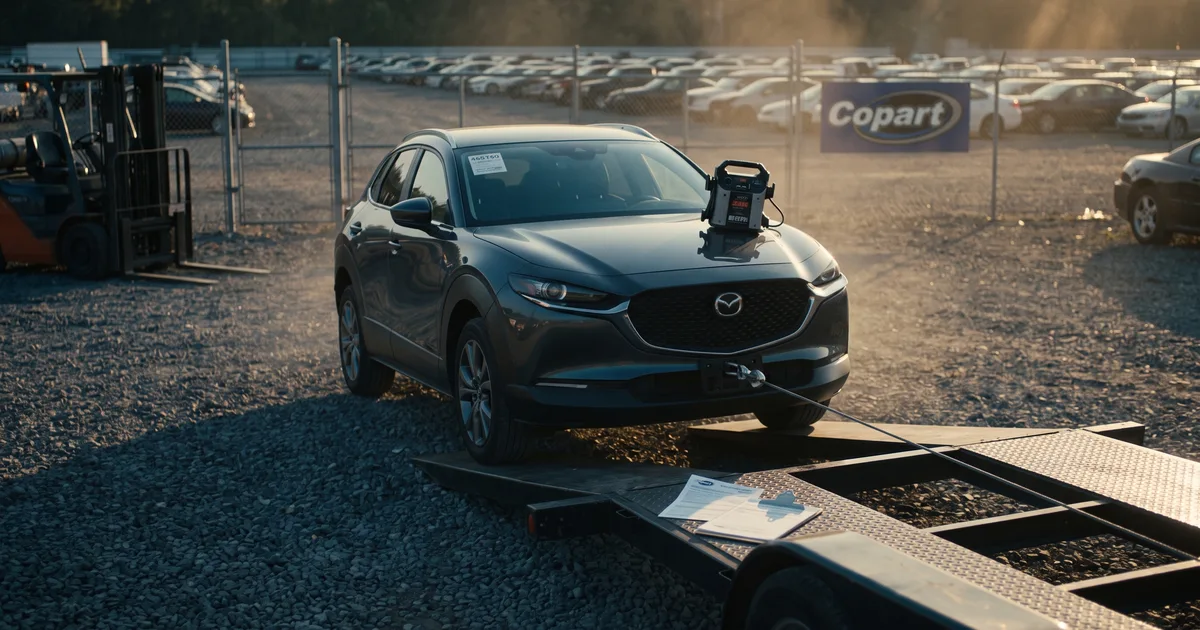
In our experience, IAA listings describe damage more truthfully. A separate pattern shows up at pickup: vehicles listed as running need an unplanned winch less often at the IAA branches we service. Our dispatchers estimate that fewer than 1 in 10 IAA cars listed as runners won’t start at the yard, against about 1 in 5 at the Copart yards we use. These are operational observations, not audited rates, and a car can fail to start for reasons the listing couldn’t show, such as a battery that died in storage. Either way, a car that won’t start needs a winch truck, and if nobody planned for it the pickup has to be rebooked. For a first-time buyer working from photos and a condition report, the more accurate description is worth more than any difference in selection.
Whichever auction you use, read the title type before you bid, and check the VIN’s title history in NMVTIS, the federal title database. Salvage, rebuildable, certificate of destruction and clean titles carry very different rules for registration and road use, and in most states a certificate of destruction car can never be registered for the road.
IAAI vs Copart Fees
The buyer fee is identical at every price band when you pay Copart with secured funds such as a wire. The gaps are in the card surcharge, the fixed fees and the penalty fees. This is the short version, with figures from each auction’s public-buyer schedule as of October 2026.
| Fee | Copart | IAA |
|---|---|---|
| Buyer fee, $5,000 car | $775 secured funds, $1,025 by card | $775 |
| Buyer fee, $10,000 car | $1,000 secured funds, up to $1,400 by card | $1,000 |
| Fixed fees per car | $110 | $125 |
| Internet bid fee | Charged on online wins; amount not on Copart’s public fee page | $40 to $160, published |
| Late payment | $50 per vehicle | $50 or 2%, whichever is greater |
Paying Copart by card is the biggest swing in the whole comparison, up to $400 on a $10,000 car. IAA costs $15 more in fixed fees and penalizes late payment harder: 2 percent of a $10,000 sale is $200, against Copart’s flat $50. Every line of each schedule, including the storage and relist rules, is broken down in our Copart fees guide and our IAAI fees guide, both based on IAA’s non-licensed buyer fee page and Copart’s non-licensed member fee page.
Deadlines That Cost Money
Both auctions start a clock the moment you win, and both clocks are short. Most avoidable costs at either auction come from missing one of these dates rather than from the fee schedule.
| Deadline | Copart | IAA |
|---|---|---|
| Pay in full | 3 business days, sale day included | Award day plus 2 days, by 5 PM local |
| Free storage ends | About 3 business days, sale day included | Award day plus 4 days |
| Storage after that | Yard rate, about $50 a day at the yards we use | About $50 a day at the branches we checked |
| Unpaid car | Relisted on day 8, 10% fee, $600 minimum | Renege on day 7, $1,000 or 15% |
The storage clock runs on calendar days at many IAA branches, weekends included, and on business days at Copart, but both vary by location. Confirm the free window for your yard on the day you win, then book the truck the same day.
Picking Up Your Car: Copart Yard vs IAA Branch
This is where the two auctions differ most for a buyer shipping the car home, and where our own pickup data comes in.
At a Copart yard, the carrier needs a scheduled pickup appointment and the buyer’s gate PIN, which Copart issues to the winning bidder. The yard will not release the car without it, so we collect the gate PIN when the transport is booked. The appointment matters to price, because it locks a fixed time into a carrier’s route. Our dispatchers estimate it adds about $50 to a Copart pickup when a carrier has a choice of loads, and in our own shipping data Copart pickups run slightly higher than comparable IAA pickups.
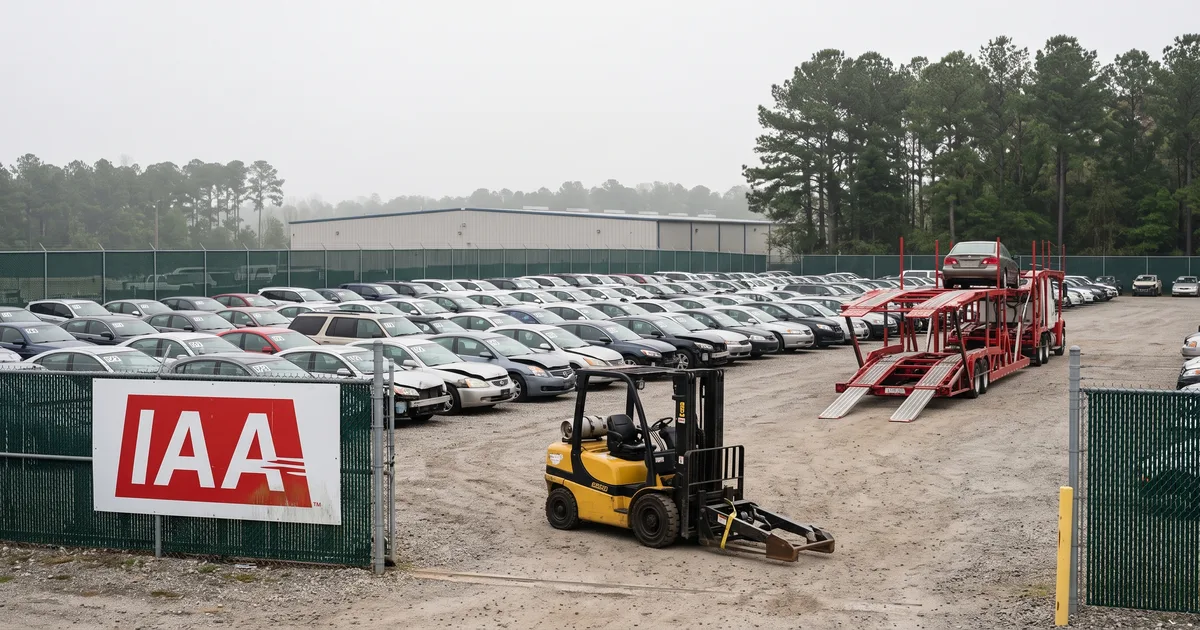
At the IAA branches we regularly service, there is no appointment. The driver arrives during yard hours with the lot number, the stock number and the buyer number, the branch brings the car out, and the truck leaves. Collect all three numbers when you pay, because an order without them cannot be dispatched.
Two things apply at both auctions. Loading happens in yard hours only, which often close before the office does, so a late-afternoon arrival can roll to the next morning. And a car the listing called a runner may still not start, which is why we ask about running condition up front and plan for a winch when there is any doubt. Our page on auction car shipping covers the full process, and the car shipping cost calculator gives an instant estimate for your route.
The buyer who calls on day four
Most buyers call for transport the day they win. The ones who wait until the free storage window is nearly over can pay for it twice.
“The buyer who calls on day three or four ends up paying more storage, which runs around $50 a day, and then pays more again for an expedited pickup.” Jack, Head of Operations, SAKAEM Logistics
On a typical sedan, an expedited pickup adds $150 to $200 at SAKAEM as of September 2026, and two or three days of storage adds $100 to $150. When both charges apply, the late caller pays $250 to $350 more than a buyer who booked on sale day, at either auction.
Copart or IAAI: Which Should You Use?
Use the auction that has the car you want, and let the differences above decide only when you have a choice. When you do, this is how we would steer each kind of buyer.
- First-time private buyer: start at IAA. The listings describe damage more accurately in our experience, public buyers can register directly in 29 states, and the pickup is simpler. Fewer surprises matter more than a slightly lower fee.
- Rebuilder buying regularly: use both. Pay Copart by wire to match IAA’s buyer fee, and watch IAA’s stricter late-payment and renege penalties.
- Small dealer: compare volume pricing. At both auctions, discounted fee schedules come from buying volume, not from holding a license. Dealers who buy wholesale from other dealers rather than insurers may also look at EDGE Pipeline.
- Buyer in a restricted state: use a broker that covers both auctions, and add the broker fee to your maximum bid.
Salvage auctions are not for everyone. If you can’t inspect the car or have someone inspect it, can’t arrange a winch for a non-runner, or need a car that is ready to register next week, a retail or dealer purchase will cost less in the end. Our guide to car auction sites compares the alternatives.
Bottom Line
Copart and IAA charge the same buyer fee when you pay with secured funds, so the choice turns on everything else. IAA is the easier start: public bidding in 29 states, listings that in our experience describe damage more accurately, and a pickup with no appointment at the branches we service. Copart matches IAA’s buyer fee on a wire payment, but a card payment, a pickup appointment and a gate PIN add cost and steps. At either one, pay on time, collect your pickup numbers on day one and book the truck the day you win.
SAKAEM Logistics has arranged transport as an auto transport broker since 2017, including regular pickups from Copart yards and IAA branches, with a 4.6-star average across more than 580 Google reviews. Get an instant quote with the yard address and the lot number before the free storage window runs out.
Copart vs IAAI FAQ
IAAI vs Copart: which is cheaper?
Not on the buyer fee. IAA’s public fee schedule matches Copart’s secured-funds schedule at every price band, so a $2,500 car carries a $610 buyer fee at both. Copart costs more if you pay by card, and IAA costs $15 more in fixed fees per car.
Copart or IAAI: which is better for beginners?
IAA, in our experience. Its listings describe damage more accurately, public buyers can register in 29 states with a government ID, and pickups need no appointment at the branches we service.
Do I need a dealer license for Copart or IAAI?
Not always. IAA lets public buyers bid in 29 states, and Copart’s rules depend on the state where the vehicle sits and the lot itself. Where a lot is restricted, a registered broker can bid for you.
Is IAA the same as IAAI?
Yes. IAA stands for Insurance Auto Auctions, and IAAI.com is its website. RB Global has owned IAA since 2023.
Are Copart and IAAI fees the same?
The buyer fees match when you pay Copart with secured funds. The fixed fees differ: Copart charges $110 in gate and environmental fees, IAA charges $125 in service and title fees, as of October 2026.
Which auction gives more free storage?
IAA gives the award day plus four days, and Copart gives about three business days including sale day. Both then charge about $50 a day at the locations we use, so book transport the day you win.
Can I buy from both auctions with one broker?
Yes. Many registered auction brokers cover both Copart and IAA, which lets you bid wherever the car is listed. Add the broker’s fee to your maximum bid.
How do I ship a car from Copart or IAAI?
Book transport the day you win. For Copart, give the shipper the gate PIN and allow for the pickup appointment. For IAA, give the lot, stock and buyer numbers, and tell the shipper whether the car runs.
Why does a Copart pickup cost more than an IAA pickup?
Copart requires a scheduled pickup appointment, which fixes a time in the carrier’s route. Our dispatchers estimate that can add about $50 to a Copart pickup, and in our shipping data Copart pickups run slightly higher than IAA ones, though the actual price depends on the route, the car’s condition and carrier availability.