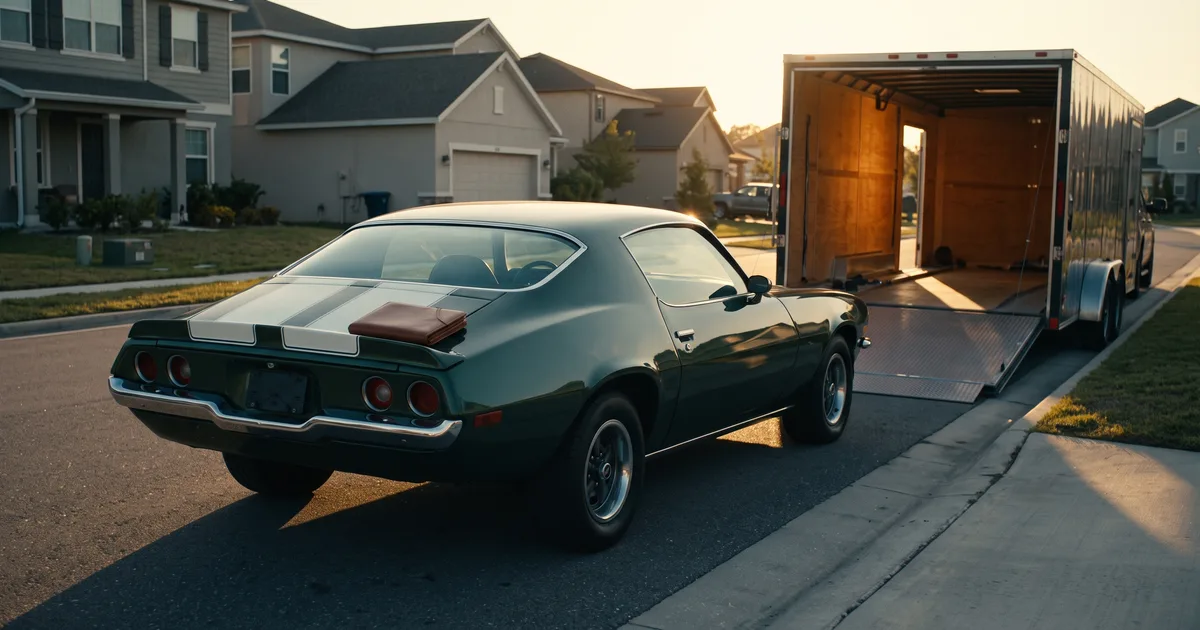
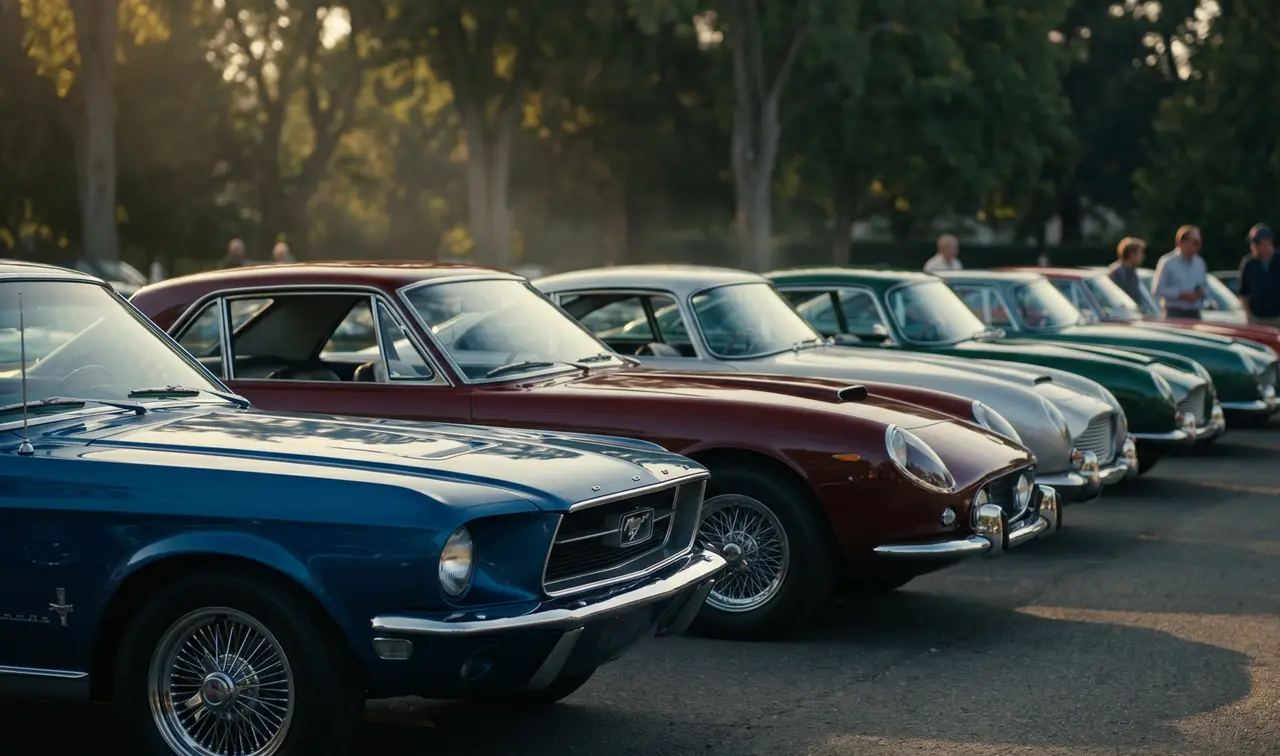

The best vintage cars to own in 2026 include the Porsche 911, Chevrolet Corvette Sting Ray, BMW E30 M3, Nissan Skyline GT-R, and first-generation Ford Mustang — models that combine collector demand, historical significance, and a proven track record of holding value. They belong to a market that has grown genuinely serious: the world’s collectible cars were worth roughly $950 billion in 2024, and with about 5% changing hands each year, annual trade volume sits near $50 billion. That scale is why the best vintage cars now sit somewhere between passion and portfolio, and the picks below reflect both their heritage and where the 2026 market is actually heading.
Key Takeaways
- The best vintage cars pair iconic design with a track record of holding or growing their value over time.
- The 2026 collector market has cooled into a selective phase that rewards rare, well-documented cars over mass-market ones.
- Modern classics from the 1980s and 1990s are the fastest-rising segment as younger collectors enter the market.
- Prices range widely, from accessible classics near $15,000 to blue-chip collectibles well above $100,000.
- Any vintage car bought out of state should travel by enclosed transport to protect its condition and worth.
Why Buy a Vintage Car?
A vintage car delivers a driving experience modern vehicles have engineered away, with mechanical steering, an analog cabin, and an engine note that connects the driver to the road. For many owners the draw is also identity and history, since the right car from the right era is a rolling piece of personal or cultural memory.
The financial case is just as real. The best classic cars have outperformed many traditional investments over the past decade, select models continue to appreciate, and ownership opens the door to a deep community of shows, clubs, and tours. Older, mechanically simple cars are also more repairable at home than today’s software-heavy vehicles, which keeps long-term running costs predictable. Style, investment potential, community, and serviceability together make vintage ownership more than a financial bet, though the current market rewards buying the right car carefully rather than buying anything old.
The 2026 Collector Car Market
The collector car market has shifted. After the pandemic-era boom, it has entered a selective phase: Hagerty’s Collector Car Market Rating fell to 58.28 in January 2026, its lowest reading in nearly 15 years, and the share of models actively gaining value sits near a recent low. That headline number hides a split market rather than a falling one. Rare, blue-chip cars at the top end are holding firm or climbing, while mass-market collectibles have softened in real terms, with Hagerty’s index of common collectibles at an inflation-adjusted all-time low.
The bigger story is generational. Younger collectors are pouring into 1980s and 1990s modern classics, pushing cars like the BMW E30 M3, Acura NSX, air-cooled Porsche 911s, and Japanese performance legends upward, while pre-war cars and traditional American luxury soften as their original audience ages out. At the same time, returning Baby Boomer demand is lifting their icons, most notably the 1963–1967 Corvette. For buyers, the takeaway is simple: in 2026, condition, originality, and documentation matter more than ever, and the cars below are chosen with that reality in mind.
What Are the Best Vintage Cars?
The list below spans American muscle, European sports cars, a classic truck, Japanese and German modern classics, and an undervalued grand tourer, chosen for recognizability, collectibility, and documented market values drawn from sources such as Hagerty and Hemmings. It deliberately mixes proven blue-chips with the rising modern classics driving the 2026 market, rather than repeating the same predictable greatest-hits roll call. Figures reflect approximate values for good-condition examples and shift with originality, mileage, and rarity. For the other end of the spectrum, our roundup of the fastest cars in the world covers modern performance icons rather than vintage collectibles.
Ford Mustang (First Generation)
The original pony car defined an entire segment and remains the most accessible entry point into serious vintage ownership. Strong parts availability and a massive enthusiast base make the first-generation Mustang easy to live with, while fastback and GT variants carry the most desirability.
- Years of production: 1964½–1968
- Rarity level: Common
- Average cost: $25,000–$45,000 (GT and fastback models higher)
Chevrolet Corvette Sting Ray (C2)
The second-generation Corvette is one of the most beautiful American cars ever built, and the 1963 split-window coupe is among the most coveted single-year models in the hobby. Independent rear suspension and available big-block power gave the C2 genuine performance credibility to match its looks. It is also one of the few segments actively appreciating in 2026, lifted by renewed Baby Boomer demand for the cars they grew up idolizing.
- Years of production: 1963–1967
- Rarity level: Moderate (1963 split-window rare)
- Average cost: $70,000–$120,000
Porsche 911 (Early Long-Hood)
The early 911 is a blue-chip European collectible whose values have climbed steadily for years. Its timeless silhouette, air-cooled flat-six character, and motorsport pedigree keep demand strong, with original S models commanding a significant premium over base cars.
- Years of production: 1965–1973
- Rarity level: Scarce
- Average cost: $90,000–$200,000+
Dodge Charger R/T
A centerpiece of the muscle-car era, the second-generation Charger R/T pairs aggressive Coke-bottle styling with big-block V8 muscle. Its on-screen fame and limited R/T production keep it firmly in demand among American muscle collectors.
- Years of production: 1968–1970
- Rarity level: Moderate (around 40,000 R/T models built)
- Average cost: ~$90,000 for excellent examples
Cadillac Eldorado Biarritz
The Biarritz convertible represents American luxury at its most extravagant, with tailfins, chrome, and presence that define the late-1950s aesthetic. It remains one of the most desirable Eldorado models, though it sits in the traditional-American-luxury segment that has softened in 2026, which makes a documented example a buy for passion first and appreciation second.
- Years of production: 1957–1958
- Rarity level: Very rare
- Average cost: ~$120,000
Chevrolet C10 Pickup
Vintage trucks have become one of the hottest corners of the collector market, and the C10 leads the charge. Its clean lines, comfortable ride for the era, and endless customization potential make it a favorite for both restorers and restomod builders, and well-sorted examples have appreciated sharply in recent years.
- Years of production: 1967–1972
- Rarity level: Common to moderate
- Average cost: $30,000–$60,000
Jensen Interceptor (Mark III)
The Interceptor is a British grand tourer with an Italian-styled body and an American Chrysler V8, a combination that delivers effortless cruising and a distinctive look. It remains underappreciated relative to its quality, which keeps it a comparative value among European classics.
- Years of production: 1971–1976
- Rarity level: Scarce
- Average cost: ~$40,000
Nissan Skyline GT-R (R33)
Now eligible for legal import into the United States under the 25-year rule, the R33 GT-R has become a holy grail for a generation of enthusiasts and a textbook example of the modern-classic surge. Its twin-turbo inline-six and all-wheel-drive system made it a giant-killer in its day, clean unmodified examples are increasingly hard to find, and it earned a place on Hagerty’s 2026 Bull Market list of cars poised to appreciate.
- Years of production: 1995–1998
- Rarity level: Rare (limited U.S. import supply)
- Average cost: $80,000+
BMW E30 M3
The original M3 is the blue-chip of the modern-classic era, a boxy homologation special built to go racing and now the car a generation of enthusiasts grew up idolizing. Its high-revving four-cylinder, balanced chassis, and motorsport bloodline have made it one of the most sought-after cars of the current market shift toward 1980s machines.
- Years of production: 1986–1991
- Rarity level: Scarce (limited U.S.-spec supply)
- Average cost: $80,000–$150,000
Mercedes-Benz SL (R107)
For buyers who want a genuine classic without a six-figure price, the R107 SL is one of the most underrated values in the market. The longest-running SL generation is elegantly styled, robustly engineered, and widely available, which keeps prices accessible even as enthusiasts increasingly recognize how much car it offers.
- Years of production: 1971–1989
- Rarity level: Common
- Average cost: $15,000–$40,000 (560SL models higher)
The table below summarizes the lineup at a glance.
| Vintage car | Years | Rarity | Average cost |
|---|---|---|---|
| Ford Mustang (1st gen) | 1964½–1968 | Common | $25,000–$45,000 |
| Chevrolet Corvette Sting Ray (C2) | 1963–1967 | Moderate | $70,000–$120,000 |
| Porsche 911 (long-hood) | 1965–1973 | Scarce | $90,000–$200,000+ |
| Dodge Charger R/T | 1968–1970 | Moderate | ~$90,000 |
| Cadillac Eldorado Biarritz | 1957–1958 | Very rare | ~$120,000 |
| Chevrolet C10 pickup | 1967–1972 | Common–moderate | $30,000–$60,000 |
| Jensen Interceptor (Mk III) | 1971–1976 | Scarce | ~$40,000 |
| Nissan Skyline GT-R (R33) | 1995–1998 | Rare | $80,000+ |
| BMW E30 M3 | 1986–1991 | Scarce | $80,000–$150,000 |
| Mercedes-Benz SL (R107) | 1971–1989 | Common | $15,000–$40,000 |
Which Vintage Cars Would We Buy in 2026?
Any of these cars is a defensible buy, but the right one depends on the goal. Matched to the 2026 market, these are the picks that make the most sense for different kinds of buyers.
- Best under $25,000: The Mercedes-Benz R107 SL offers the most genuine classic for the money, with elegant styling, robust engineering, and broad parts availability that keep ownership affordable.
- Best long-term investment: The BMW E30 M3 sits at the center of the modern-classic surge, and its motorsport pedigree and limited supply give it the strongest case for sustained appreciation.
- Best first collector car: The first-generation Ford Mustang remains the easiest entry point, with massive parts support and a forgiving ownership experience that makes early mistakes cheap to fix.
- Best appreciation play right now: The Nissan Skyline GT-R R33 is one of the few cars actively rising as it earns a spot on Hagerty’s 2026 Bull Market list while clean examples grow scarcer.
Where to Buy an Older Vintage Car?
The strongest vintage cars rarely sell through a local lot, so most serious buyers shop nationally. Collector-focused auctions such as Mecum, Barrett-Jackson, and RM Sotheby’s move the highest-profile cars, and a winning bid usually means coordinating auction car shipping to get the vehicle home. Online marketplaces like Bring a Trailer and Hagerty Marketplace have become the default for everything from accessible classics to six-figure collectibles, while specialist dealers and classifieds such as Hemmings round out the field. Our guide on where to buy classic cars breaks down the trade-offs of each channel in detail, and when it is eventually time to move a car on, how to sell a classic car covers the other side of the transaction.
Because the best example of a given model is often hundreds of miles away, buying out of state is the norm rather than the exception in this hobby. Once you have won the bid or agreed on a price, the next decision is transport, and a vintage car should never be driven home on its original drivetrain or trailered casually. Professional enclosed car shipping protects the paint, originality, and value that make the car worth owning in the first place. A collectible should travel fully enclosed, away from road debris, salt, and weather, secured with soft straps over the tires rather than chains across the chassis, and ideally on the top deck of a multi-car trailer so nothing above it can leak onto original paint. The highest-value collectibles are best handled through dedicated luxury and exotic car shipping.
When Is a Car Considered Vintage?
In everyday use, “vintage car” is shorthand for any older, collectible vehicle, which is how most enthusiasts and shoppers use the term and how it is used throughout this guide. The technical definitions are narrower. By the year-based framework used by insurers such as American Collectors Insurance, a vintage car is strictly one built between 1919 and 1930, a classic car is generally at least 20 years old, and an antique car is 45 years or older. By that strict reading, most of the cars above are properly classic or collector vehicles rather than vintage in the 1919–1930 sense. These thresholds are not universal either, since state DMVs, insurers, and collector clubs each apply their own standards for registration, plates, and coverage, which is why the same car can qualify as a classic in one context and an antique in another.
Bottom Line
The best vintage cars reward owners on two fronts, delivering a driving experience and a sense of history that modern cars cannot match, while many hold or grow their value over time. Whether the goal is an accessible Mustang or a blue-chip Corvette, success comes down to buying a documented, well-preserved example and protecting it from the moment it changes hands. Since most collectible cars are bought out of state, that protection starts with the way it travels. SAKAEM regularly arranges enclosed transport for collector and classic vehicles bought at auction, through dealers, and in private sales, with insured, door-to-door classic car shipping on carriers built for exactly these vehicles, so the car that arrives is the car you bought. Get a free shipping quote before your next purchase.
Vintage Car FAQ
What is the easiest vintage car to maintain?
The classic Volkswagen Beetle and the first-generation Ford Mustang are among the easiest vintage cars to maintain, thanks to simple mechanicals and enormous parts networks. Both have decades of aftermarket support, so most components are reproduced and affordable.
Are vintage cars a good investment?
The best classic cars have outperformed many traditional investments over the past decade, but returns vary widely by model, condition, and timing. Documented, original examples of desirable cars tend to appreciate most, while ordinary old cars in average condition rarely do.
What should I inspect before buying a vintage car?
Inspect a vintage car for rust, frame and floor integrity, matching-numbers drivetrain components, and the quality of any prior restoration. A pre-purchase inspection by a marque specialist is essential, since hidden corrosion or non-original parts can dramatically affect value.
How can I maintain a vintage car’s value?
Preserve originality, keep complete service and ownership documentation, and store the car in a climate-controlled space away from moisture and sunlight. Using enclosed transport whenever the car travels long distances also protects the paint and finish that buyers pay a premium for.
What is the difference between a vintage, classic, and antique car?
Vintage cars are generally those built between 1919 and 1930, classic cars are usually at least 20 years old, and antique cars are typically 45 years or older. The exact cutoffs depend on the state, insurer, or club applying them.
What is the most popular vintage car?
The first-generation Ford Mustang and the classic Volkswagen Beetle are among the most popular vintage cars worldwide, both because of their cultural impact and their accessibility. Their huge production numbers also mean strong parts availability and active owner communities.
How much does it cost to ship a vintage car?
Shipping a vintage car typically costs more than a standard vehicle because most owners choose enclosed transport for protection. Our guide on how much it costs to ship a classic car covers the factors that determine the final price.
Do vintage cars need special insurance?
Most vintage cars are best covered by specialty collector-car insurance, which uses an agreed value rather than standard depreciated value. These policies are often cheaper than regular auto insurance because collector cars are driven less and maintained carefully.
What is the cheapest vintage car to buy?
The Mercedes-Benz R107 SL and the classic Volkswagen Beetle are among the cheapest ways into vintage ownership, with driver-quality examples often starting around $15,000. Entry-level first-generation Mustangs and other mass-produced classics also offer affordable footholds in the hobby.
Can I drive a vintage car as a daily driver?
A vintage car can be driven daily, but most owners avoid it to limit wear, mileage, and exposure to weather and accidents. Older cars also lack modern safety and convenience features, which makes them better suited to weekend and show use than commuting.