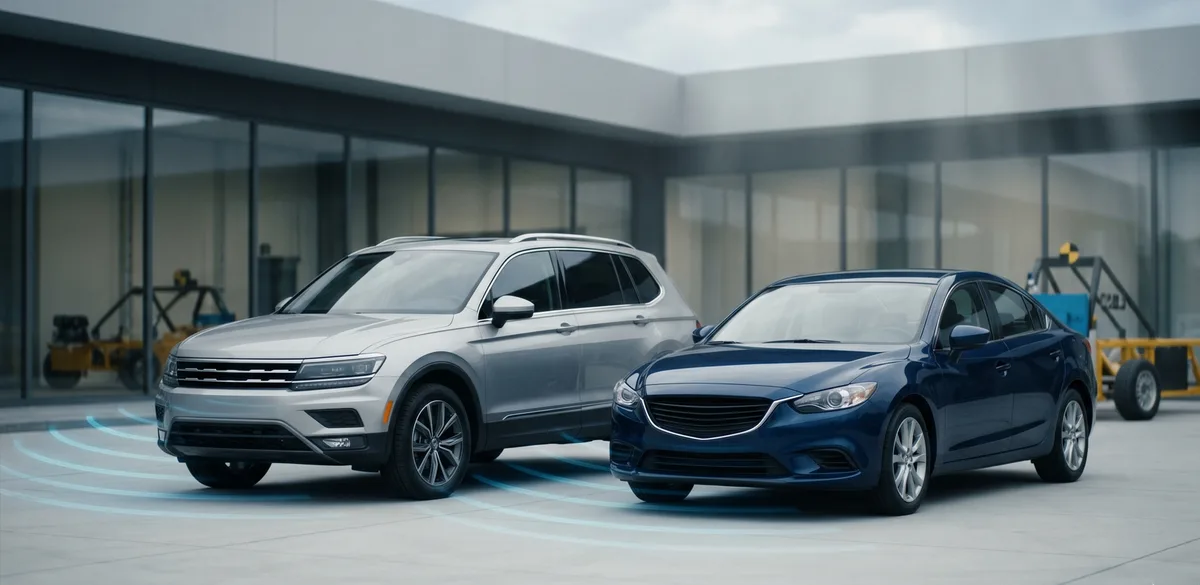

The safest car brand of 2026 is Mazda, which in February 2026 became the first brand ever named Safest New-Car Brand by Consumer Reports, finishing ahead of Genesis, Acura, Lincoln, and Hyundai in its new Safety Verdict. Measured by raw IIHS Top Safety Pick awards instead, the Hyundai Motor Group dominates the year, with the Hyundai, Genesis, and Kia brands combining for 16 of the 2026 awards. No single brand wins on every measure, though, so the right answer depends on what you are buying and how you weigh crash protection against everyday driver-assist technology.
This guide ranks the safest brands and models for 2026 using the three bodies that actually test cars — the Insurance Institute for Highway Safety (IIHS), the National Highway Traffic Safety Administration (NHTSA), and Consumer Reports, with J.D. Power dependability data for the long-term picture — and it covers what every other safety list skips: how to get the car you choose home safely, especially one bought out of state.
Key Takeaways
- Safety ratings now reward standard crash-avoidance technology, not just crash survival — a brand that makes automatic emergency braking and blind-spot monitoring standard outranks one that charges extra.
- The safest models span every price point, from the sub-$26,000 Mazda 3 to luxury EVs, so a top safety rating no longer requires a luxury budget.
- IIHS and NHTSA awards depend on the model year, trim, and headlight package, so the safest configuration is not always the base one — always confirm the exact build.
- Buyers increasingly purchase a safe car from another state, and shipping it with a vetted broker keeps those first long-distance miles off the odometer.
How Car Safety Is Measured in 2026
Three organizations set the standard, and they do not measure the same things.
NHTSA runs the federal 5-Star Safety Ratings program, crash-testing vehicles in frontal, side, and rollover scenarios. It is the government benchmark, and a five-star overall rating is the baseline buyers should expect from any modern vehicle. IIHS, funded by the insurance industry, tests more aggressively — small-overlap front crashes, an updated and tougher side test, and rear-seat occupant protection. Its Top Safety Pick and the higher Top Safety Pick+ awards require good crash results plus effective front crash prevention and acceptable headlights, a far harder bar than five federal stars.
Consumer Reports layers a third lens on top, combining federal and IIHS crash data with its own braking, handling, and rollover-avoidance testing, then weighing which crash-avoidance features come standard and even penalizing vehicles whose controls distract the driver. J.D. Power’s dependability study adds the durability angle, measuring how well those systems hold up over years of ownership rather than how they perform when new.
The practical takeaway is to read all three: a car with five NHTSA stars, an IIHS Top Safety Pick+, and a strong Consumer Reports verdict is safe across every test that exists, while one that wins a single award may still have a gap the others expose.
Safest Car Brands of 2026, Ranked
The brands below combine the strongest crash results with the widest standard safety technology across their lineups. Consumer Reports’ verdict drives the order, cross-checked against each brand’s IIHS award count.
| Rank | Brand | Why it ranks here |
|---|---|---|
| 1 | Mazda | Consumer Reports’ first-ever Safest New-Car Brand; near-standard crash-avoidance tech and strong IIHS results across the lineup. |
| 2 | Genesis | All five of its 2026 IIHS awards are the higher Top Safety Pick+, with comprehensive standard driver assists. |
| 3 | Acura | Strong crash scores plus the AcuraWatch safety suite standard across models. |
| 4 | Lincoln | The surprise of Consumer Reports’ 2026 top five, earning its place on standard safety tech and crash performance. |
| 5 | Hyundai | Seven 2026 IIHS awards, six of them Top Safety Pick+ — the most of any single brand. |
| 6 | Kia | Four 2026 IIHS Top Safety Pick+ awards, sharing Hyundai Motor Group’s safety engineering. |
| 7 | Toyota | Toyota Safety Sense standard fleet-wide and a deep bench of award-winning models. |
| 8 | Subaru | A perennial IIHS award winner with standard EyeSight, though some trims still lack standard blind-spot monitoring. |
The order reflects how the two leading scorekeepers weigh 2026 differently. Consumer Reports rewards standard safety technology and penalizes distracting controls, which is how Mazda topped its verdict. Counted purely by IIHS awards, the Hyundai Motor Group runs away with the year — Hyundai, Genesis, and Kia took 16, fifteen of them the higher Top Safety Pick+. Either way, the leaders share one habit: they make crash-avoidance features standard rather than optional, which puts a top safety rating within reach at mainstream prices.
Why Isn’t Volvo the Safest Brand?
Volvo built its identity on safety, and its cars still post strong crash-test results, so its absence from the top of the 2026 rankings surprises many buyers. The reason is how Consumer Reports now scores safety. Its Safety Verdict penalizes vehicles whose controls distract the driver, and Volvo — like Tesla — has moved many everyday functions into touchscreens that pull a driver’s eyes off the road. Excellent crash protection no longer fully offsets an interface that makes routine adjustments harder to do without looking.
Volvo remains a genuinely safe choice, and several of its models still earn IIHS awards — it simply no longer has the category to itself. The brands ahead of it pair comparable crash protection with controls that keep a driver’s attention on the road. The lesson is that brand reputation and current test data are not the same thing.
Safest Cars by Category for 2026
Brand averages are a starting point, but you buy a specific car. The models below stand out within their segments. Because IIHS and NHTSA finalize awards across the model year and tie them to specific trims and headlight packages, treat this as the shortlist to verify rather than a guarantee for every configuration.
| Segment | Standout safe pick | Safety credential |
|---|---|---|
| Small car | Mazda 3 | 2026 IIHS Top Safety Pick+ and a five-star NHTSA overall rating |
| Compact car | Honda Civic / Hyundai Elantra | 2026 IIHS Top Safety Pick awards |
| Compact crossover | Mazda CX-5 / Hyundai Tucson | 2026 models with strong IIHS crash results and standard driver assists |
| Compact car (value) | Kia K4 | 2026 IIHS Top Safety Pick+ |
| Three-row SUV | Hyundai Palisade / Kia Telluride | Perennial Top Safety Pick three-row family haulers |
| Midsize sedan | Toyota Camry | Long-running five-star and Top Safety Pick performer |
| Electric | Genesis and Hyundai EVs | Top crash scores with full standard driver-assist suites |
A pattern runs through the list: the safest mainstream cars cluster around Mazda, Hyundai, Kia, Honda, and Toyota, while the safest luxury and electric options come from Genesis and the wider Hyundai Motor Group. For the single safest new car without a luxury budget, the Mazda 3 is the standout — a Top Safety Pick+ with five NHTSA stars at an entry-level price.
Pickup trucks remain the weakest segment, with one striking exception. Body-on-frame trucks consistently lag cars and crossovers on the small-overlap and rear-passenger tests, but for 2026 the Tesla Cybertruck became the only pickup to earn an IIHS Top Safety Pick+, with good results across all six core crash disciplines after mid-year structural updates. The Toyota Tundra is the only other truck to earn any award, a standard Top Safety Pick. Outside those two, crossovers and sedans still hold the strongest results.
Safest Cars for Families and Teen Drivers
Two groups search for safety more than any other, and their best picks differ.
For families, the priorities are rear-seat protection, three-row capacity, and standard driver assists. The Hyundai Palisade and Kia Telluride lead the three-row class, with the Mazda CX-90 and Toyota Highlander strong alternatives; in smaller SUVs, the Mazda CX-5, Subaru Forester, and Honda CR-V combine practicality with consistent IIHS recognition.
For teen drivers, the IIHS recommends vehicles with strong crash protection, standard automatic emergency braking, and enough size to protect a new driver without the excess horsepower that encourages risk. The Mazda 3, Honda Civic, Subaru Crosstrek, and Toyota Corolla check those boxes affordably, which is why they recur on safest-cars-for-teens lists. A clean used example of any of them, with its driver-assist features confirmed, is one of the smartest first cars a family can buy.
What Actually Makes a Car Safe Today
Crash survival still matters, but the biggest recent safety gains come from technology that prevents the crash. Comparing the safest brands largely means comparing how much of this is standard rather than optional.
- Automatic emergency braking (AEB) brakes for you when a collision is imminent — the single most impactful crash-avoidance feature, now standard on most safe brands.
- Forward-collision and pedestrian detection warn of obstacles and people ahead, extending AEB’s protection to vulnerable road users.
- Blind-spot monitoring and rear cross-traffic alert cover the angles mirrors miss; their absence as standard equipment is what drops some otherwise strong brands down the rankings.
- Lane-keeping assist counters drifting from distraction or fatigue, a leading cause of single-vehicle crashes.
- Adaptive cruise control holds a safe following distance automatically, reducing rear-end collisions in traffic.
When you shop, check the window sticker for which of these are standard on the specific trim, because the same model can be a safety leader or merely average depending on how it is equipped.
Are Safe Used Cars Still Safe?
A used car from a safe brand is still a safe car, with two caveats. Crash-test standards tighten over time — IIHS made its side-impact test much harder in recent years — so a 2021 Top Safety Pick was judged against an easier bar than a 2026 one; the car did not get less safe, the test got tougher. And an older car may lack the latest pedestrian-detection or rear-seat-reminder systems.
For used buyers, the smart move is to look up the exact model year on the IIHS and NHTSA sites rather than assume a brand’s reputation carries backward, and to confirm which driver-assist features that car included. Certified pre-owned programs add inspection and warranty coverage that further de-risk the purchase. If you are researching the broader used market, our guides to the best used-car websites and how to find a fair price on a vehicle cover the buying side in depth.
Buying a Safe Car Out of State
The safest configuration of a model is not always at the nearest dealership. Inventory varies by region, the trim with the higher-rated headlights or the standard driver-assist package may sit on a lot several states away, and a growing share of buyers now purchase remotely or sight-unseen through online listings and certified pre-owned programs. Finding the exact safe car you want increasingly means looking beyond your local market.
That turns a buying decision into a logistics one. Driving a newly purchased car 1,500 miles home adds wear, weather exposure, and the riskiest miles a car ever sees — long-distance interstate driving — to a vehicle you chose specifically to be safe, before you have even registered it. Shipping it instead keeps those first miles off the odometer.
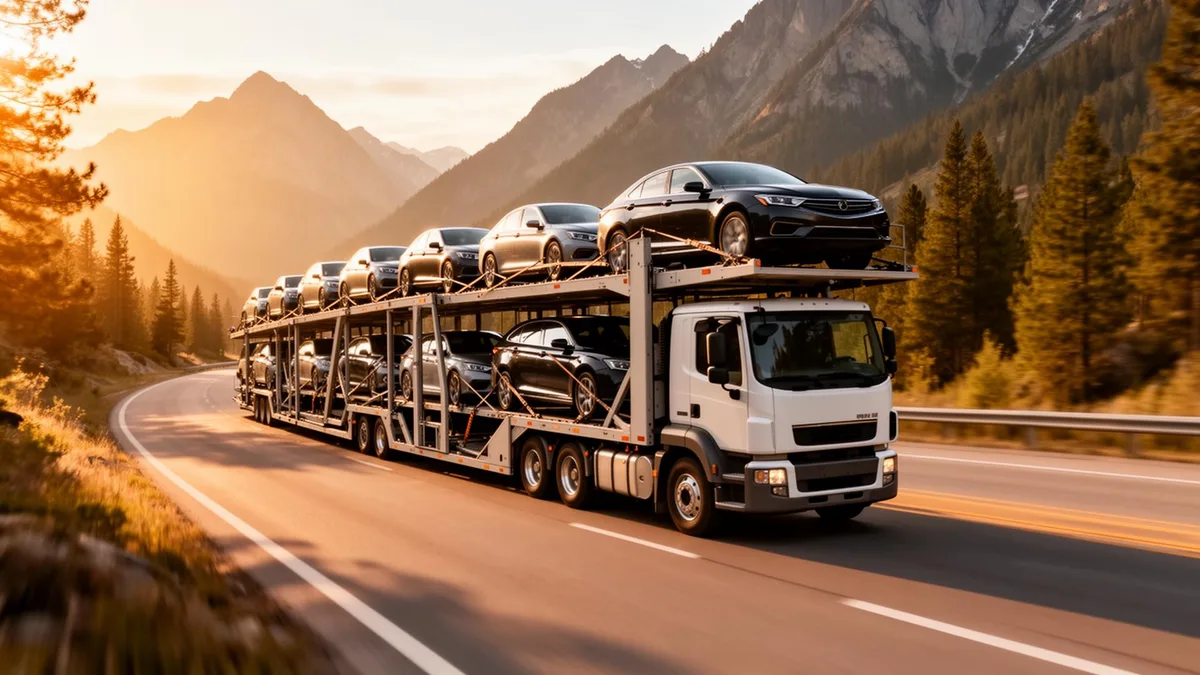
A professional auto transport broker arranges a vetted carrier to deliver the car door to door, so the only driving you do is the test drive and the trip home from your own driveway. For a new or high-value purchase, enclosed transport adds a fully covered trailer that shields the vehicle from road debris and weather, while open transport remains the affordable standard for everyday models. Shipping is also, on balance, a safe way to move a car — often safer than adding cross-country highway miles yourself.
One detail matters more on a remote purchase than a local one: confirm the exact build before the car ships. Because an IIHS award can hinge on the headlight package or trim, a model advertised as a Top Safety Pick+ may carry a lower-rated configuration depending on how that unit was equipped. Checking the window sticker before transport protects the safety rating you are paying for.
SAKAEM Logistics is a licensed auto transport broker, not a trucking carrier, and every carrier we assign is verified through the Federal Motor Carrier Safety Administration (FMCSA) for active operating authority, insurance, and safety record before it touches your car. If you are buying out of state, our guide to shipping a car to another state and our service for online and remote car buyers walk through the handoff. The same logic applies to a classic or collectible purchase or an American-built model bought direct: the safest way to take delivery is rarely a long solo drive.
Safest Car Brands FAQ
What is the safest car brand in 2026?
Mazda ranks as the safest car brand in 2026 on Consumer Reports’ safety verdict and is also a leader in IIHS Top Safety Pick awards, followed by Genesis and Acura. It earns the top spot largely because it makes crash-avoidance technology standard rather than optional across its lineup.
Which car brands have the most IIHS Top Safety Pick awards?
The Hyundai Motor Group leads 2026 with 16 awards across Hyundai, Genesis, and Kia, fifteen of them the higher Top Safety Pick+. Mazda and Toyota also earn strong award counts.
What is the difference between IIHS Top Safety Pick and Top Safety Pick+?
Top Safety Pick+ is the higher award. Both require good crash-test results and effective front crash prevention, but Top Safety Pick+ demands good or acceptable headlights across all trims, while the standard Top Safety Pick allows the qualifying headlights on only some versions.
Are luxury brands safer than mainstream brands?
Not necessarily. Luxury brands like Genesis, Acura, and Volvo rank highly because they include comprehensive driver-assist technology as standard, but mainstream brands such as Mazda, Hyundai, and Toyota match or beat many luxury makers on crash testing at a fraction of the price.
What is the safest SUV brand for families?
Hyundai and its sister brand Kia lead the family-SUV category, with the three-row Palisade and Telluride pairing top crash protection and standard driver assists with the space larger families need. Mazda and Subaru crossovers are also strong choices in smaller SUV segments.
Why isn’t Volvo ranked the safest car brand?
Volvo still builds very safe cars and earns IIHS awards, but it no longer tops Consumer Reports’ 2026 verdict because that ranking penalizes distracting touchscreen controls. Brands like Mazda, Genesis, and Acura now match Volvo on crash protection while keeping more everyday functions on physical controls that keep a driver’s eyes on the road.
What are the safest cars for teen drivers?
The IIHS recommends safe, moderately powered vehicles with standard automatic emergency braking for new drivers. The Mazda 3, Honda Civic, Subaru Crosstrek, and Toyota Corolla are among the safest affordable choices, in new or certified pre-owned form, because they pair strong crash protection with restrained horsepower.
Are electric vehicles safer than gas cars?
EVs generally perform well in crash tests because their heavy floor-mounted battery lowers the center of gravity and reduces rollover risk, and the absence of a front engine block can improve frontal crush space. Genesis and Hyundai Motor Group EVs earn particularly strong safety results in 2026.
Should I trust NHTSA or IIHS ratings more?
Use both. NHTSA’s five-star program is the federal baseline, while IIHS tests more aggressively with small-overlap and updated side-impact crashes. A car that earns five NHTSA stars and an IIHS Top Safety Pick+ has passed the most complete set of tests available.
Are used cars from safe brands still safe?
Yes, but verify the specific model year. Crash-test standards have grown stricter over time, so an older Top Safety Pick was tested against a slightly easier bar, and it may lack the newest driver-assist features. Look the exact year up on the IIHS and NHTSA sites and confirm which safety features that car included.
What safety features matter most in 2026?
Automatic emergency braking is the most impactful, followed by blind-spot monitoring, forward-collision and pedestrian detection, lane-keeping assist, and adaptive cruise control. The safest brands make these standard rather than charging extra for them.
How do I ship a car I bought in another state?
A licensed auto transport broker arranges a vetted carrier to pick the car up at the dealership or seller and deliver it door to door. You can choose open transport for everyday models or enclosed transport for new and high-value vehicles, and you do not need to be present yourself as long as someone is available for the handoff.
The Bottom Line
The safest car brands of 2026 are Mazda, Genesis, and Acura, with the Hyundai Motor Group dominating on raw IIHS awards. The safest models stretch from the sub-$26,000 Mazda 3 to luxury EVs, so a top rating is within reach at almost any budget — just confirm the exact model year, trim, and headlight package on the IIHS and NHTSA sites, because the safest configuration is not always the obvious one.
Once you have chosen the right car, protect that decision through delivery. If your safest option is in another state or you bought it online, shipping it with a vetted carrier keeps the first cross-country miles off a car you bought to keep you safe. Get a free, no-obligation shipping quote or call SAKAEM at (470) 410-6364, and we will arrange FMCSA-verified door-to-door transport so the only drive you take in your new car is the one you want to.