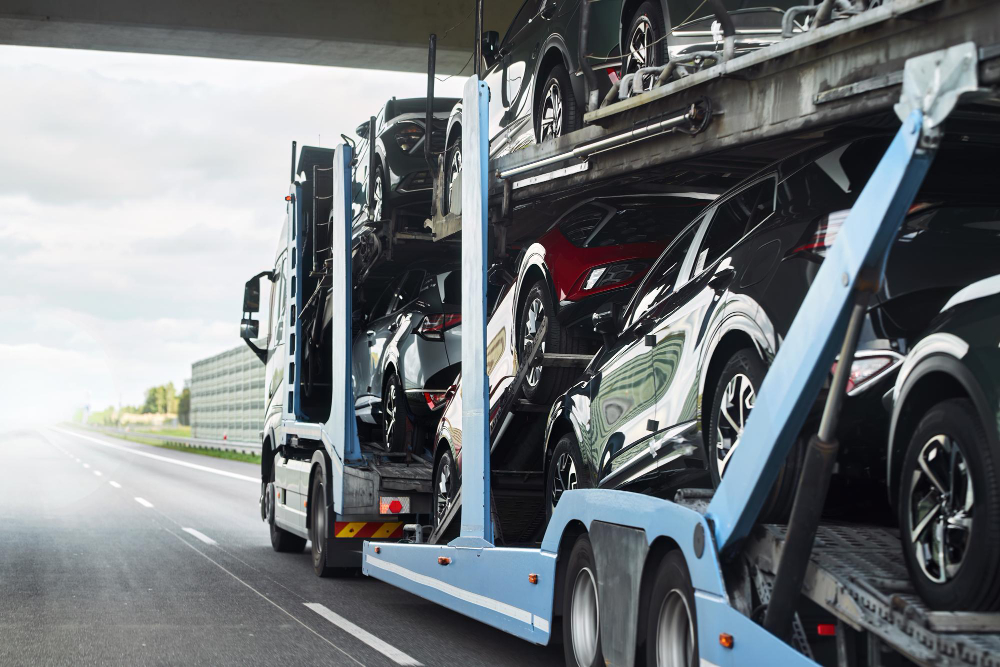


Shipping a genuinely exotic car across the country costs between $2,200 and $3,100 in an enclosed trailer — roughly double what an ordinary sedan pays for the same miles on an open carrier. And here’s the part the quote sites get wrong: the “dedicated single-car truck” tier you’ll see advertised at $4,000–$7,500 barely exists on cross-country lanes. Carriers running coast-to-coast don’t operate single-car enclosed trailers; request exclusivity and, in most cases, the price comes back in the same range, because your car ends up on the same enclosed network either way.
The premium over ordinary shipping isn’t padding. It buys a different trailer, a different loading process, a different insurance conversation, and a much shorter list of drivers anyone should trust with seven figures of someone else’s carbon fiber.
This guide breaks down where every dollar goes, when the expensive option is genuinely necessary and when it isn’t, and the insurance detail that matters more than any quote. SAKAEM Logistics has brokered enclosed, high-value transport since 2017; the numbers below are 2026 market ranges, and like everything in vehicle shipping they move with lane and season — treat them as the anatomy, not a menu. For a starting number on your own route, our car shipping cost calculator is the place to begin.
Key Takeaways
- Enclosed exotic transport typically costs $2,200–$3,100 coast to coast in 2026 — roughly double open-carrier rates for the same miles, driven by scarce equipment and high-value handling.
- The “dedicated single-car truck” tier advertised online mostly doesn’t exist on long-haul lanes; cross-country carriers run multi-car enclosed trailers, and exclusivity requests usually price in the same range.
- The number that matters more than the quote: enclosed carriers’ cargo policies range from $100,000 up to $1 million, with $250,000 the typical standard — often less than one supercar is worth.
- Low-clearance cars need liftgate loading, not ramps; confirming the equipment matters as much as the price.
- Auction weeks, shows, and productions run on hard deadlines — book those moves weeks ahead, not days.
What Exotic Car Transport Actually Costs
Exotic transport pricing starts from the same physics as any car shipping cost — distance, lane demand, season — and then adds the premium tiers. The 2026 market ranges:
| Distance | Enclosed exotic transport (2026) |
|---|---|
| Under 500 miles | $700 – $1,100 |
| 500 – 1,000 miles | $1,100 – $1,700 |
| 1,000 – 2,000 miles | $1,600 – $2,400 |
| Coast to coast (2,500+ miles) | $2,200 – $3,100 |
Expressed as real lanes, those same 2026 ranges look like this:
| Example route | Approx. distance | Enclosed range |
|---|---|---|
| Los Angeles → Las Vegas | 270 mi | $700 – $1,100 |
| Atlanta → Miami | 660 mi | $1,100 – $1,700 |
| New York → Miami | 1,280 mi | $1,600 – $2,400 |
| Chicago → Scottsdale | 1,750 mi | $1,600 – $2,400 |
| Miami → Los Angeles | 2,750 mi | $2,200 – $3,100 |
What moves the number inside those ranges:
- Ground clearance and body kits. Anything under about four inches of clearance needs a liftgate trailer and slower handling — fewer trucks qualify, so the lane price rises.
- The calendar. Snowbird season, auction weeks, and summer relocation peaks tighten enclosed capacity fast; enclosed trucks are a small fraction of the national fleet to begin with.
- Declared value. Higher value means a higher insurance conversation (next section) and a shorter list of acceptable carriers.
- Flexibility. A three-day pickup window prices better than a guaranteed date; a hard date on an auction weekend prices like the deadline it is.
For calibration: enclosed transport typically runs 50–60% above open-carrier rates for the same miles, and exotic-grade enclosed — liftgate equipment, low-clearance handling, high-value insurance — lands at the top of that math. One thing you will NOT find in the real market, despite what quote sites advertise: a separate cross-country “dedicated single-car” tier at $4,000–$7,500. Long-haul carriers run multi-car enclosed trailers; ask for exclusive use and the quote usually comes back in the same $2,200–$3,100 range, because capacity — not exclusivity — is what sets the price. Genuine single-car service exists mainly as a short-haul and specialist product.
Why It Costs More: The Insurance Layer
Here is the detail that should drive every high-value transport decision, and almost nobody selling a cheap quote will bring it up: enclosed carriers’ cargo policies range from $100,000 up to $1 million, and the typical standard is $250,000 — for the whole load. Federal rules require carriers to hold cargo coverage, but the minimums are set for ordinary freight, not for a trailer where one occupant is worth half a million dollars. A carrier whose policy tops out at $250,000 can be completely legal, completely sincere — and completely unable to make you whole. The carriers at the $1 million end exist; finding and verifying them is precisely the work a quote comparison never shows.
The insurance math cuts the other way too: some brokers will challenge — or decline outright — vehicles in the Rolls-Royce and Lamborghini class, because finding a carrier whose cargo coverage genuinely reaches the $1 million level that car demands is difficult, and the liability of arranging a move that available coverage can’t fully protect isn’t worth taking on. That refusal is actually a sign of a broker doing the math. The opposite — a broker who books a seven-figure car without ever asking what it’s worth — is the red flag. SAKAEM’s approach sits in between: high-value shipments are evaluated one at a time, and whether coverage adequate to the specific car can actually be secured is what decides whether the shipment gets booked — that’s the evaluation protecting both sides of the transaction.
Moving a car that exceeds those caps properly means the boring paperwork has to happen before the truck is booked:
- A certificate of insurance (COI) pulled directly from the carrier’s insurer, showing cargo limits that actually cover your declared value — not a screenshot, not a verbal “we’re fully insured.”
- Higher-limit or rider coverage for vehicles above standard caps, arranged per shipment where needed.
- Carrier vetting beyond the policy: active authority, clean inspection history in FMCSA’s public database, and verifiable experience with high-value cargo. This is the version of SAKAEM’s three-point carrier check that gets the most scrutiny, because the downside is largest.
- Your own agreed-value policy as the second layer — collector-car insurers generally cover transit; confirm rather than assume, and see our auto transport insurance guide for how the layers interact.
The quotable version: the cheapest quote’s cargo policy may be worth less than your car’s paint. Price differences between quotes are often insurance differences wearing a discount.
How a $500,000 Car Gets Loaded
The craft is half of what the premium buys — and it’s the same protocol whether the cargo is a Lamborghini Revuelto headed to a collection, a Porsche GT3 RS headed to a track weekend, or a Bugatti bound for a concours lawn. A proper exotic move looks like this:
- Hard-sided trailer — no soft-side canvas flapping against mirrors for two thousand miles, and position in the trailer chosen for the car, not the route.
- Liftgate loading for low cars: the vehicle rolls onto a flat platform and rises level into the trailer. Ramps flex and scrape; a liftgate doesn’t care that a Ferrari 296’s splitter or a McLaren 750S’s nose sits three inches off the ground.
- Over-the-wheel soft straps, never frame hooks — the tie-down force goes through the tires and suspension the way the car was engineered to carry load, and painted or carbon surfaces are never touched.
- The quarter-tank protocol: fuel low, battery healthy or on a tender for long hauls, alarm and automatic systems disabled, front sensors noted so nobody triggers a nose-lift mid-load.
- Photographic condition documentation on the bill of lading at both ends — the same discipline as any shipment, executed to a much finer standard of “pre-existing.”
Drivers who do this daily are a small guild inside the industry. That scarcity, more than fuel or miles, is what the dedicated tier actually prices.
How Much Protection Does Your Car Actually Need?
Honesty the sales pages skip: most exotic cars ship on multi-car enclosed trailers, and that’s the right call. An enclosed trailer carrying several vehicles provides the weather and debris protection, the soft-strap handling, and the driver expertise the class requires — and it’s what the long-haul market actually runs. The “one car, one truck” product advertised online is mostly a short-haul and specialist niche; on cross-country lanes, requesting exclusivity rarely changes either the truck or the price. What high-value cars genuinely need arranged per shipment isn’t a private trailer — it’s verified insurance limits, the right loading equipment, and a carrier with provenance.
The decision, compressed:
| Your situation | Right approach | Why |
|---|---|---|
| Entry-luxury daily driver ($80K–$150K), flexible dates | Open or enclosed | Same trucks new inventory rides; enclosed if the finish and rarity justify it |
| Exotic or supercar ($150K–$500K) | Enclosed, standard booking | The default for the class — full protection on the multi-car enclosed network |
| Seven-figure or irreplaceable | Enclosed with per-shipment insurance verification | The differentiator is the cargo-policy limit and carrier provenance, not trailer exclusivity |
| Hard event deadline (auction lot, show, production call time) | Enclosed, booked weeks ahead | The date is the product; enclosed capacity sells out around event weeks |
And one step further down: open transport is a defensible choice for the entry-luxury tier. A $120,000 daily-driven sports sedan crosses the country on open carriers every day — the same trucks that deliver new inventory to dealerships. The math and tradeoffs live in our open versus enclosed breakdown; the honest rule is that enclosed is about the car’s value, rarity, and finish, not its badge. Collector-grade vehicles have their own calculus — closer to what we cover for classic car transport, where originality drives everything.
Auction Weeks, Shows, and Productions
A meaningful slice of exotic transport never touches a private driveway. The same enclosed fleet moves the collector-car economy’s calendar, and each venue has its own logistics personality:
- Auction weeks — Monterey Car Week, Scottsdale, Mecum’s giant sales — compress hundreds of high-value arrivals into tight delivery windows with staging-lot rules and gate schedules. Capacity on those lanes sells out weeks ahead, and a missed window can mean a car misses its lot number.
- Shows and concours demand arrival timing plus condition perfection — a car that shows dusty defeats the purpose of the trailer it came in.
- Film, television, and music-video productions move cars on production schedules: exact call times, unusual locations, sometimes discretion about what’s arriving and for whom. The transport has to behave like part of the crew.
- Dealer and collection movements — cars headed to auction purchases or between private collections — run quieter but on the same enclosed infrastructure.
The practical takeaway for an owner: if your car’s date is an event date, treat transport as part of the entry fee and book it when you book the event. Standard windows are for standard weeks.
How to Vet a Transport Partner for a High-Value Car
The exotic tier attracts the same lowball games as every corner of auto transport, with higher stakes. The red flags, in order of expense:
- A quote far under the ranges above. Enclosed capacity is scarce and priced accordingly; a bargain usually means an open truck, a bait-and-raise, or a cargo policy that can’t cover the car. Our guide to auto transport scams covers the mechanics.
- “Fully insured” without a COI. If the certificate with adequate cargo limits doesn’t appear on request, the coverage doesn’t exist for your purposes.
- No liftgate answer. Ask how they load a car with three inches of clearance. Hesitation is your answer.
- No provenance. Carriers that genuinely move seven-figure vehicles can demonstrate it. So can brokers: ask who verifies the carrier, and how — that vetting is the job. It’s the core of what a luxury and exotic transport service is actually selling.
Bottom Line
Exotic car transport in 2026 costs roughly $2,200–$3,100 cross-country enclosed — with the real differences hiding below the price: cargo insurance that actually matches the car’s value, liftgate equipment, and drivers who handle this class of vehicle for a living. Ignore the “dedicated single-car” tiers advertised at double that; on long-haul lanes they mostly don’t exist. Match the protection to the car and the calendar, verify the COI before anyone touches the keys, and be appropriately suspicious of both the cheapest number on the page and the most expensive one.
SAKAEM Logistics has brokered high-value enclosed moves since 2017 — 4.6 stars across 544+ Google reviews — with carrier insurance verified per shipment and market-rate pricing for your exact lane and dates, $0 upfront. Get an instant quote, and if the car needs higher insurance limits or event-week timing, say so in the notes: that conversation is the product.
Exotic Car Transport FAQ
How much does it cost to ship a Lamborghini or Ferrari across the country?
Typically $2,200–$3,100 coast to coast enclosed in 2026, and proportionally less on shorter routes. Exact pricing is market-rate for your lane, dates, and the car’s clearance and value — and be skeptical of “dedicated single-car” quotes at double that, since long-haul carriers run multi-car enclosed trailers.
Is enclosed transport required for exotic cars?
Not legally, but practically yes for anything rare, low, or high-value — enclosed protects against weather, road debris, and prying eyes. The multi-car enclosed network covers virtually all exotics; what exceptional-value cars need on top is verified insurance limits, not a private trailer.
Can an exotic car ship on an open carrier?
A driven-daily entry-luxury car can, and many do — it’s the same transport new inventory rides. The dividing line is value, rarity, and finish rather than brand; when a stone chip means a five-figure respray, enclosed pays for itself.
How do I verify a carrier’s insurance actually covers my car?
Request the certificate of insurance directly and check the cargo limit against your car’s value — enclosed carriers’ policies range from $100,000 up to $1 million, with $250,000 the typical standard. For cars above the carrier’s limit, higher coverage must be arranged before pickup, and a broker should do the verifying for you.
How is a low-clearance car loaded?
With a liftgate — a flat platform that raises the car level into the trailer — plus race ramps where approach angles need help. If a company can’t explain its low-clearance process immediately, keep shopping.
How far in advance should I book exotic transport?
Two to three weeks for normal moves; four or more around auction weeks, major shows, and seasonal peaks, when the small enclosed fleet sells out. Event deadlines should be booked when you commit to the event.
Do exotic transport trucks make multiple stops?
Yes — long-haul enclosed trailers carry several vehicles and make multiple stops; that’s how the network works, and it’s also why requesting a “dedicated” truck on a cross-country lane rarely changes the price. Genuine single-car service is mostly a short-haul and specialist product.
Can I put anything in the car during transport?
Keep an exotic empty. High-value moves are documented to a fine standard, and loose items risk interior damage that’s expensive to argue about; personal-item allowances are a mainstream-shipment convention, not an exotic one.
What happens if the car is damaged in transit?
Damage is noted against the pickup inspection on the bill of lading and claimed against the carrier’s cargo policy — which is exactly why the policy’s limit has to exceed the car’s value before the truck is booked, not after.
Do transport companies handle auction pickups and deliveries?
Yes — auction-week logistics (staging lots, gate schedules, lot deadlines) are a standard part of high-value transport, but capacity on those lanes disappears early. Book with the auction calendar, not against it.
Are race cars and track-only cars shipped the same way?
Same trailers, extra details: non-running configurations, winch loading, slicks with no tread to strap against, and fluids rules at some venues. Disclose the car’s exact state when quoting so the right equipment shows up.
Does SAKAEM ship exotic cars internationally?
Our focus is door-to-door transport within the continental U.S., including port drop-offs. For overseas legs, we can move the car to the port; the ocean segment runs through international freight forwarders.